Description
Form
tree, perennial, evergreen
Height: Indoors 1–3 m; 30 m or more in the wild
Flowering
No reliable data in the sources.
Habitat
Leaves
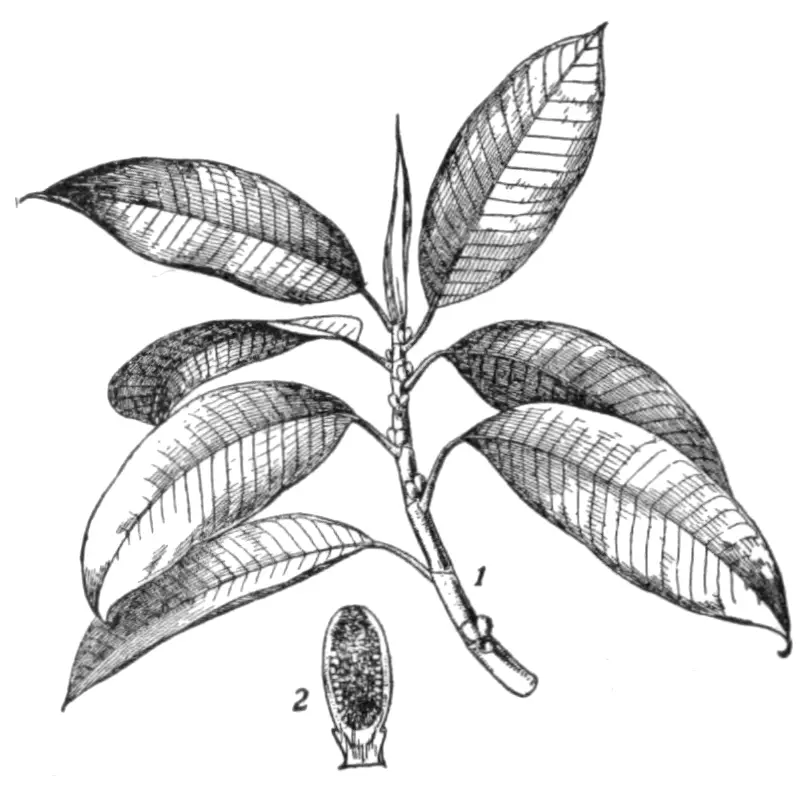
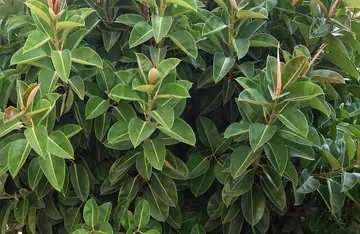
Oval, thick, glossy leaves 10–35 cm long. Each new leaf unfurls from a reddish sheath that later falls off. Variegated (white- or cream-edged) and dark burgundy cultivars exist.
Flowers
As in all figs, the flowers are hidden inside a closed structure (syconium); they do not form indoors.
Classification
- KingdomPlantae
- PhylumTracheophyta
- ClassMagnoliopsida
- OrderRosales
- FamilyMoraceae
- GenusFicus
- SpeciesFicus elastica
Native range
According to POWO it is native from Nepal and the eastern Himalaya through Assam, Bangladesh, Myanmar, Thailand, Laos, Vietnam and southern China to Malaysia, Sumatra and Java. It is planted as a park tree throughout the tropics.
IUCN Red List status: Least concern (LC).
Care
Light
Bright, indirect light; morning sun is good. Drops leaves in low light.
Water
When the top 2–3 cm of soil are dry; never leave water in the saucer.
Soil
Free-draining, humus-rich potting mix.
Temperature
15–29 °C. Sudden moves or temperature changes can make it drop leaves.
Wipe dust off the leaves with a damp cloth. Pruning the top makes it branch.
Culture and history
Living root bridges
In Meghalaya, India, the Khasi people guide the aerial roots of rubber figs across streams; over decades they grow into living bridges strong enough to walk on.
Toxicity
The milky sap can irritate the eyes and skin and upsets the stomach if eaten. ASPCA lists the "Indian rubber plant" as toxic to cats and dogs, citing ficin and psoralen (its entry gives the scientific name of a related Ficus).
In an emergency call your local poison centre; for pets, contact a vet straight away. See also: plants and pets.
Look-alikes
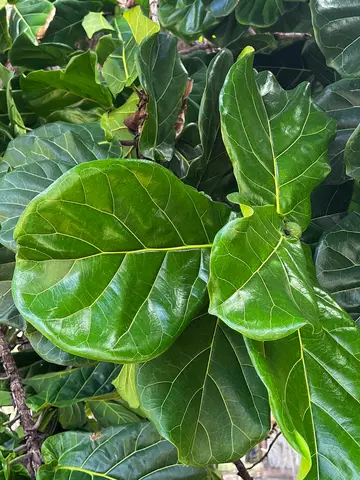
- Fiddle-leaf fig: Another indoor fig, with large, wavy, violin-shaped leaves. Compare side by side →
- Pará rubber tree (Hevea brasiliensis): The true source of natural rubber today; a different family, with leaves of three leaflets.
- Weeping fig (Ficus benjamina): Another glossy-leaved fig grown as a potted tree, but its leaves are much smaller (6–13 cm) with a pointed tip. Rubber plant leaves are 10–35 cm, thick and oval, and each new leaf unfurls from a reddish sheath. Compare side by side →
Questions
Is the rubber plant toxic to cats?
Yes. ASPCA lists the Indian rubber plant as toxic to cats and dogs; its milky sap irritates the mouth and stomach.
Rubber plant: how do you care for it?
Light: Bright, indirect light; morning sun is good. Drops leaves in low light. Water: When the top 2–3 cm of soil are dry; never leave water in the saucer. Soil: Free-draining, humus-rich potting mix. Temperature: 15–29 °C. Sudden moves or temperature changes can make it drop leaves. Wipe dust off the leaves with a damp cloth.
Rubber plant: when and how do you prune it?
Pruning the top makes it branch.
Rubber plant: what is its scientific name?
Ficus elastica Roxb. ex Hornem., in the genus Ficus and the family Moraceae.
Sources
- Wikipedia: Ficus elastica
- World Flora Online
- Plants of the World Online (Kew) · native range (WCVP)
- GBIF · classification
- Wikidata
- ASPCA Animal Poison Control: Indian Rubber Plant
Checked: 2026-11-16. Spotted a mistake? Tell us.