Description
Form
herbaceous, annual or perennial
Height: Up to about 40 cm
Flower colour
PurplePink
Flowering
No reliable data in the sources.
Leaves
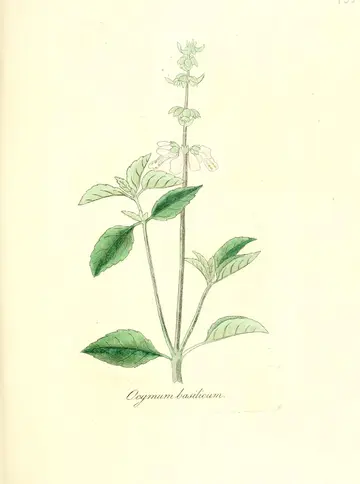
Opposite, narrowly oval, downy leaves 2–3 cm long and 1 cm wide, sparsely toothed towards the tip. The stems are square, from hairless to densely hairy. The whole plant is strongly scented when crushed.
Flowers
Small (6 mm), mauve, four-lobed flowers densely packed in widely separated whorls at the nodes.
Classification
- KingdomPlantae
- PhylumTracheophyta
- ClassMagnoliopsida
- OrderLamiales
- FamilyLamiaceae
- GenusMentha
- SpeciesMentha pulegium
Native range
According to POWO it is native to most of Europe, Macaronesia, North Africa, Ethiopia, Türkiye, Cyprus, Lebanon-Syria, Palestine, the Caucasus and Iran.
IUCN Red List status: Least concern (LC).
Culture and history
An old Turkish word
According to the Turkish Wikipedia its Turkish name, yarpuz, is an Old Turkic word defined in the 11th-century Dīwān Lughāt al-Turk as "a sweet-smelling herb, wild mint".
Toxicity
According to Wikipedia pennyroyal is toxic to the liver and has caused some deaths. There is no ASPCA entry.
In an emergency call your local poison centre; for pets, contact a vet straight away. See also: plants and pets.
Look-alikes
- Spearmint (Mentha spicata): Same genus, but its leaves are 5–9 cm long and its flowers are in slender spikes at the stem tips. Pennyroyal leaves are 2–3 cm long and its flowers sit in separate whorls along the stems. Compare side by side →
Questions
Is pennyroyal the same as mint?
It is a mint, but a different species from spearmint. Pennyroyal (Mentha pulegium) has smaller leaves and flowers in separate whorls along the stem; according to Wikipedia it is toxic to the liver.
Pennyroyal: what is its scientific name?
Mentha pulegium L., in the genus Mentha and the family Lamiaceae.
Sources
- Wikipedia: Mentha pulegium
- Plants of the World Online (Kew) · native range (WCVP)
- GBIF · classification
- Wikidata
Checked: 2026-11-24. Spotted a mistake? Tell us.