Description
Form
herb, perennial, evergreen
Height: 30–60 cm
Flower colour
White
Flowering
No reliable data in the sources.
Habitat
Leaves
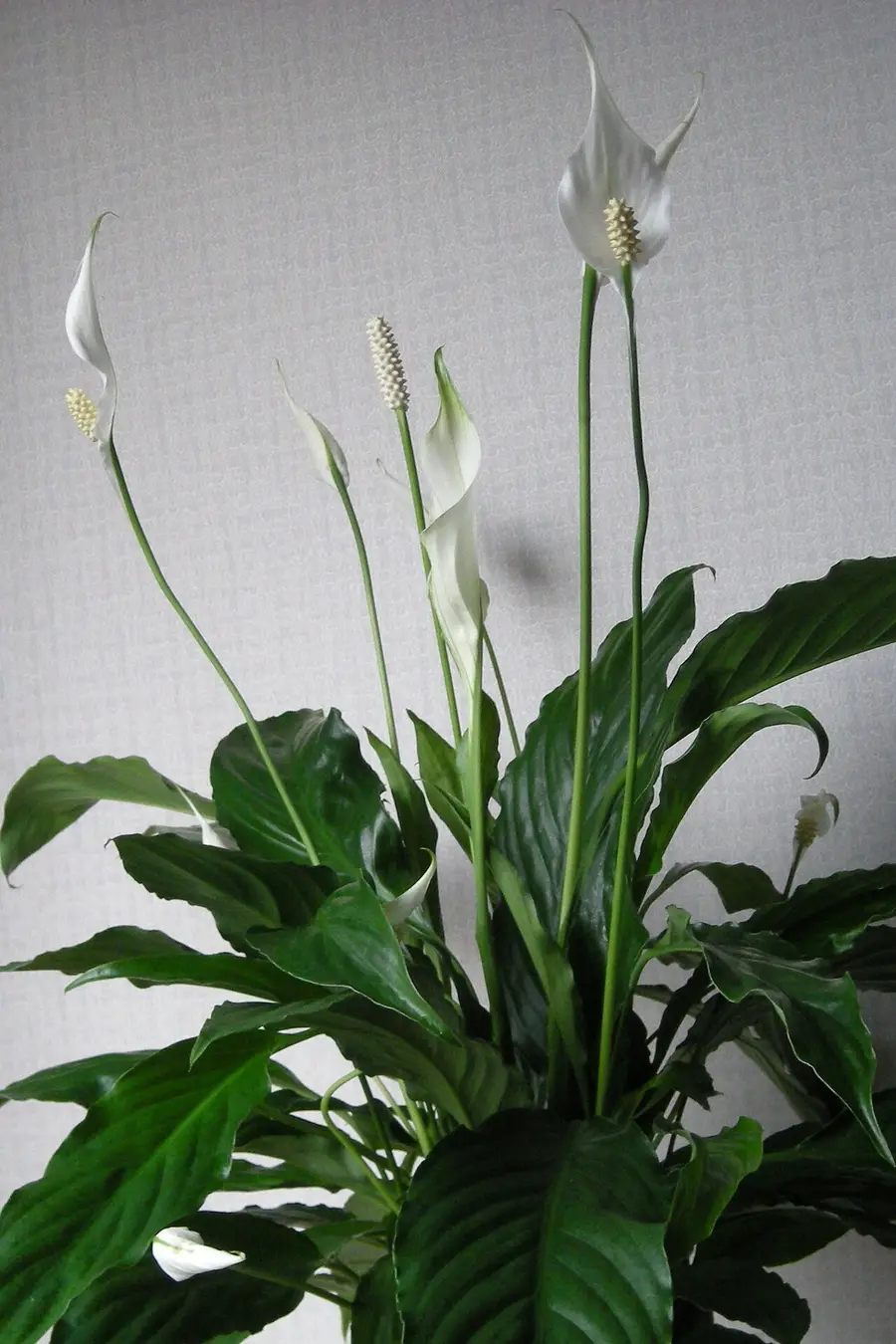
Glossy, dark green, lance-shaped leaves on long stalks.
Flowers
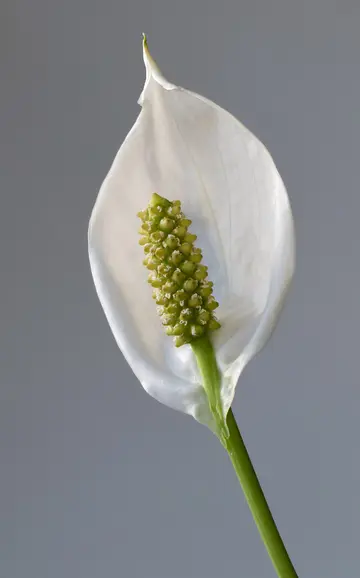
A white spathe around a cream spadix; it turns green as it ages.
Fruit and seeds
Small berries; rarely formed indoors.
Classification
- KingdomPlantae
- PhylumTracheophyta
- ClassLiliopsida
- OrderAlismatales
- FamilyAraceae
- GenusSpathiphyllum
- SpeciesSpathiphyllum wallisii
Native range
According to POWO it is native to the tropical rainforests of Colombia and Venezuela, on the humid, shady forest floor. Many "peace lilies" sold are hybrid cultivars of this and other Spathiphyllum species.
Care
Light
Medium to bright indirect light; tolerates shade.
Water
Keep lightly moist; the plant droops visibly when thirsty and recovers after watering.
Soil
Humus-rich, well-drained potting mix.
Temperature
18–27 °C; dislikes cold draughts and temperatures below 13 °C.
Brown leaf tips usually mean dry air or irregular watering.
Toxicity
ASPCA lists it as toxic to cats and dogs. It contains insoluble calcium oxalate crystals; chewing causes burning of the mouth, tongue and lips, drooling, vomiting and difficulty swallowing. It is not a true lily, so it does not cause the kidney failure in cats seen with Lilium species.
In an emergency call your local poison centre; for pets, contact a vet straight away. See also: plants and pets.
Look-alikes
- Madonna lily: A true lily. Lilies (Lilium) are extremely dangerous to cats; the peace lily is not one. Compare side by side →
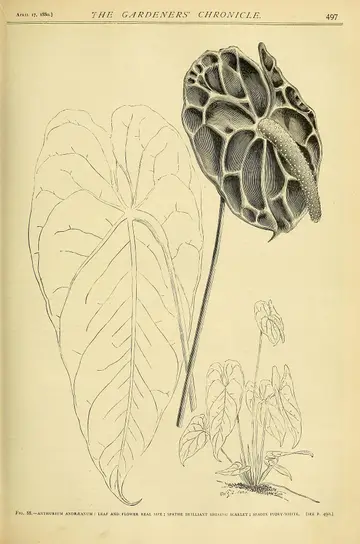
- Anthurium: A relative with a glossy, usually red, heart-shaped spathe. Compare side by side →
Questions
Is the peace lily dangerous to cats?
It is toxic but not in the way true lilies are: its calcium oxalate crystals cause painful mouth irritation and vomiting, not kidney failure.
Peace lily: how do you care for it?
Light: Medium to bright indirect light; tolerates shade. Water: Keep lightly moist; the plant droops visibly when thirsty and recovers after watering. Soil: Humus-rich, well-drained potting mix. Temperature: 18–27 °C; dislikes cold draughts and temperatures below 13 °C. Brown leaf tips usually mean dry air or irregular watering.
Peace lily: is it toxic to cats and dogs?
Toxic to cats and dogs; Mildly toxic / irritant to people. Calcium oxalate; mouth irritation.
Peace lily: what is its scientific name?
Spathiphyllum wallisii Regel, in the genus Spathiphyllum and the family Araceae.
Sources
- ASPCA Animal Poison Control: Peace lily
- Wikipedia: Spathiphyllum
- World Flora Online
- Plants of the World Online (Kew) · native range (WCVP)
- GBIF · classification
- Wikidata
- Wikipedia
Checked: 2026-11-16. Spotted a mistake? Tell us.