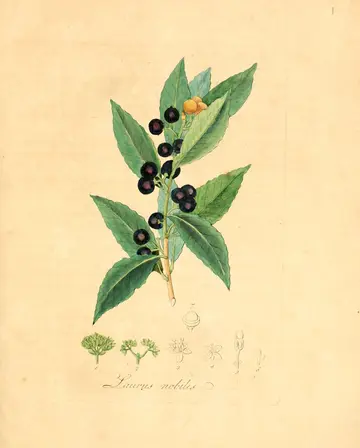
Description
Form
tree, perennial, evergreen
Height: Up to 15 m
Flower colour
WhitePink
Flowering
No reliable data in the sources.
Habitat
Leaves
Simple, oblong, glossy leaves with wavy margins, up to 20 cm long and 10 cm wide.
Flowers
White or pink flowers.
Fruit and seeds
Round, woody-shelled, edible nuts 2–3.5 cm across.
Classification
- KingdomPlantae
- PhylumTracheophyta
- ClassMagnoliopsida
- OrderProteales
- FamilyProteaceae
- GenusMacadamia
- SpeciesMacadamia integrifolia
Native range
According to POWO it is native only to Queensland and New South Wales in Australia.
IUCN Red List status: Vulnerable (VU).
Toxicity
ASPCA lists macadamia as toxic to dogs; the toxic principle is unknown. Signs in dogs are depression, weakness (especially of the rear legs), vomiting and tremors.
In an emergency call your local poison centre; for pets, contact a vet straight away. See also: plants and pets.
Look-alikes
- Common hazel (Corylus avellana): Also a round, hard-shelled nut, but it grows on a deciduous shrub in groups of two to four inside a leafy, fringed husk, and its leaves are softly hairy and double-toothed. Compare side by side →
Questions
Are macadamia nuts toxic to dogs?
Yes. ASPCA lists macadamia as toxic to dogs; signs include weakness (especially of the rear legs), vomiting and tremors.
Macadamia: what is its scientific name?
Macadamia integrifolia Maiden & Betche, in the genus Macadamia and the family Proteaceae.
Sources
- Wikipedia: Macadamia integrifolia
- ASPCA Animal Poison Control: Macadamia Nut
- World Flora Online
- Plants of the World Online (Kew) · native range (WCVP)
- GBIF · classification
- Wikidata
Checked: 2026-11-22. Spotted a mistake? Tell us.