Telling them apart
Common hazel vs Macadamia
Common hazel (Corylus avellana) and Macadamia (Macadamia integrifolia) look similar enough to be confused. They belong to different families: Betulaceae (birch family) and Proteaceae (protea family).
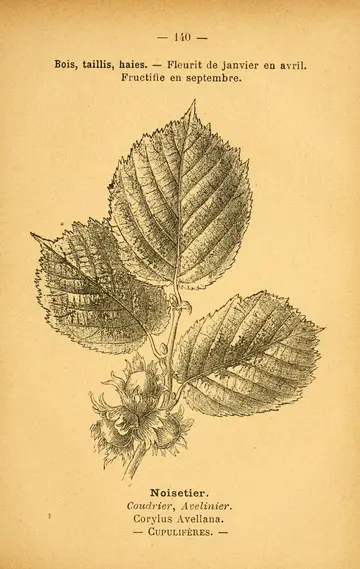
Image wanted. A licensed image will be added when found.
How to tell them apart
- Common hazel: Also a round, hard-shelled nut, but it grows on a deciduous shrub in groups of two to four inside a leafy, fringed husk, and its leaves are softly hairy and double-toothed.
Side by side
| Common hazel | Macadamia | |
|---|---|---|
| Scientific name | Corylus avellana | Macadamia integrifolia |
| Family | Betulaceae (birch family) | Proteaceae (protea family) |
| Form | shrub, perennial, deciduous | tree, perennial, evergreen |
| Height | 3–8 m | Up to 15 m |
| Flower colour | Yellow, Red | White, Pink |
| Origin | Europe and western Asia | Eastern Australia |
| Toxicity | — | Dogs: toxic |
| Flowering | — | |
| Leaves | Round, pointed, double-toothed, softly hairy leaves. | Simple, oblong, glossy leaves with wavy margins, up to 20 cm long and 10 cm wide. |
| Flowers | Male flowers are yellow hanging catkins at the end of winter, shedding clouds of pollen. Female flowers are tiny and bud-like, showing only their red stigmas. | White or pink flowers. |
| Fruit and seeds | A hard-shelled nut in a leafy, fringed husk, usually two to four together. | Round, woody-shelled, edible nuts 2–3.5 cm across. |
All pairs: look-alike plants · Full pages: Common hazel, Macadamia