Description
Form
herbaceous, perennial
Height: 15–30 cm
Flower colour
BluePurplePinkWhite
Flowering
March–April
Habitat
Leaves
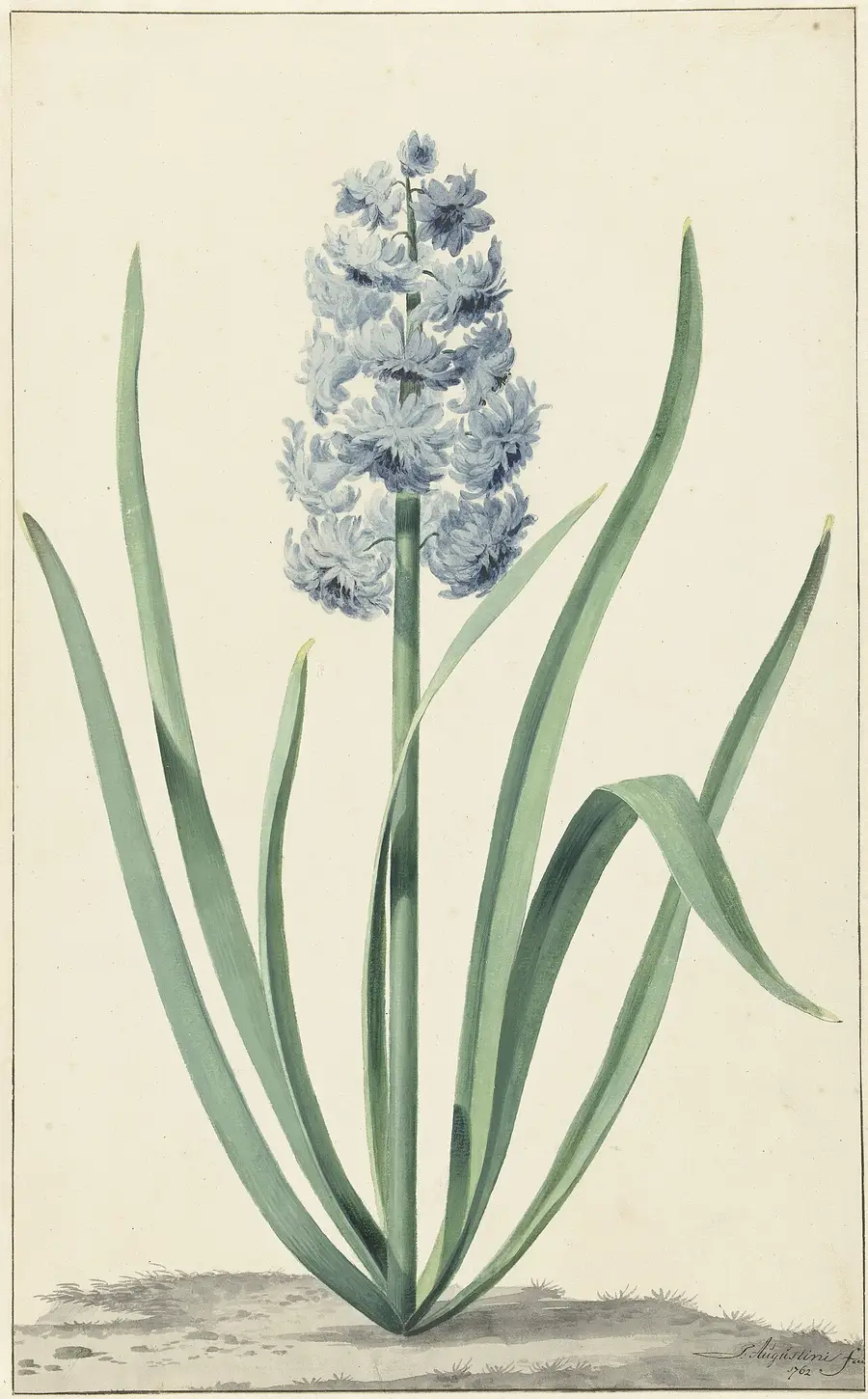
4–6 strap-shaped, glossy green, fleshy leaves from the bulb.
Flowers
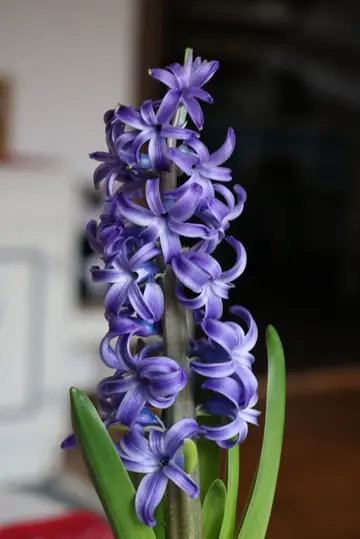
Bell-shaped, six-lobed flowers in a dense spike on a single stalk. Wild plants have sparse, pale blue flowers; garden varieties are much denser, in blue, purple, pink, white or yellow.
Fruit and seeds
A three-chambered capsule.
Classification
- KingdomPlantae
- PhylumTracheophyta
- ClassLiliopsida
- OrderAsparagales
- FamilyAsparagaceae
- GenusHyacinthus
- SpeciesHyacinthus orientalis
Native range
According to POWO its native range is Türkiye, Lebanon–Syria, Palestine and Iraq, where wild plants grow on rocky slopes and in scrub. As a garden plant it has been taken all over the world.
Growing conditions
Light
Sun or partial shade.
Water
Moderate while growing; dry after the leaves yellow.
Soil
Free-draining, humus-rich soil.
Temperature
Needs a few weeks of winter cold to flower.
Plant bulbs in autumn. It can also be flowered in a pot or a hyacinth glass of water.
Culture and history
In Ottoman gardens
The hyacinth was as beloved as the tulip in Ottoman gardens. It reached Europe via Istanbul in the 16th century, and by the 18th century hundreds of varieties were grown in the Netherlands.
Toxicity
ASPCA lists hyacinth as toxic to cats, dogs and horses; the poison is concentrated in the bulb. Signs include severe vomiting, sometimes bloody diarrhoea, depression and tremors. In people, handling the bulbs can cause itching and skin irritation from calcium oxalate crystals.
In an emergency call your local poison centre; for pets, contact a vet straight away. See also: plants and pets.
Look-alikes
- Grape hyacinths (Muscari): Much smaller, with round or urn-shaped flowers narrowed at the mouth. Compare side by side →
Questions
Are hyacinths toxic to cats?
Yes. ASPCA lists hyacinth as toxic to cats, dogs and horses; the bulb is the most dangerous part.
When should hyacinth bulbs be planted?
In autumn, in October–November; they need winter cold to flower.
Hyacinth: how do you grow it?
Light: Sun or partial shade. Water: Moderate while growing; dry after the leaves yellow. Soil: Free-draining, humus-rich soil. Temperature: Needs a few weeks of winter cold to flower. Plant bulbs in autumn. It can also be flowered in a pot or a hyacinth glass of water.
Hyacinth: what is its scientific name?
Hyacinthus orientalis L., in the genus Hyacinthus and the family Asparagaceae.
Sources
- Wikipedia: Hyacinthus orientalis
- World Flora Online
- Plants of the World Online (Kew) · native range (WCVP)
- GBIF · classification
- Wikidata
- ASPCA Animal Poison Control: Hyacinth (Hyacinthus orientalis)
Checked: 2026-11-16. Spotted a mistake? Tell us.