
Description
Form
tree, perennial, deciduous
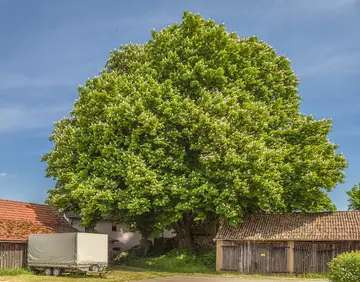
Height: Up to 39 m
Flower colour
White
Flowering
April–May
Habitat
Leaves
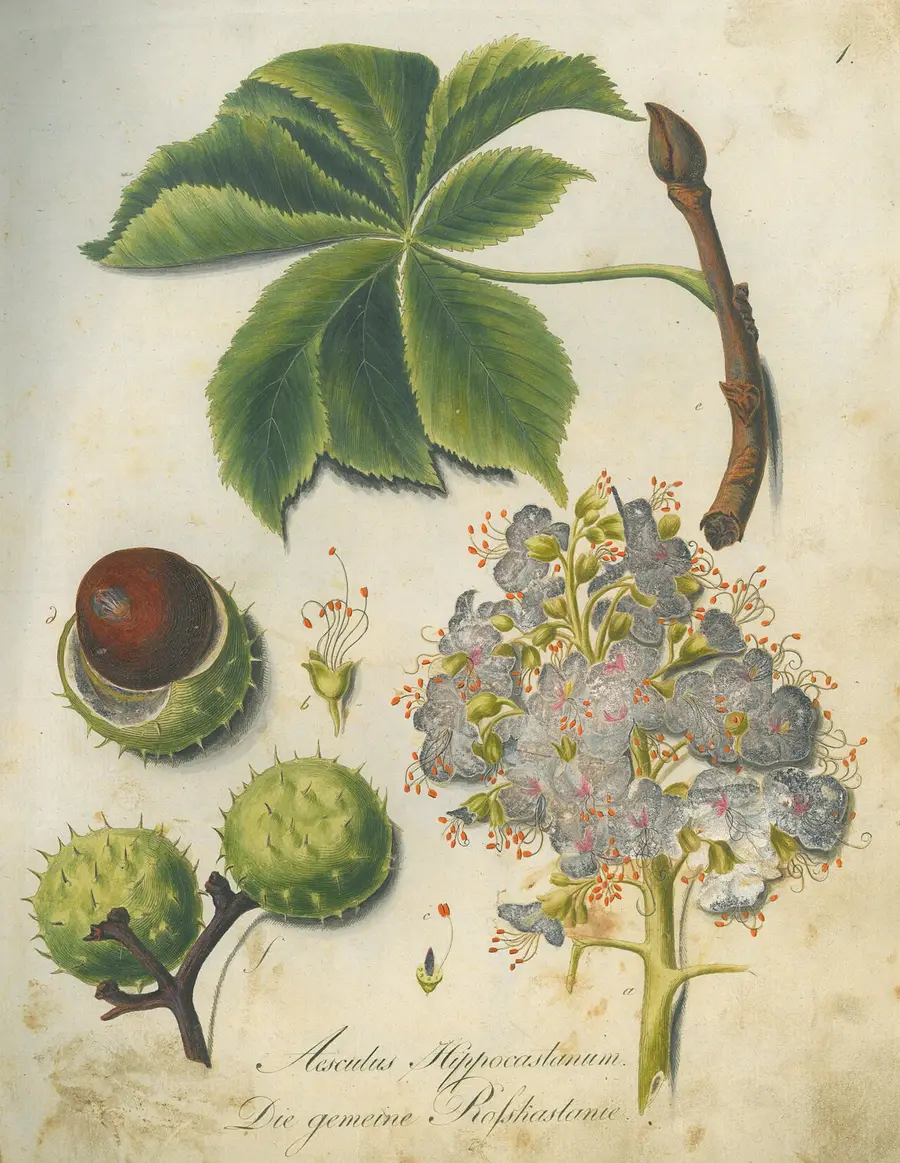
Hand-shaped compound leaves of 5–7 large, toothed leaflets spreading from one point.
Flowers
White flowers in upright, candle-shaped spikes; each has a blotch in the centre that turns from yellow to red after pollination.
Fruit and seeds
One or two glossy brown seeds in a spiny green husk. They are not edible.

Classification
- KingdomPlantae
- PhylumTracheophyta
- ClassMagnoliopsida
- OrderSapindales
- FamilySapindaceae
- GenusAesculus
- SpeciesAesculus hippocastanum
Native range
According to POWO its native range is Albania, Bulgaria, Greece and the western Balkans; POWO also includes Türkiye and Turkmenistan. Many other sources limit the wild populations to mountain valleys of the Balkans.
IUCN Red List status: Vulnerable (VU) (assessed 2017).
Culture and history
From Istanbul to Europe
The horse chestnut reached western Europe with seeds sent from Istanbul to Vienna in 1576 and quickly became one of the best-loved park trees. Its name is often linked to the Ottoman practice of feeding the seeds to horses.
Toxicity
The seeds, leaves and bark contain aesculin and other saponins; eating them can cause vomiting, diarrhoea, weakness and nervous signs. ASPCA lists the buckeye genus (entry under Aesculus glabra) as toxic to cats, dogs and horses.
In an emergency call your local poison centre; for pets, contact a vet straight away. See also: plants and pets.
Look-alikes
- Sweet chestnut: The edible chestnut. Its husk is covered in dense, fine spines and its nut has a pointed, hairy tip; its leaves are single and long. Compare side by side →
Questions
Are horse chestnuts edible?
No. Conkers contain saponins and are poisonous; the edible chestnut comes from a different tree, the sweet chestnut.
Horse chestnut: when does it flower?
In spring: April–May. Months are for temperate northern-hemisphere climates and shift with altitude and weather.
Horse chestnut: is it toxic to cats and dogs?
Toxic to cats and dogs and people. Saponins (aesculin); seeds not edible.
Horse chestnut: what is its scientific name?
Aesculus hippocastanum L., in the genus Aesculus and the family Sapindaceae.
Sources
- Wikipedia: Aesculus hippocastanum
- World Flora Online
- Plants of the World Online (Kew) · native range (WCVP)
- GBIF · classification
- Wikidata
- ASPCA Animal Poison Control: Horse Chestnut (kayıt: Aesculus glabra)
Checked: 2026-11-16. Spotted a mistake? Tell us.