Description
Form
herbaceous, biennial or short-lived perennial
Height: 1.5–2.5 m
Flower colour
PinkRedWhiteYellow
Flowering
June–August
Habitat
Leaves
Large, heart-shaped or shallowly lobed, rough-hairy leaves.
Flowers
Five-petalled, cup-shaped flowers about 13 cm across lined up along the upright stem, in white, yellow, orange, pink and dark red. There are double forms.
Fruit and seeds
A flat, round fruit made of one-seeded segments arranged in a ring.
Classification
- KingdomPlantae
- PhylumTracheophyta
- ClassMagnoliopsida
- OrderMalvales
- FamilyMalvaceae
- GenusAlcea
- SpeciesAlcea rosea
Native range
POWO gives Türkiye as its only native area. Wikipedia, however, says it was brought to Europe from south-western China in or before the 15th century. As a very old garden plant its true origin is debated.
Growing conditions
Light
Full sun.
Water
Moderate.
Soil
Not fussy.
Temperature
Cold-hardy.
Easily grown from seed and self-seeds. Rust is common on the leaves, and slugs can eat young plants.
Culture and history
The English name
According to Wikipedia the English name "hollyhock" comes from "holyoke", the name given to the plant by the 16th-century English herbalist William Turner.
Toxicity
ASPCA lists hollyhock as non-toxic to cats, dogs and horses.
In an emergency call your local poison centre; for pets, contact a vet straight away. See also: plants and pets.
Look-alikes
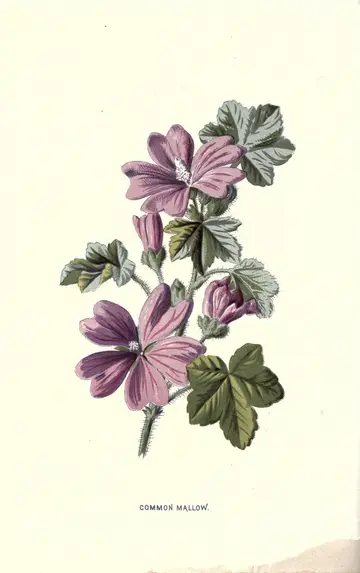
- Common mallow: Same family; much shorter, with small, pinkish-purple flowers striped darker. Compare side by side →
- Marsh mallow (Althaea officinalis): The plant usually called simply "hatmi" in Turkish; it has velvety-hairy leaves and small, pale pink flowers and grows in damp places.
Questions
Is hollyhock toxic to cats?
No. ASPCA lists hollyhock as non-toxic to cats, dogs and horses.
Common hollyhock: when does it flower?
In summer: June–August. Months are for temperate northern-hemisphere climates and shift with altitude and weather.
Common hollyhock: how do you grow it?
Light: Full sun. Water: Moderate. Soil: Not fussy. Temperature: Cold-hardy. Rust is common on the leaves, and slugs can eat young plants.
Common hollyhock: how do you propagate it?
Easily grown from seed and self-seeds.
Common hollyhock: what is its scientific name?
Alcea rosea L., in the genus Alcea and the family Malvaceae.
Sources
- Wikipedia: Alcea rosea
- ASPCA: Hollyhock
- World Flora Online
- Plants of the World Online (Kew) · native range (WCVP)
- GBIF · classification
- Wikidata
Checked: 2026-11-17. Spotted a mistake? Tell us.