Description
Form
herbaceous, perennial, deciduous
Height: 50–70 cm
Flower colour
PinkWhiteRed
Flowering
May–June
Habitat
Leaves
Dark green leaves 20–40 cm long, deeply divided (usually into nine lobes); the plant dies back to the ground in autumn.
Flowers
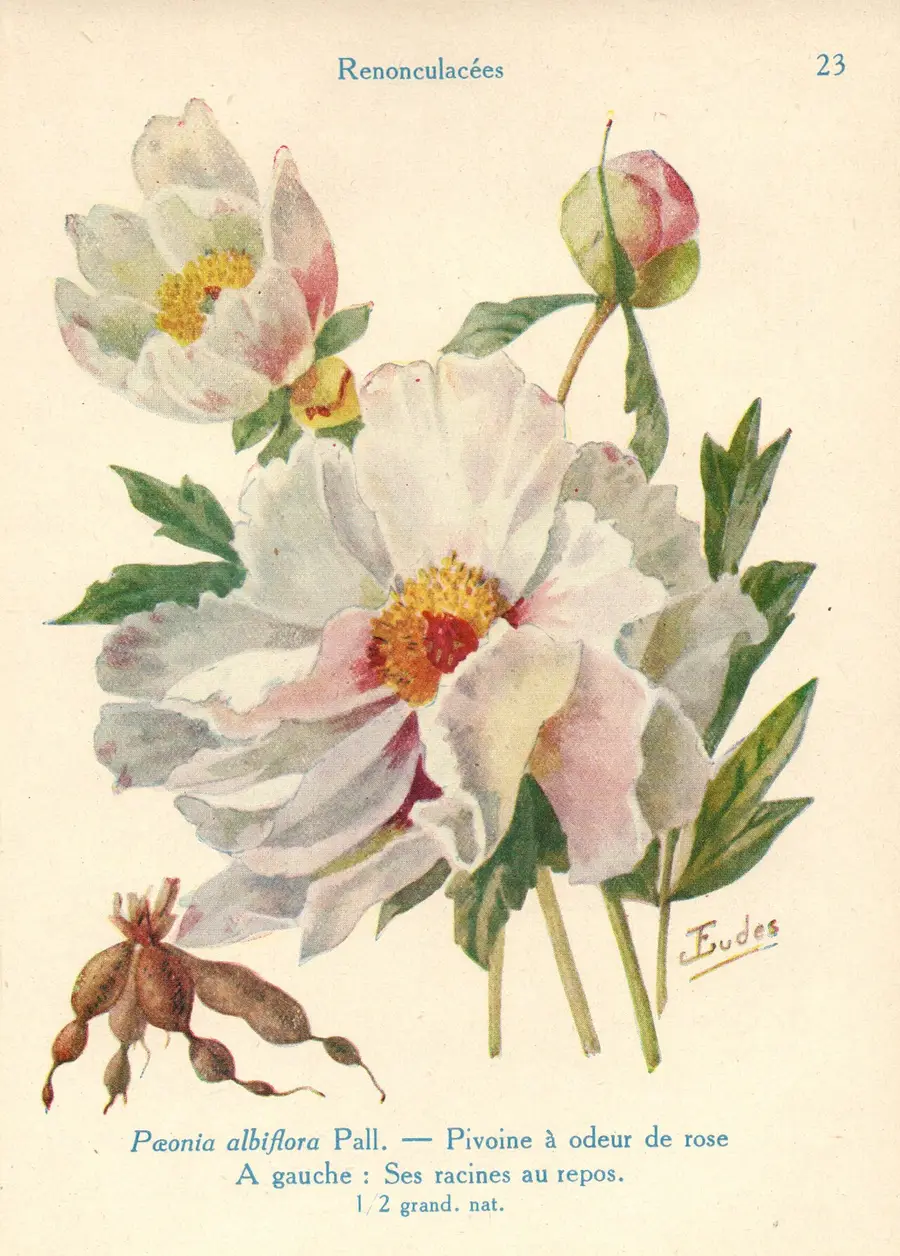
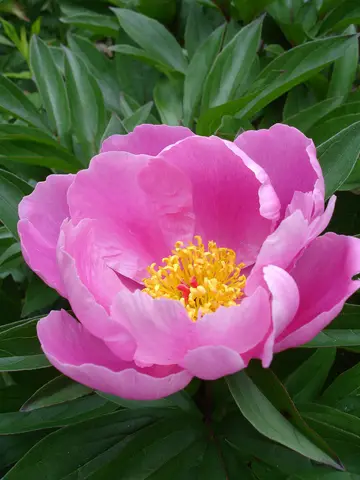
Bowl- or cup-shaped fragrant flowers 8–16 cm across. The wild plant has 5–10 white, pink or deep red petals around yellow stamens; most cultivars are double, their stamens turned into extra petals.
Fruit and seeds
Thick, curved capsules (follicles).
Classification
- KingdomPlantae
- PhylumTracheophyta
- ClassMagnoliopsida
- OrderSaxifragales
- FamilyPaeoniaceae
- GenusPaeonia
- SpeciesPaeonia lactiflora
Native range
According to POWO it is native to northern and central China, Inner Mongolia, Mongolia, Manchuria and the Russian Far East, growing on dry, open, stony slopes, by streams and along open forest edges. It has been grown as an ornamental in China since the 7th century.
Growing conditions
Light
Full sun or light shade.
Water
Moderate.
Soil
Deep, fertile, free-draining soil.
Temperature
Very hardy; needs a cold winter to flower.
Planted too deep, it will not flower; the buds should be only a few centimetres below the surface. It dislikes being moved and can live in one spot for decades.
Culture and history
Minister of flowers
In China this species is called the "minister of flowers", while the title "king of flowers" belongs to the tree peony.
Ants on the buds
Ants are often seen on peony buds because the buds secrete a sweet liquid. Many people believe ants help the flowers open, but peonies open without them.
Journey to Europe
It reached England in the mid-18th century, first known as the "white peony" (P. albiflora), and became the ancestor of most garden peonies. Renoir, Monet, Manet and Van Gogh all painted peonies.
Toxicity
ASPCA lists peony (entry under Paeonia officinalis) as toxic to cats, dogs and horses. The toxic principle is paeonol; signs are vomiting, diarrhoea and depression.
In an emergency call your local poison centre; for pets, contact a vet straight away. See also: plants and pets.
Look-alikes
- Tree peony (Paeonia suffruticosa): A woody shrub whose stems do not die back in winter.
- Damask rose (Rosa × damascena): It also has large, strongly scented, double pink flowers, but it is a prickly shrub whose leaves are made of 5–7 toothed leaflets. Peony is herbaceous: its leaves are deeply divided and its top growth dies back in autumn. Compare side by side →
Questions
Why won't my peony flower?
The usual reasons are planting too deep, too little sun or a recent move. Newly planted peonies can take a few years to flower.
Chinese peony: when does it flower?
In spring and summer: May–June. Months are for temperate northern-hemisphere climates and shift with altitude and weather.
Chinese peony: how do you grow it?
Light: Full sun or light shade. Water: Moderate. Soil: Deep, fertile, free-draining soil. Temperature: Very hardy; needs a cold winter to flower. Planted too deep, it will not flower; the buds should be only a few centimetres below the surface. It dislikes being moved and can live in one spot for decades.
Chinese peony: is it toxic to cats and dogs?
Toxic to cats and dogs. Paeonol: vomiting, diarrhoea.
Chinese peony: what is its scientific name?
Paeonia lactiflora Pall., in the genus Paeonia and the family Paeoniaceae.
Sources
- Wikipedia: Paeonia lactiflora
- World Flora Online
- Plants of the World Online (Kew) · native range (WCVP)
- GBIF · classification
- Wikidata
- ASPCA Animal Poison Control: Peony (kayıt: Paeonia officinalis)
Checked: 2026-11-16. Spotted a mistake? Tell us.