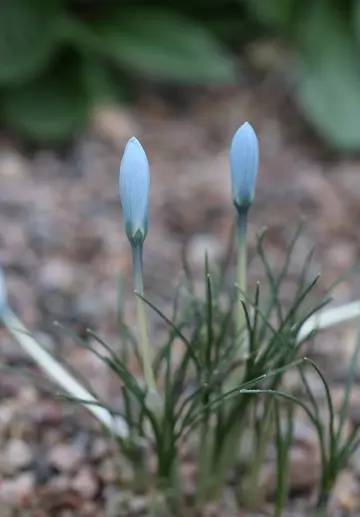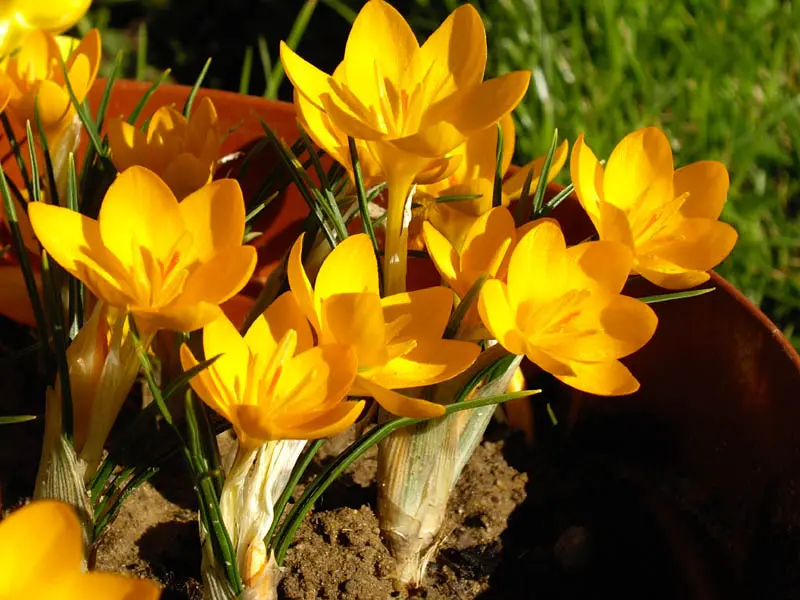
Description
Form
herb (corm), perennial
Height: 5–10 cm
Flower colour
YellowOrange
Flowering
February–April
Habitat
Leaves
Three or four very narrow, grass-like leaves with a white central stripe appear with the flowers.
Flowers
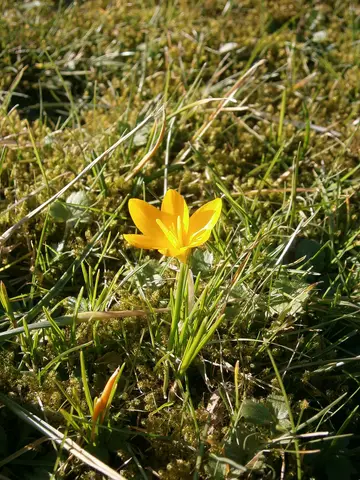
Goblet-shaped, bright orange-yellow flowers just above the ground; one corm can produce several.
Fruit and seeds
A small capsule close to the ground.
Classification
- KingdomPlantae
- PhylumTracheophyta
- ClassLiliopsida
- OrderAsparagales
- FamilyIridaceae
- GenusCrocus
- SpeciesCrocus ancyrensis
Native range
According to POWO it is native only to Türkiye, on steppe, rocky slopes and open scrub at 1,000–1,600 m. It has escaped from gardens and naturalised locally in Germany and Britain.
Culture and history
The name
"Ancyrensis" comes from Ankyra, the ancient name of Ankara, where the species was first collected.
Look-alikes
- Autumn crocus (Colchicum): Highly poisonous. Most species flower in autumn, have much broader leaves and six stamens in each flower (crocuses have three).
- Saffron crocus (Crocus sativus): An autumn-flowering purple crocus whose red stigmas are the spice saffron. Compare side by side →
Questions
Where does the Ankara crocus grow?
Only in Türkiye, on steppe and rocky slopes of central and northern Anatolia at 1,000–1,600 m.
Ankara crocus: when does it flower?
In winter and spring: February–April. Months are for temperate northern-hemisphere climates and shift with altitude and weather.
Ankara crocus: what is its scientific name?
Crocus ancyrensis (Herb.) Maw, in the genus Crocus and the family Iridaceae.
Sources
- Wikipedia: Crocus ancyrensis
- World Flora Online
- Plants of the World Online (Kew) · native range (WCVP)
- GBIF · classification
- Wikidata
Checked: 2026-11-16. Spotted a mistake? Tell us.