Description
Form
shrub, perennial, deciduous
Height: 1–2 m
Flower colour
Pink
Flowering
May–June
Habitat
Leaves
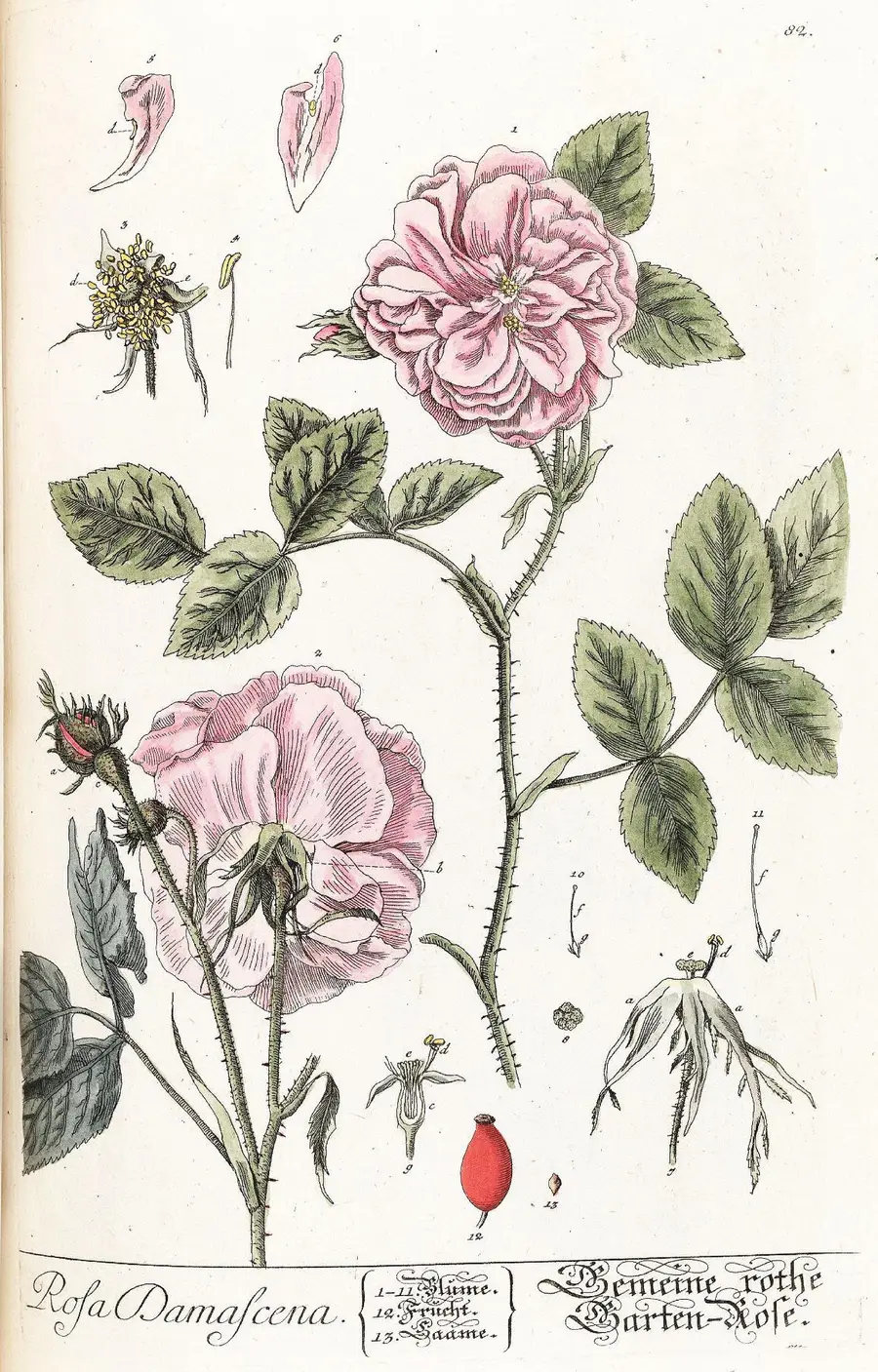
Pinnate leaves with 5–7 toothed, slightly hairy leaflets; stems carry curved prickles.
Flowers
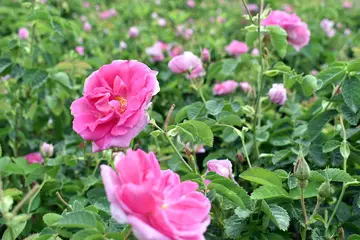
Semi-double, strongly scented pink flowers in clusters, opening over a few weeks in late spring.
Fruit and seeds
Red, oval hips.
Classification
- KingdomPlantae
- PhylumTracheophyta
- ClassMagnoliopsida
- OrderRosales
- FamilyRosaceae
- GenusRosa
- SpeciesRosa × damascena
Native range
A cultivated hybrid with no natural range. Genetic studies show it descends from crosses between Rosa gallica and Rosa moschata. It has been grown for centuries in Iran, Anatolia and the Balkans.
Growing conditions
Light
Full sun, with at least 6 hours of direct sun a day.
Water
Regular watering while young; established plants tolerate dry spells.
Soil
Deep, well-drained soil.
Temperature
Hardy to hard frost.
Petals for oil are hand-picked in the early morning, when their scent is strongest.
Culture and history
A fragrant harvest
Several tonnes of petals are needed to distil a single kilogram of rose oil, which is why it is one of the most expensive raw materials in perfumery.
Toxicity
ASPCA lists roses (Rosa species) as non-toxic to cats, dogs and horses. The prickles can injure mouths and paws.
In an emergency call your local poison centre; for pets, contact a vet straight away. See also: plants and pets.
Look-alikes
- Dog rose: A wild rose with single, pale pink flowers and bright red hips; it is not grown for oil. Compare side by side →
Questions
Where does rose oil come from?
Mostly from the damask rose, distilled from freshly picked petals. The main producing areas are Isparta in Türkiye and the Kazanlak valley in Bulgaria.
Are roses toxic to cats?
No. ASPCA lists roses as non-toxic to cats, dogs and horses, though the prickles can cause injuries.
Damask rose: when does it flower?
In spring and summer: May–June. Months are for temperate northern-hemisphere climates and shift with altitude and weather.
Damask rose: how do you grow it?
Light: Full sun, with at least 6 hours of direct sun a day. Water: Regular watering while young; established plants tolerate dry spells. Soil: Deep, well-drained soil. Temperature: Hardy to hard frost. Petals for oil are hand-picked in the early morning, when their scent is strongest.
Damask rose: what is its scientific name?
Rosa × damascena Herrm., in the genus Rosa and the family Rosaceae.
Sources
- ASPCA Animal Poison Control: Rose
- Wikipedia: Rosa × damascena
- World Flora Online
- Plants of the World Online (Kew) · native range (WCVP)
- GBIF · classification
- Wikidata
Checked: 2026-11-16. Spotted a mistake? Tell us.