Description
Form
fern, perennial, evergreen
Height: Fronds 50–90 cm
Flowering
No reliable data in the sources.
Habitat
Leaves
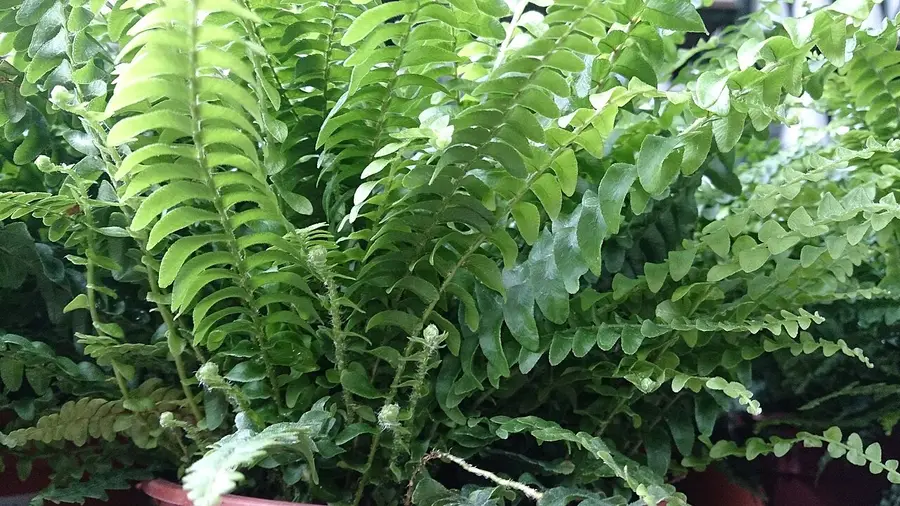
Long, arching, feather-like fronds with many small leaflets; spore cases sit on the undersides.
Flowers
Ferns do not flower; they reproduce by spores.
Classification
- KingdomPlantae
- PhylumTracheophyta
- ClassPolypodiopsida
- OrderPolypodiales
- FamilyNephrolepidaceae
- GenusNephrolepis
- SpeciesNephrolepis exaltata
Native range
According to POWO it is native to Florida, the Caribbean, Mexico, Central America and the tropical parts of South America.
IUCN Red List status: Least concern (LC).
Care
Light
Bright, indirect light.
Water
Keep evenly moist; never let it dry out.
Soil
Humus-rich, moisture-retentive but free-draining mix.
Temperature
16–24 °C.
Needs high humidity; leaflets drop in dry air.
Toxicity
ASPCA lists the Boston fern as non-toxic to cats and dogs.
In an emergency call your local poison centre; for pets, contact a vet straight away. See also: plants and pets.
Look-alikes
- Asparagus fern (Asparagus setaceus, A. densiflorus): Not a true fern but a relative of asparagus; its berries are toxic to pets.
Questions
Is the Boston fern safe for cats?
Yes. ASPCA lists it as non-toxic to cats and dogs.
Boston fern: how do you care for it?
Light: Bright, indirect light. Water: Keep evenly moist; never let it dry out. Soil: Humus-rich, moisture-retentive but free-draining mix. Temperature: 16–24 °C. Needs high humidity; leaflets drop in dry air.
Boston fern: is it toxic to cats and dogs?
Non-toxic to cats and dogs. Non-toxic.
Boston fern: what is its scientific name?
Nephrolepis exaltata (L.) Schott, in the genus Nephrolepis and the family Nephrolepidaceae.
Sources
- Wikipedia: Nephrolepis exaltata
- World Flora Online
- Plants of the World Online (Kew) · native range (WCVP)
- GBIF · classification
- Wikidata
- ASPCA Animal Poison Control: Boston Fern (Nephrolepis exaltata bostoniensis)
Checked: 2026-11-16. Spotted a mistake? Tell us.