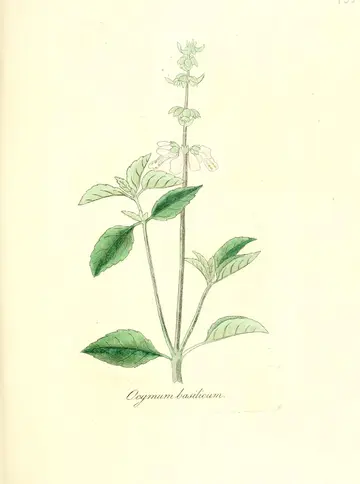
Description
Form
herbaceous, annual
Height: Up to 60 cm
Flower colour
BluePinkWhite
Flowering
June–September
Leaves
Alternate, simple leaves 5–15 cm long; the whole plant is bristly.
Flowers
Flowers with five narrow, triangular, pointed petals, most often blue, sometimes pink; white-flowered forms are also grown. Many open at once along coiled (scorpioid) clusters.
Classification
- KingdomPlantae
- PhylumTracheophyta
- ClassMagnoliopsida
- OrderBoraginales
- FamilyBoraginaceae
- GenusBorago
- SpeciesBorago officinalis
Native range
According to POWO it is native to Portugal, Spain, the Balearic Islands, France, Corsica, Sardinia, Italy, Sicily, the Balkans, Greece, Crete and North Africa from Morocco to Libya. It has been introduced to Türkiye.
Culture and history
Dominant blue
According to Wikipedia white-flowered types are also cultivated, but blue flower colour is genetically dominant over white.
Toxicity
ASPCA lists borage as toxic to cats, dogs and horses; the toxic principles are tannins and mucilage, and signs are vomiting, diarrhoea and dermatitis. According to Wikipedia the plant contains small amounts of pyrrolizidine alkaloids.
In an emergency call your local poison centre; for pets, contact a vet straight away. See also: plants and pets.
Questions
Is borage toxic to cats and dogs?
Yes. ASPCA lists borage as toxic to cats, dogs and horses; signs are vomiting, diarrhoea and skin irritation.
Borage: when does it flower?
In summer and autumn: June–September. Months are for temperate northern-hemisphere climates and shift with altitude and weather.
Borage: what is its scientific name?
Borago officinalis L., in the genus Borago and the family Boraginaceae.
Sources
- Wikipedia: Borago officinalis
- ASPCA Animal Poison Control: Borage (Borago officinalis)
- Plants of the World Online (Kew) · native range (WCVP)
- GBIF · classification
- Wikidata
- Wikipedia
Checked: 2026-11-24. Spotted a mistake? Tell us.