Telling them apart
Black pine vs Turkish pine
Black pine (Pinus nigra) and Turkish pine (Pinus brutia) look similar enough to be confused. Both belong to the same family, Pinaceae (pine family).
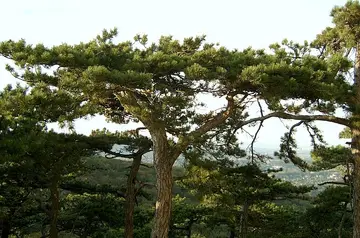
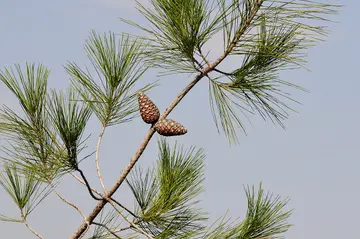
How to tell them apart
- Turkish pine: Grows near the coast; its bark is reddish and its needles slender and light green.
- Black pine: Grows higher in the mountains; its needles are stiffer and darker, its bark grey-black.
Side by side
| Black pine | Turkish pine | |
|---|---|---|
| Scientific name | Pinus nigra | Pinus brutia |
| Family | Pinaceae (pine family) | Pinaceae (pine family) |
| Form | tree, perennial, evergreen | tree, perennial, evergreen |
| Height | 20–55 m | 20–35 m |
| Flower colour | — | — |
| Origin | Southern Europe, Anatolia and North Africa | Eastern Mediterranean |
| Toxicity | — | — |
| Flowering | — | — |
| Leaves | Needles in pairs, mostly 10–18 cm long, stiff and dark green. | Needles in pairs, 10–18 cm long, slender and light green. |
| Flowers | Pines do not flower; in spring the male cones shed yellow pollen. | Pines do not flower; in spring the male cones shed yellow pollen. |
| Fruit and seeds | Egg-shaped, glossy brown cones 5–10 cm long, ripening about 18 months after pollination. | Cones 5–10 cm long, almost stalkless and pointing forwards; they can stay closed on the branch for years and open after fire. |
All pairs: look-alike plants · Full pages: Black pine, Turkish pine