Description
Form
herbaceous, biennial or short-lived perennial
Height: 13–92 cm
Flower colour
RedPinkWhitePurple
Flowering
May–July
Habitat
Leaves
Opposite, lance-shaped, green or bluish-green leaves 4–10 cm long and 1–2 cm wide.
Flowers
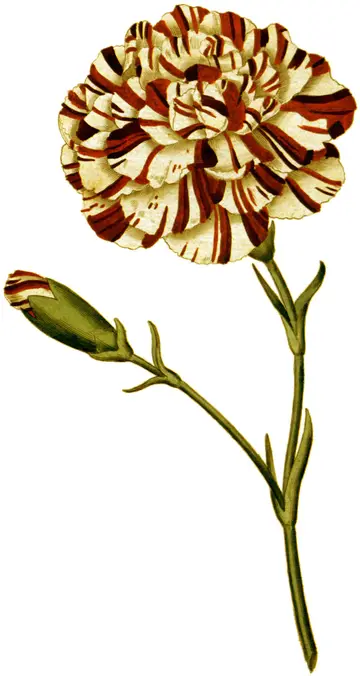
Dense, flat clusters of up to 30 flowers at the stem tips; each flower is 2–3 cm across, five-petalled and toothed at the edge, with a spicy, clove-like scent.
Fruit and seeds
A small, cylindrical capsule.
Classification
- KingdomPlantae
- PhylumTracheophyta
- ClassMagnoliopsida
- OrderCaryophyllales
- FamilyCaryophyllaceae
- GenusDianthus
- SpeciesDianthus barbatus
Native range
According to POWO it is native to the mountains of southern and central Europe from the Pyrenees to the Carpathians and the Balkans, to Thrace, and separately to north-eastern China, Korea and the far south-east of Russia.
Growing conditions
Light
Full sun or part shade.
Water
Moderate.
Soil
Free-draining, slightly limy soil.
Temperature
Hardy.
Usually flowers in its second year; can self-seed.
Culture and history
The English name
The origin of the name "sweet William" is unknown; according to Wikipedia it first appears in 1596 in the garden catalogue of the botanist John Gerard.
Look-alikes
- Carnation: Same genus, but its flowers are large and borne singly or a few together, not in dense clusters. Compare side by side →
Questions
Is sweet William a carnation?
Yes, it belongs to Dianthus, the carnation genus; it stands out for its small flowers in dense clusters.
Sweet William: when does it flower?
In spring and summer: May–July. Months are for temperate northern-hemisphere climates and shift with altitude and weather.
Sweet William: how do you grow it?
Light: Full sun or part shade. Water: Moderate. Soil: Free-draining, slightly limy soil. Temperature: Hardy. Usually flowers in its second year; can self-seed.
Sweet William: what is its scientific name?
Dianthus barbatus L., in the genus Dianthus and the family Caryophyllaceae.
Sources
- Wikipedia: Dianthus barbatus
- World Flora Online
- Plants of the World Online (Kew) · native range (WCVP)
- GBIF · classification
- Wikidata
Checked: 2026-11-17. Spotted a mistake? Tell us.