Description
Form
herbaceous, perennial, evergreen
Height: Up to 80 cm
Flower colour
RedPinkWhiteYellow
Flowering
May–July
Habitat
Leaves
Opposite, narrow, strap-like, bluish grey-green leaves up to 15 cm long on a jointed stem.
Flowers
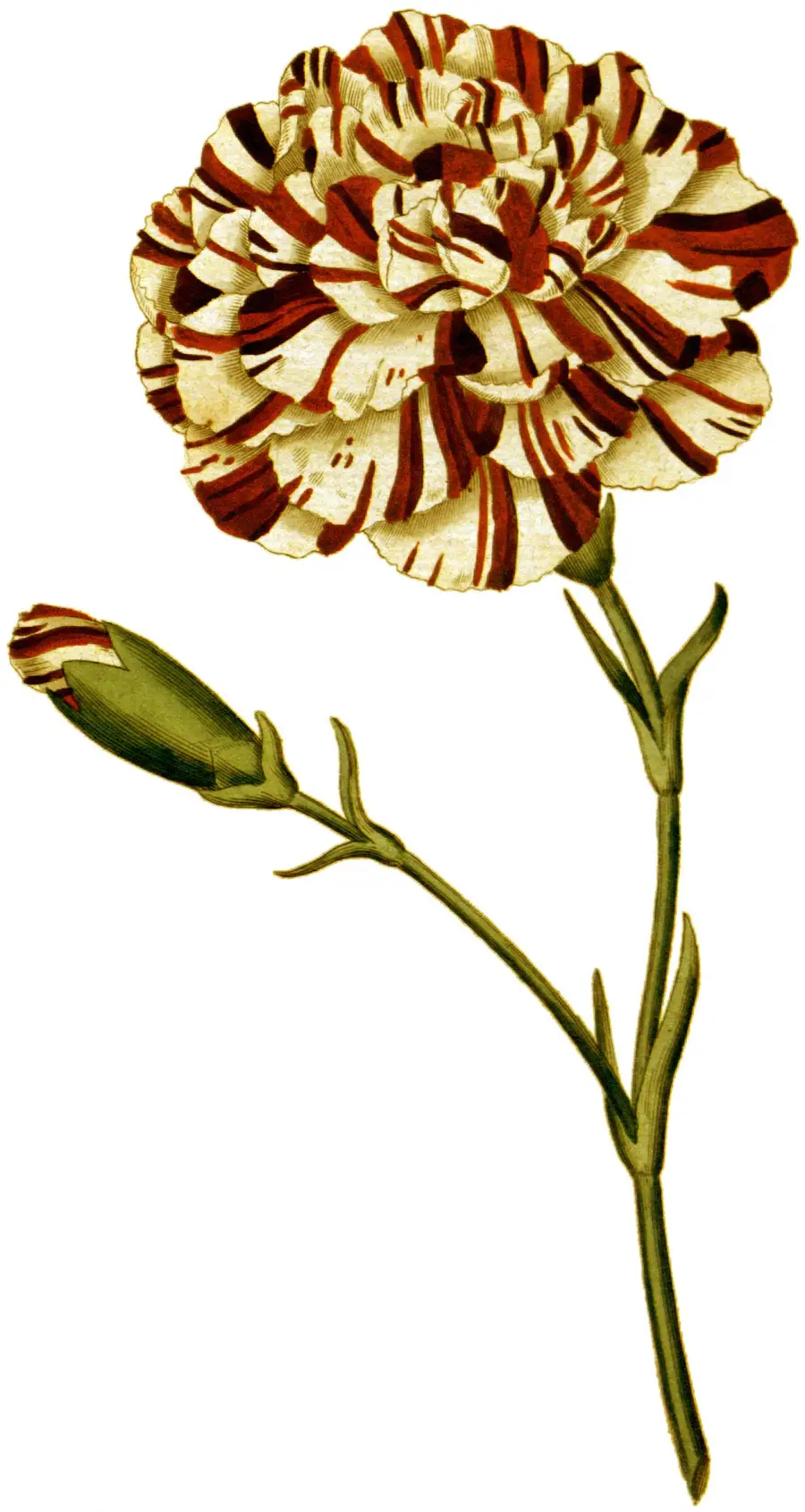
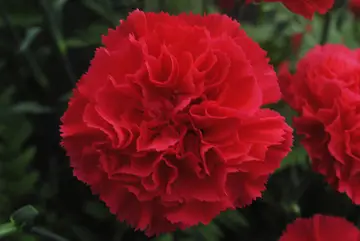
Flowers 3–5 cm across, single or up to five together, with toothed or fringed petals. The wild form is bright pinkish-purple; cultivars are usually double, in red, pink, white, yellow, green or streaked. There is no true blue carnation; blue ones are dyed. The scent recalls cloves.
Fruit and seeds
A small, cylindrical capsule.
Classification
- KingdomPlantae
- PhylumTracheophyta
- ClassMagnoliopsida
- OrderCaryophyllales
- FamilyCaryophyllaceae
- GenusDianthus
- SpeciesDianthus caryophyllus
Native range
According to POWO its native range is Greece, Albania and the western Balkans. Because it has been grown since ancient times, the exact home of its wild ancestor is debated. It is now grown worldwide as a garden and cut flower.
Growing conditions
Light
Full sun.
Water
Low to moderate; dislikes wet soil.
Soil
Free-draining, slightly limy soil.
Temperature
Likes cool summers; tolerates light frost.
Culture and history
In Ottoman art
With the tulip and the rose, the carnation is one of the most used flower motifs in Ottoman tiles, textiles and manuscript illumination.
A symbol
Portugal's 1974 revolution that ended the dictatorship is called the Carnation Revolution, after the red carnations placed in soldiers' rifle barrels.
Toxicity
ASPCA lists carnation as toxic to cats, dogs and horses; the toxic principle is unknown. Signs are mild: stomach upset and mild skin irritation.
In an emergency call your local poison centre; for pets, contact a vet straight away. See also: plants and pets.
Look-alikes
- Sweet William (Dianthus barbatus): Same genus; its small flowers form dense, flat clusters. Compare side by side →
Questions
Are carnations toxic to cats?
ASPCA lists carnations as toxic to cats, but signs are usually mild, such as vomiting and diarrhoea.
Are there blue carnations?
No carnation variety has truly blue flowers; blue carnations in florists are dyed.
Carnation: when does it flower?
In spring and summer: May–July. Months are for temperate northern-hemisphere climates and shift with altitude and weather.
Carnation: how do you grow it?
Light: Full sun. Water: Low to moderate; dislikes wet soil. Soil: Free-draining, slightly limy soil. Temperature: Likes cool summers; tolerates light frost.
Carnation: what is its scientific name?
Dianthus caryophyllus L., in the genus Dianthus and the family Caryophyllaceae.
Sources
- Wikipedia: Dianthus caryophyllus
- World Flora Online
- Plants of the World Online (Kew) · native range (WCVP)
- GBIF · classification
- Wikidata
- ASPCA Animal Poison Control: Carnation (Dianthus caryophyllus)
Checked: 2026-11-16. Spotted a mistake? Tell us.