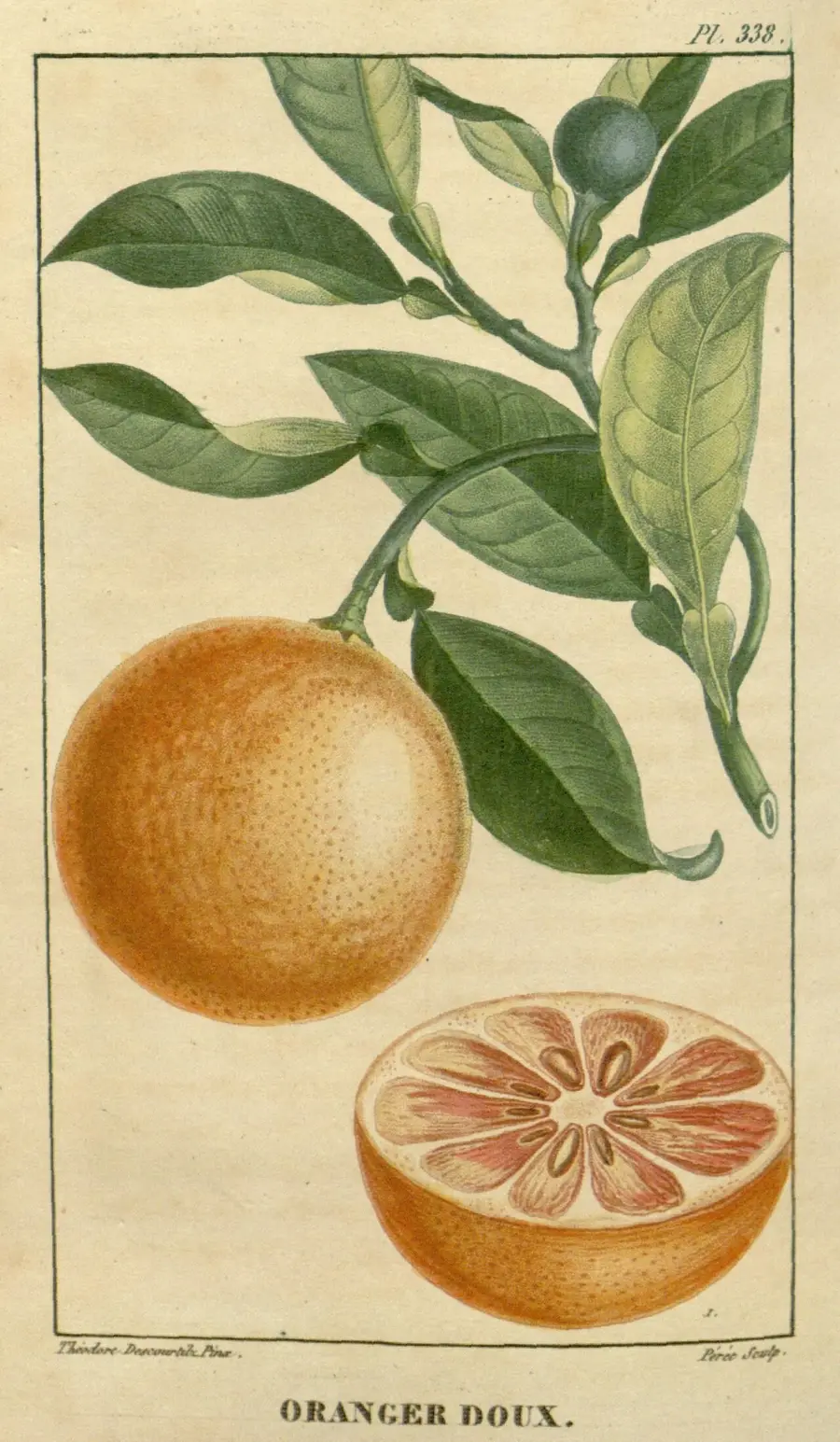

Description
Form
tree, perennial, evergreen
Height: 5–10 m
Flower colour
White
Flowering
March–May
Leaves
Glossy, leathery, oval, aromatic leaves with a narrow wing on the stalk.
Flowers
White, thick-petalled, very fragrant flowers ("orange blossom"), an important source for honeybees.
Fruit and seeds
A hesperidium, a special kind of berry: oil glands in the peel and juicy segments inside.
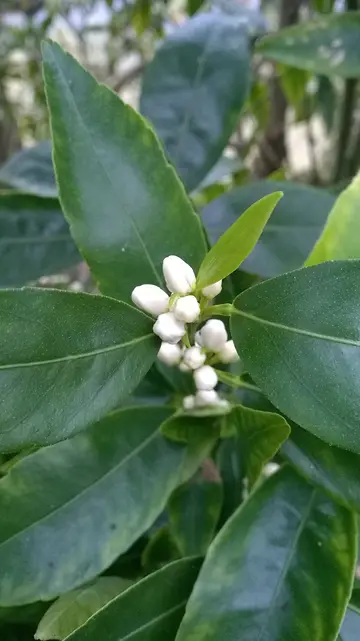

Classification
- KingdomPlantae
- PhylumTracheophyta
- ClassMagnoliopsida
- OrderSapindales
- FamilyRutaceae
- GenusCitrus
- SpeciesCitrus sinensis
Native range
It has no natural range. Genetic studies show the sweet orange arose in and around southern China from a cross between pomelo (Citrus maxima) and mandarin (Citrus reticulata). It spread to Europe in the 15th and 16th centuries.
Growing conditions
Light
Full sun.
Water
Needs regular watering.
Soil
Free-draining, slightly acid to neutral soil.
Temperature
Frost-sensitive; a few degrees of frost damage fruit and young shoots.
Culture and history
The name
The Turkish word "portakal" comes from Portugal, because Portuguese traders spread the sweet orange around the Mediterranean; Greek, Arabic and Balkan languages use similar names.
Toxicity
ASPCA lists citrus as toxic to cats, dogs and horses. Essential oils and psoralens in the peel, leaves and other parts can cause vomiting, diarrhoea, weakness and skin irritation. The fruit itself is edible; a small amount usually causes no more than a mild upset stomach.
In an emergency call your local poison centre; for pets, contact a vet straight away. See also: plants and pets.
Look-alikes
- Bitter orange (Citrus × aurantium): Its fruit is sour and bitter, used for marmalade and cologne.
- Mandarin (Citrus reticulata): Smaller, flattened, easy-peeling fruit. Compare side by side →
Questions
Is there a wild orange tree?
No. The sweet orange is a cultivated hybrid of pomelo and mandarin that arose in southern China.
Sweet orange: when does it flower?
In spring: March–May. Months are for temperate northern-hemisphere climates and shift with altitude and weather.
Sweet orange: how do you grow it?
Light: Full sun. Water: Needs regular watering. Soil: Free-draining, slightly acid to neutral soil. Temperature: Frost-sensitive; a few degrees of frost damage fruit and young shoots.
Sweet orange: is it toxic to cats and dogs?
Toxic to cats and dogs. Oils in peel and leaves: vomiting, diarrhoea.
Sweet orange: what is its scientific name?
Citrus sinensis (L.) Osbeck, in the genus Citrus and the family Rutaceae.
Sources
- Wikipedia: Orange (fruit)
- World Flora Online
- GBIF · classification
- ASPCA Animal Poison Control: Orange (Citrus sinensis)
Checked: 2026-11-16. Spotted a mistake? Tell us.