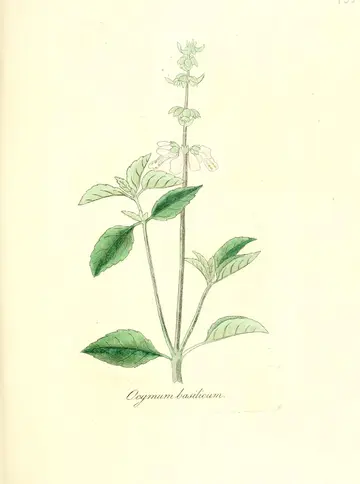
Description
Form
subshrub, perennial, evergreen
Height: 30–60 cm
Flower colour
WhitePink
Flowering
June–September
Habitat
Leaves
Small, oval, grey-green, softly hairy leaves with a sweet, sharp scent when crushed.
Flowers
Small white or pink flowers in round, knot-like heads at the branch tips.
Fruit and seeds
A small dry fruit that splits into four nutlets.
Classification
- KingdomPlantae
- PhylumTracheophyta
- ClassMagnoliopsida
- OrderLamiales
- FamilyLamiaceae
- GenusOriganum
- SpeciesOriganum majorana
Native range
POWO gives Türkiye and Cyprus as its only native areas; Wikipedia also lists the Levant and the Arabian Peninsula. It is grown in many parts of the world.
Growing conditions
Light
Full sun.
Water
Low to moderate.
Soil
Free-draining, limy soil.
Temperature
Frost-tender; grown as an annual in cold regions.
Culture and history
A herb of happiness
According to Wikipedia it was a symbol of happiness in ancient Greece and Rome. In one Greek tale Amaracus, royal perfumer of Cyprus, was turned into marjoram; the Greeks believed Aphrodite had created the plant.
Toxicity
ASPCA lists marjoram as toxic to cats and dogs; it irritates the digestive tract. Signs are vomiting and diarrhoea.
In an emergency call your local poison centre; for pets, contact a vet straight away. See also: plants and pets.
Look-alikes
- Cretan oregano: Same genus; sharper scent, rougher-haired leaves and more frost-hardy. Compare side by side →
- Common thyme (Thymus vulgaris): Its leaves are even smaller, and its purple or pink flowers grow in clusters at the shoot tips. Sweet marjoram has white or pink flowers packed in round, knot-like heads, and softly hairy leaves. Compare side by side →
Questions
Are marjoram and oregano the same plant?
No, but they are relatives: marjoram is Origanum majorana and several plants called oregano are also Origanum. Marjoram smells sweeter.
Sweet marjoram: when does it flower?
In summer and autumn: June–September. Months are for temperate northern-hemisphere climates and shift with altitude and weather.
Sweet marjoram: how do you grow it?
Light: Full sun. Water: Low to moderate. Soil: Free-draining, limy soil. Temperature: Frost-tender; grown as an annual in cold regions.
Sweet marjoram: is it toxic to cats and dogs?
Toxic to cats and dogs. Vomiting, diarrhoea.
Sweet marjoram: what is its scientific name?
Origanum majorana L., in the genus Origanum and the family Lamiaceae.
Sources
- Wikipedia: Marjoram
- ASPCA Animal Poison Control: Marjoram
- World Flora Online
- Plants of the World Online (Kew) · native range (WCVP)
- GBIF · classification
- Wikidata
Checked: 2026-11-17. Spotted a mistake? Tell us.