Description
Form
tree, perennial, deciduous
Height: up to 7–10 m
Flowering
No reliable data in the sources.
Leaves
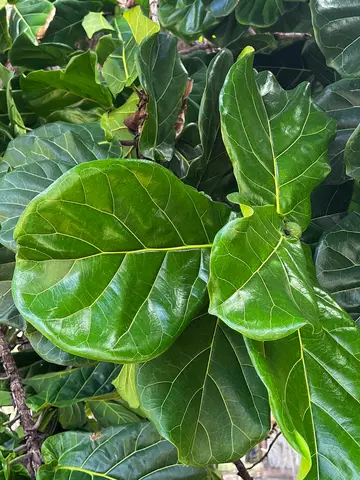
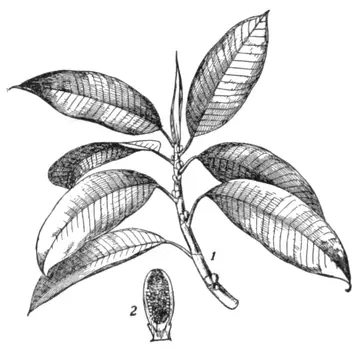
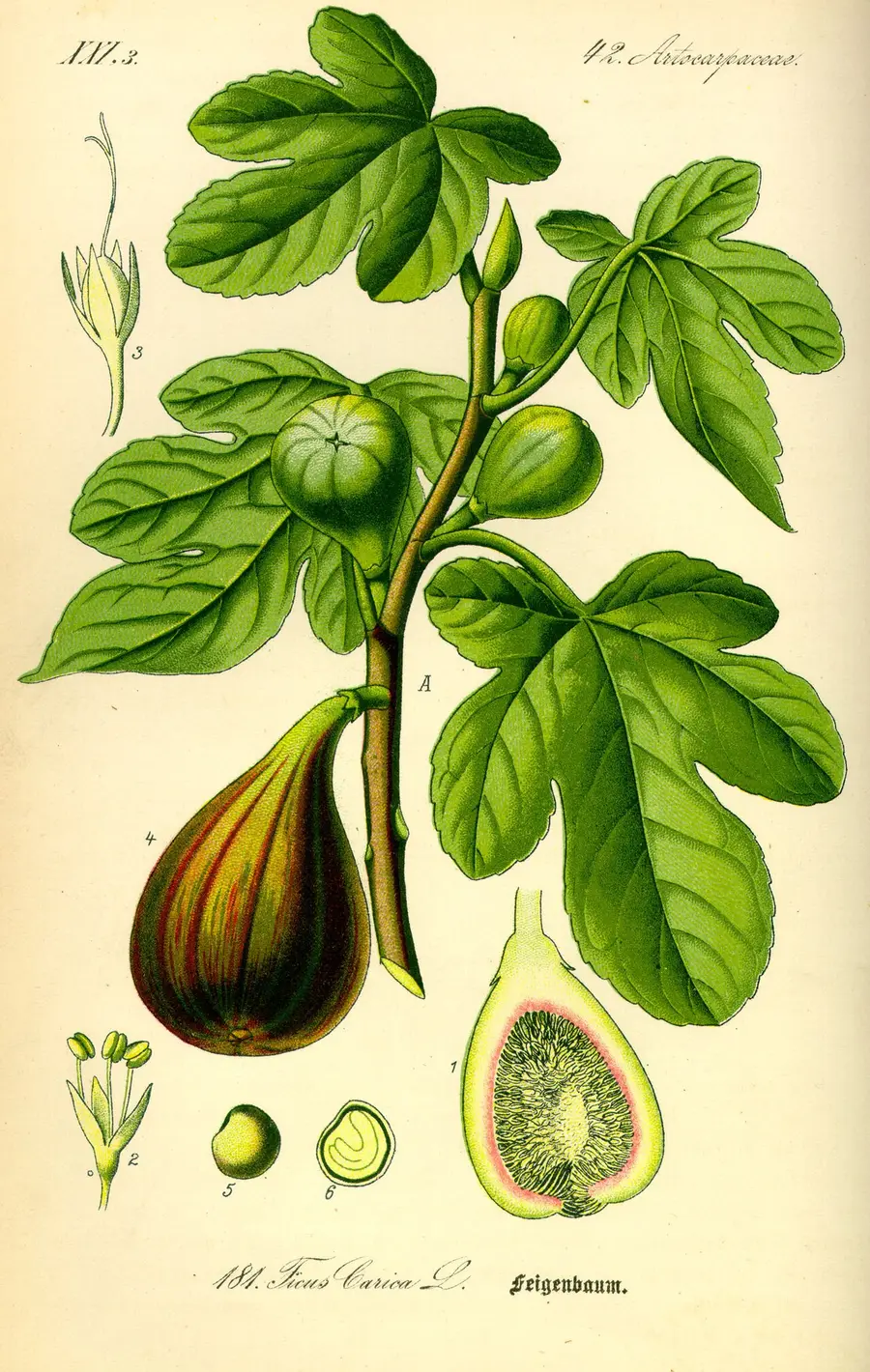
Large (about 20 cm long and 14 cm wide), fragrant, rough leaves, deeply 3- or 5-lobed.
Flowers
Hundreds of tiny flowers line the inside of the hollow, closed fig.
Fruit and seeds
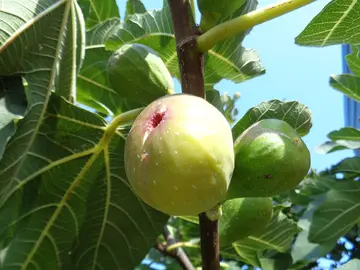
The fig (3–5 cm) is really an inward-turned cluster of flowers (a syconium); the small crunchy grains inside are the true fruits. Ripe figs stay green or turn purple or brown.
Classification
- KingdomPlantae
- PhylumTracheophyta
- ClassMagnoliopsida
- OrderRosales
- FamilyMoraceae
- GenusFicus
- SpeciesFicus carica
Native range
According to POWO it is native to Türkiye, Cyprus, Greece and Crete, Lebanon–Syria, Palestine, Iraq, Iran, the Caucasus and Central Asia to the western Himalaya. It has been grown throughout the Mediterranean since antiquity.
IUCN Red List status: Least concern (LC).
Growing conditions
Light
Full sun.
Water
Drought tolerant once established.
Soil
Not fussy; well-drained.
Temperature
Hardy to moderate frost.
Its roots are vigorous; keep it away from walls and pipes.
Culture and history
The fig and the wasp
Wild figs are pollinated by tiny fig wasps that breed inside the fruit; many cultivated varieties set fruit without pollination.
Toxicity
The milky sap of the leaves and twigs contains psoralens; on skin exposed to sunlight it can cause burn-like redness and blisters (phytophotodermatitis). ASPCA lists the fig genus as toxic to cats, dogs and horses, causing gastrointestinal and skin irritation.
In an emergency call your local poison centre; for pets, contact a vet straight away. See also: plants and pets.
Questions
Is a fig a fruit or a flower?
Botanically a fig is an inflorescence: a hollow, fleshy structure lined on the inside with hundreds of tiny flowers.
Common fig: how do you grow it?
Light: Full sun. Water: Drought tolerant once established. Soil: Not fussy; well-drained. Temperature: Hardy to moderate frost. Its roots are vigorous; keep it away from walls and pipes.
Common fig: is it toxic to cats and dogs?
Toxic to cats and dogs; Mildly toxic / irritant to people. Sap with psoralens; skin irritation in sunlight.
Common fig: what is its scientific name?
Ficus carica L., in the genus Ficus and the family Moraceae.
Sources
- ASPCA Animal Poison Control: Fig
- Wikipedia: Common fig
- World Flora Online
- Plants of the World Online (Kew) · native range (WCVP)
- GBIF · classification
- Wikidata
- Wikipedia
Checked: 2026-11-16. Spotted a mistake? Tell us.