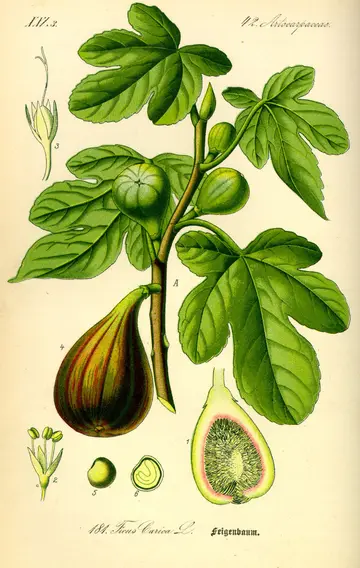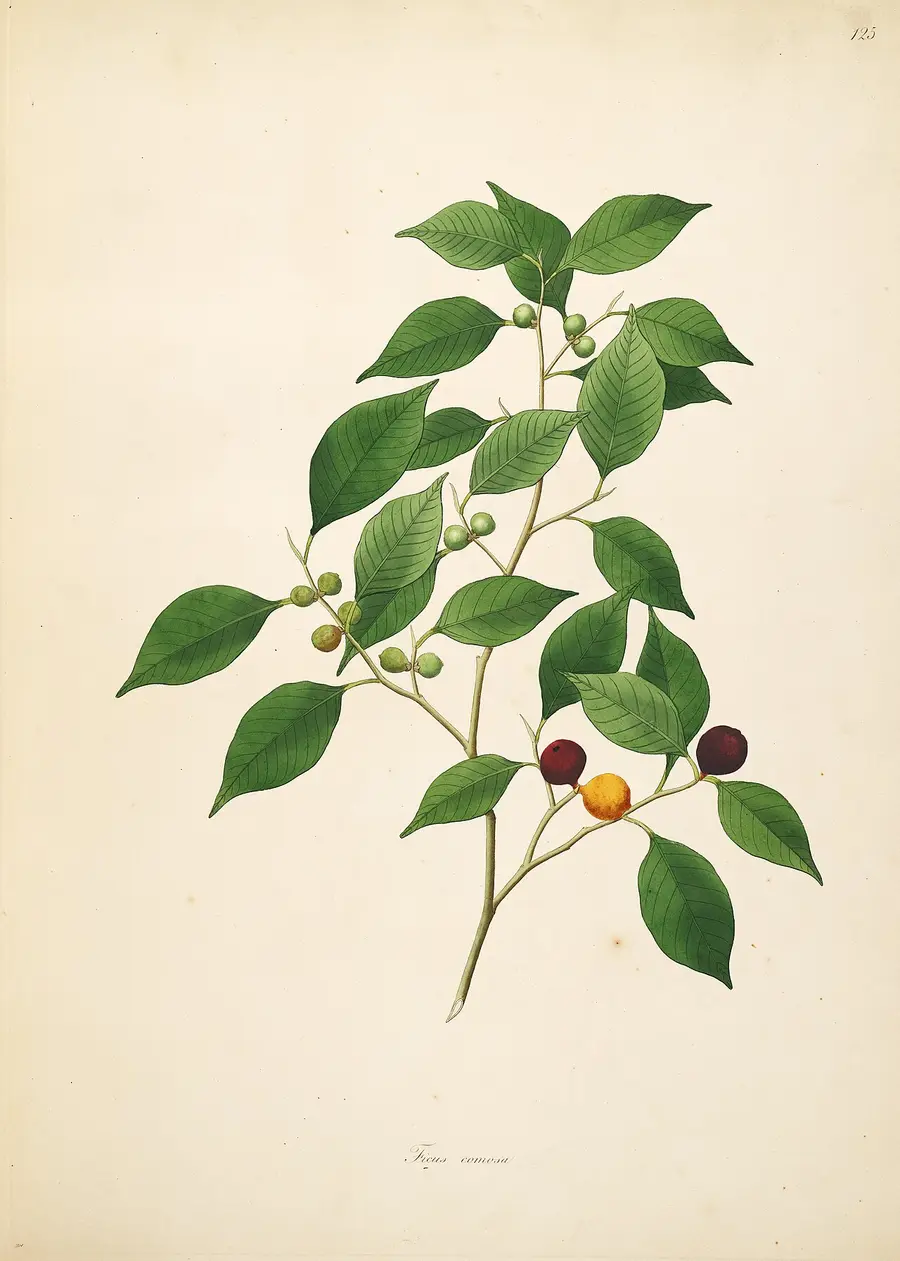
Description
Form
tree, perennial, evergreen
Height: 1–3 m indoors; 30 m in the wild
Flowering
No reliable data in the sources.
Habitat
Leaves
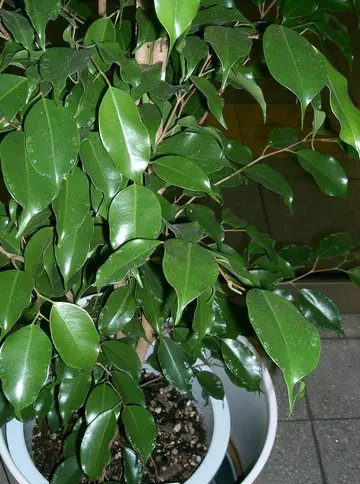
Oval, pointed, glossy leaves 6–13 cm long. Variegated cultivars (edged white or yellow) are common.
Flowers
The flowers are hidden inside small fig-like structures; they do not form indoors.
Fruit and seeds
Small, reddish figs; rare in cultivation.
Classification
- KingdomPlantae
- PhylumTracheophyta
- ClassMagnoliopsida
- OrderRosales
- FamilyMoraceae
- GenusFicus
- SpeciesFicus benjamina
Native range
According to POWO it is native from India, Nepal and the eastern Himalaya through southern China, Indochina, Malaysia, Indonesia and the Philippines to New Guinea and northern Australia.
IUCN Red List status: Least concern (LC).
Care
Light
Bright indirect light; morning sun is good.
Water
Water when the top 2–3 cm of soil is dry; do not leave water in the saucer.
Soil
Free-draining potting compost.
Temperature
16–27 °C.
It quickly drops leaves when moved, when light falls or in cold draughts; it likes a fixed, bright spot. The stems can be braided.
Toxicity
ASPCA lists Ficus benjamina as toxic to cats, dogs and horses: ficin and psoralen in the milky sap irritate the mouth, stomach and skin. The sap and leaf dust of this species can also cause indoor allergies in some people.
In an emergency call your local poison centre; for pets, contact a vet straight away. See also: plants and pets.
Look-alikes
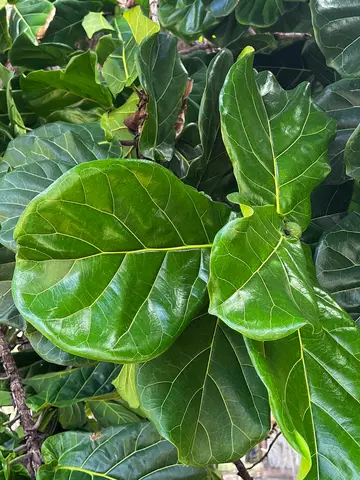
- Fiddle-leaf fig: Same genus; its leaves are much larger and fiddle-shaped. Compare side by side →
Questions
Why is my weeping fig dropping leaves?
The commonest cause is being moved. Less light, cold draughts and over- or under-watering also make it drop leaves.
Weeping fig: how do you care for it?
Light: Bright indirect light; morning sun is good. Water: Water when the top 2–3 cm of soil is dry; do not leave water in the saucer. Soil: Free-draining potting compost. Temperature: 16–27 °C. It quickly drops leaves when moved, when light falls or in cold draughts; it likes a fixed, bright spot. The stems can be braided.
Weeping fig: is it toxic to cats and dogs?
Toxic to cats and dogs; Mildly toxic / irritant to people. Ficin, psoralen: stomach and skin irritation.
Weeping fig: what is its scientific name?
Ficus benjamina L., in the genus Ficus and the family Moraceae.
Sources
- Wikipedia: Ficus benjamina
- World Flora Online
- Plants of the World Online (Kew) · native range (WCVP)
- GBIF · classification
- Wikidata
- ASPCA Animal Poison Control: Fig (Ficus benjamina)
Checked: 2026-11-16. Spotted a mistake? Tell us.