Description
Form
herb, biennial
Height: 1–2.5 m
Flower colour
White
Flowering
May–July
Leaves
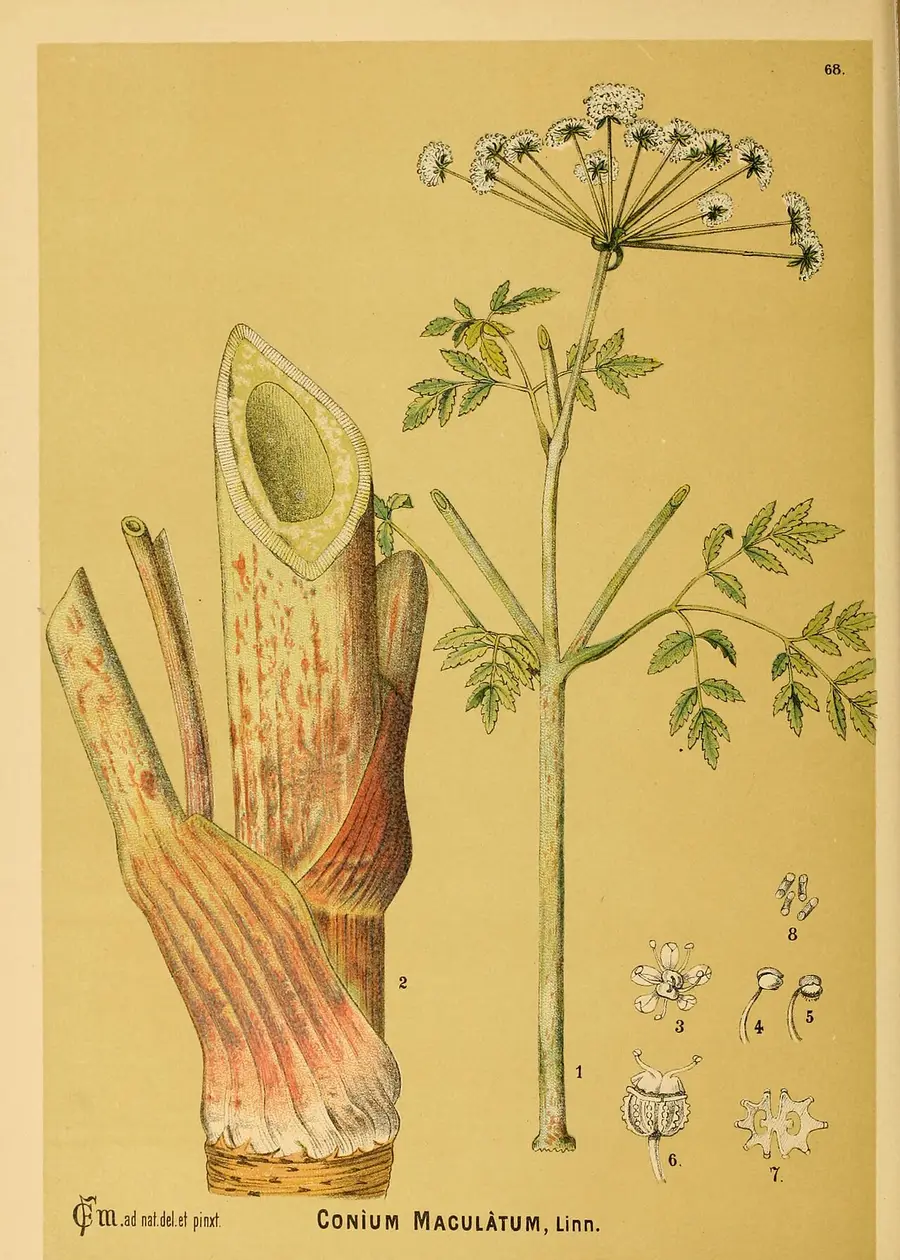
Finely divided, fern-like, glossy green leaves with an unpleasant smell when crushed.
Flowers
Small white flowers in umbrella-shaped clusters (umbels).
Fruit and seeds
Small, ridged, roundish fruits.
Classification
- KingdomPlantae
- PhylumTracheophyta
- ClassMagnoliopsida
- OrderApiales
- FamilyApiaceae
- GenusConium
- SpeciesConium maculatum
Native range
According to POWO it is native to most of Europe, North Africa, Türkiye and western Asia to Central Asia. It has spread as a weed in the Americas and Australia.
Culture and history
Socrates
According to ancient sources, the philosopher Socrates, sentenced to death in Athens, died in 399 BC after drinking hemlock poison.
Toxicity
All parts contain alkaloids such as coniine; the seeds and roots are especially toxic. Eating it can cause muscle paralysis and respiratory failure. ASPCA lists signs in animals as nervousness, trembling, drooling, diarrhoea, paralysis and death. Never pick or eat a wild plant unless you are certain what it is. If poisoning is suspected, call your local poison centre or emergency number at once.
In an emergency call your local poison centre; for pets, contact a vet straight away. See also: plants and pets.
Look-alikes
- Parsley: Similar leaves, but parsley has no purple spots on the stem and smells pleasant.
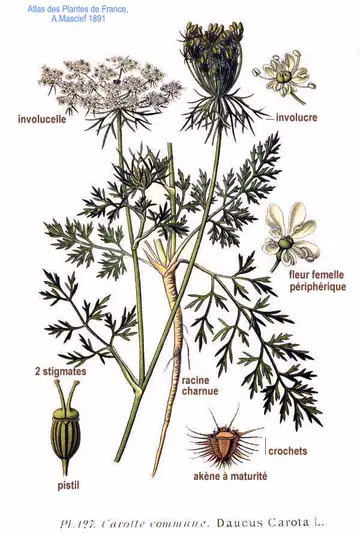
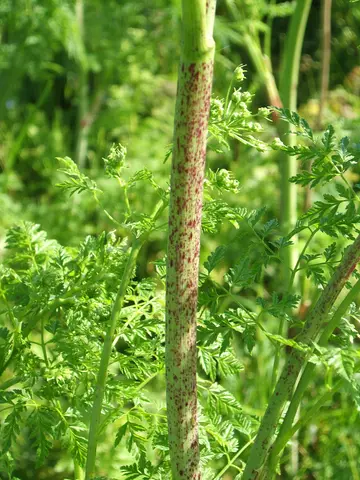
- Wild carrot (Queen Anne's lace): Wild carrot has a hairy stem; poison hemlock's stem is smooth and purple-blotched. A wild carrot umbel often has a single dark purple floret in the centre.
- Dill: Dill has thread-fine leaves and yellow flowers; poison hemlock's flowers are white.
Questions
How do you identify poison hemlock?
By its smooth, hollow, purple-spotted stems, white umbrella-shaped flower heads and the unpleasant, mousy smell of its crushed leaves. Never pick any carrot-family plant unless you are certain of it.
Poison hemlock: when does it flower?
In spring and summer: May–July. Months are for temperate northern-hemisphere climates and shift with altitude and weather.
Poison hemlock: what is its scientific name?
Conium maculatum L., in the genus Conium and the family Apiaceae.
Sources
- Wikipedia: Conium maculatum
- World Flora Online
- Plants of the World Online (Kew) · native range (WCVP)
- GBIF · classification
- Wikidata
- ASPCA Animal Poison Control: Poison Hemlock (Conium maculatum)
Checked: 2026-11-16. Spotted a mistake? Tell us.