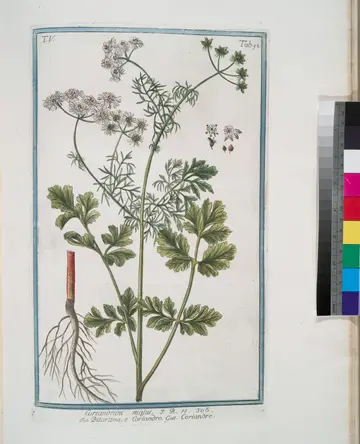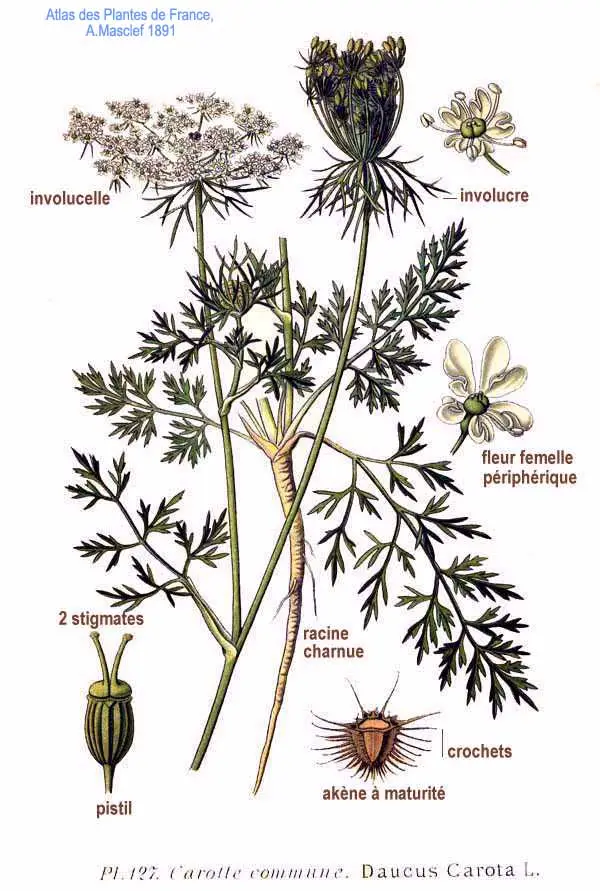
Description
Form
herbaceous, biennial
Height: 30–100 cm (flowering stem)
Flower colour
White
Flowering
No reliable data in the sources.
Habitat
Leaves
Two- or three-times divided, finely cut, hairy leaves that smell of carrot when crushed.
Flowers
Small white flowers form a flat, lacy umbrella. In wild carrot there is often a single dark purple flower in the centre. As the seeds form, the umbrella curls inwards like a bird's nest.
Fruit and seeds
A small, spiny, two-part dry fruit.
Classification
- KingdomPlantae
- PhylumTracheophyta
- ClassMagnoliopsida
- OrderApiales
- FamilyApiaceae
- GenusDaucus
- SpeciesDaucus carota
Native range
According to POWO it is native to most of Europe, North Africa and Macaronesia, Türkiye, the Caucasus, the Middle East and from Central Asia to the Himalaya. It has been introduced to the Americas and Australia, where it grows wild.
IUCN Red List status: Least concern (LC).
Growing conditions
Light
Full sun.
Water
Regular; roots split if very dry soil is suddenly soaked.
Soil
Deep, stone-free, loose and sandy soil; roots fork in stony ground.
Temperature
Likes cool weather; tolerates light frost.
Sow seed directly where it is to grow; it dislikes transplanting.
Culture and history
The orange carrot
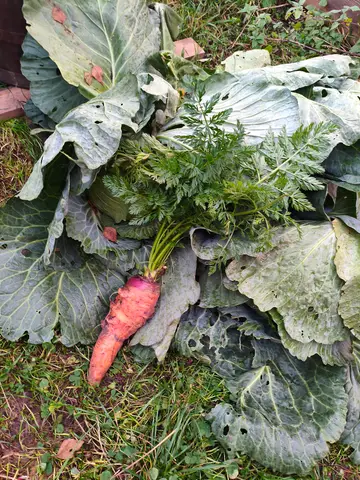
According to Wikipedia the carrot was probably first grown in Iran, for its leaves and seeds. Eastern carrots were purple and yellow. The orange "Western carrot" appeared in the Netherlands in the 16th or 17th century. The colour is often said to honour the House of Orange, but this popular claim is unproven.
Toxicity
ASPCA lists carrot as non-toxic to cats, dogs and horses. The plant contains psoralens and can irritate the skin of some people.
In an emergency call your local poison centre; for pets, contact a vet straight away. See also: plants and pets.
Look-alikes
- Poison hemlock (Conium maculatum): Deadly poisonous member of the same family, with white umbrella-shaped flower heads too; it is much taller, its stem is smooth with purple blotches and it smells foul when crushed. Never pick wild plants of the carrot family. Compare side by side →
Questions
Were carrots always orange?
No. The first cultivated carrots were purple and yellow. Orange carrots appeared in the Netherlands in the 16th–17th century.
What does wild carrot look like?
It has lacy white umbrella-shaped flower heads, often with a single dark purple flower in the centre. Because it can be confused with deadly poison hemlock, it should not be picked.
Carrot: how do you grow it?
Light: Full sun. Water: Regular; roots split if very dry soil is suddenly soaked. Soil: Deep, stone-free, loose and sandy soil; roots fork in stony ground. Temperature: Likes cool weather; tolerates light frost. Sow seed directly where it is to grow; it dislikes transplanting.
Carrot: is it toxic to cats and dogs?
Non-toxic to cats and dogs. Non-toxic to pets; psoralens can irritate skin.
Carrot: what is its scientific name?
Daucus carota L., in the genus Daucus and the family Apiaceae.
Sources
- Wikipedia: Daucus carota
- World Flora Online
- Plants of the World Online (Kew) · native range (WCVP)
- GBIF · classification
- Wikidata
- ASPCA Animal Poison Control: Carrot Flower
- Wikipedia: Carrot
Checked: 2026-11-17. Spotted a mistake? Tell us.