Description
Form
shrub, perennial, evergreen
Height: Potted 30–60 cm; 0.6–4 m in the wild
Flower colour
RedPinkWhite
Flowering
December–February
Habitat
Leaves
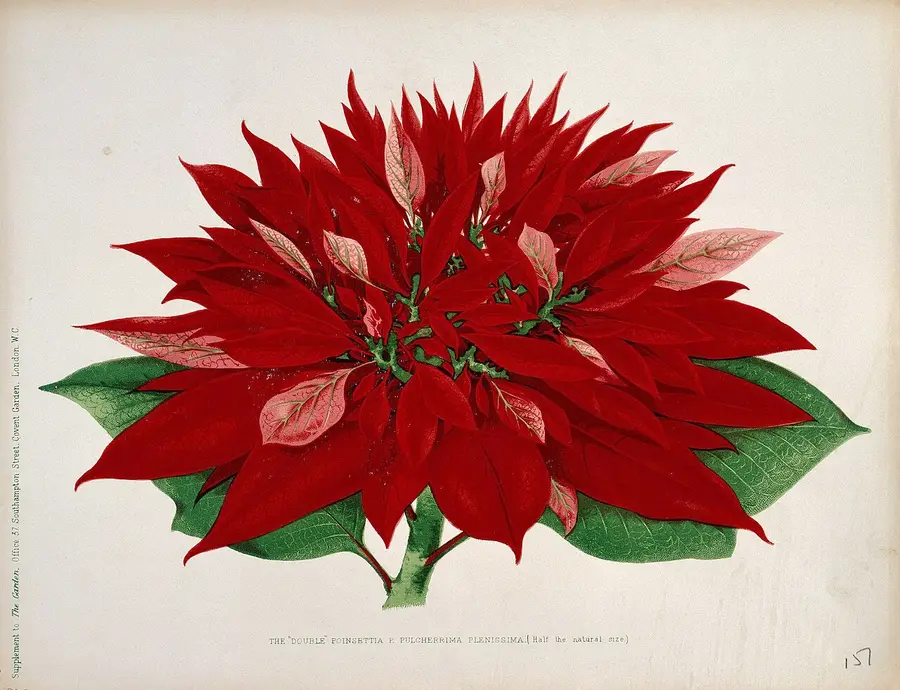
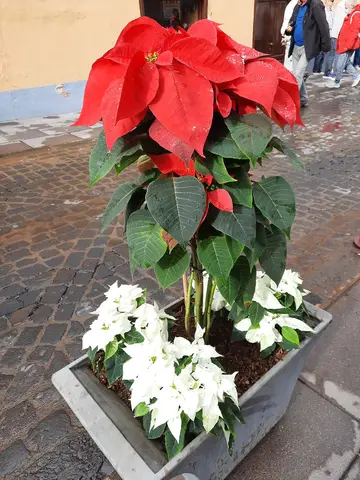
Dark green, oval leaves 6–16 cm long with slightly toothed edges; the upper bracts turn red, pink, cream or white as the days shorten.
Flowers
Small yellow-green flower clusters (cyathia) in the centre of the coloured bracts.
Fruit and seeds
A small three-lobed capsule.
Classification
- KingdomPlantae
- PhylumTracheophyta
- ClassMagnoliopsida
- OrderMalpighiales
- FamilyEuphorbiaceae
- GenusEuphorbia
- SpeciesEuphorbia pulcherrima
Native range
According to POWO it is native to the Pacific and Gulf slopes of Mexico and to Guatemala. Wild populations grow in mid-elevation dry forest and are fragmented by deforestation.
IUCN Red List status: Least concern (LC).
Care
Light
Bright, indirect light.
Water
When the top 2–3 cm of soil is dry; no standing water. Leaf drop is usually caused by over- or under-watering or cold draughts.
Soil
Well-drained potting mix.
Temperature
15–24 °C; very sensitive to cold draughts.
To colour again, it needs 14 hours of uninterrupted darkness every night for 8–10 weeks from early October; even a brief exposure to light can upset the process.
Toxicity
Often described as "very poisonous", which is an exaggeration. ASPCA notes that its milky sap irritates the mouth and stomach and sometimes causes vomiting, but that its toxicity is "generally over-rated".
In an emergency call your local poison centre; for pets, contact a vet straight away. See also: plants and pets.
Questions
Is poinsettia poisonous to cats?
It is mildly toxic. ASPCA says the milky sap can irritate the mouth and stomach, but its toxicity is generally over-rated.
Poinsettia: when does it flower?
In winter: December–February. Months are for temperate northern-hemisphere climates and shift with altitude and weather.
Poinsettia: how do you care for it?
Light: Bright, indirect light. Water: When the top 2–3 cm of soil is dry; no standing water. Leaf drop is usually caused by over- or under-watering or cold draughts. Soil: Well-drained potting mix. Temperature: 15–24 °C; very sensitive to cold draughts. To colour again, it needs 14 hours of uninterrupted darkness every night for 8–10 weeks from early October; even a brief exposure to light can upset the process.
Poinsettia: what is its scientific name?
Euphorbia pulcherrima Willd. ex Klotzsch, in the genus Euphorbia and the family Euphorbiaceae.
Sources
- ASPCA Animal Poison Control: Poinsettia
- Wikipedia: Poinsettia
- UGA Extension: Trick poinsettias into blooming again
- WSU Extension: Poinsettias
- World Flora Online
- Plants of the World Online (Kew) · native range (WCVP)
- GBIF · classification
- Wikidata
Checked: 2026-11-16. Spotted a mistake? Tell us.