
Description
Form
tree, perennial, evergreen
Height: 3–6 m
Flower colour
WhitePink
Flowering
March–May, September–October
Leaves
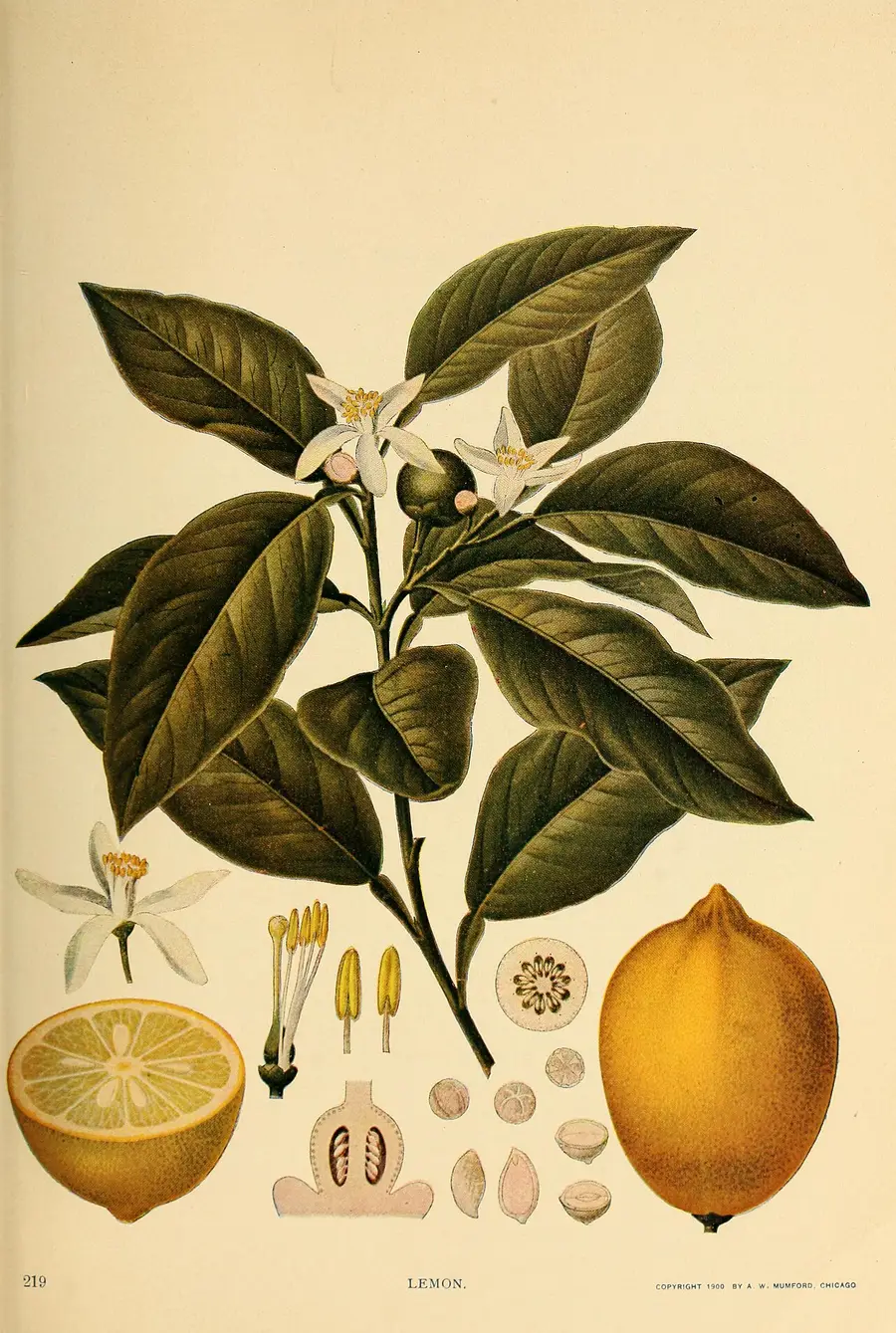
Oval, glossy, aromatic leaves with slightly toothed edges; the branches may carry sharp thorns.
Flowers
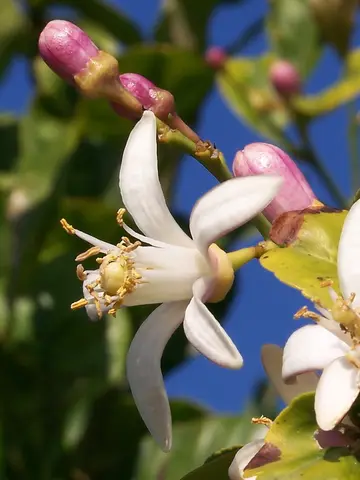
Purplish-pink buds opening to white, fragrant flowers; in warm climates it flowers several times a year.
Fruit and seeds
An oval, yellow hesperidium with a pointed tip and very sour juice.

Classification
- KingdomPlantae
- PhylumTracheophyta
- ClassMagnoliopsida
- OrderSapindales
- FamilyRutaceae
- GenusCitrus
- SpeciesCitrus × limon
Native range
It has no natural range. Genetic studies show the lemon is a hybrid of bitter orange (Citrus × aurantium) and citron (Citrus medica), thought to have arisen around northeastern India, Myanmar and southern China.
Growing conditions
Light
Full sun; the brightest spot when in a pot.
Water
Regular; in a pot, when the top of the soil dries.
Soil
Free-draining, slightly acid soil.
Temperature
One of the most frost-sensitive citrus.
A potted lemon should spend winter somewhere cool and bright.
Culture and history
Lemon cologne
Lemon peel oil is the main scent of Turkish lemon cologne (kolonya), offered to guests as a sign of hospitality.
Toxicity
ASPCA lists citrus as toxic to cats, dogs and horses. Essential oils and psoralens in the peel, leaves and other parts can cause vomiting, diarrhoea, weakness and skin irritation. The fruit itself is edible; a small amount usually causes no more than a mild upset stomach.
In an emergency call your local poison centre; for pets, contact a vet straight away. See also: plants and pets.
Look-alikes
- Lime (Citrus × aurantiifolia and others): Smaller, green, round, thin-skinned fruit.
- Citron (Citrus medica): One of the lemon's parents; its fruit is much larger with a very thick, bumpy peel.
Questions
Where does the lemon come from?
It is a cultivated hybrid of bitter orange and citron, thought to have arisen around northeastern India, Myanmar and southern China.
Lemon: when does it flower?
In spring and autumn: March–May, September–October. Months are for temperate northern-hemisphere climates and shift with altitude and weather.
Lemon: how do you grow it?
Light: Full sun; the brightest spot when in a pot. Water: Regular; in a pot, when the top of the soil dries. Soil: Free-draining, slightly acid soil. Temperature: One of the most frost-sensitive citrus. A potted lemon should spend winter somewhere cool and bright.
Lemon: is it toxic to cats and dogs?
Toxic to cats and dogs. Oils in peel and leaves: vomiting, diarrhoea.
Lemon: what is its scientific name?
Citrus × limon (L.) Osbeck, in the genus Citrus and the family Rutaceae.
Sources
- Wikipedia: Lemon
- World Flora Online
- Plants of the World Online (Kew) · native range (WCVP)
- GBIF · classification
- Wikidata
- ASPCA Animal Poison Control: Lemon (Citrus limonia)
Checked: 2026-11-16. Spotted a mistake? Tell us.