Telling them apart
Horse chestnut vs Sweet chestnut
Horse chestnut (Aesculus hippocastanum) and Sweet chestnut (Castanea sativa) look similar enough to be confused. They belong to different families: Sapindaceae (soapberry family) and Fagaceae (beech family).
CautionHorse chestnut is poisonous to people. Never pick or eat a wild plant unless you are certain of its identity. If poisoning is suspected, call your local poison centre or emergency number.
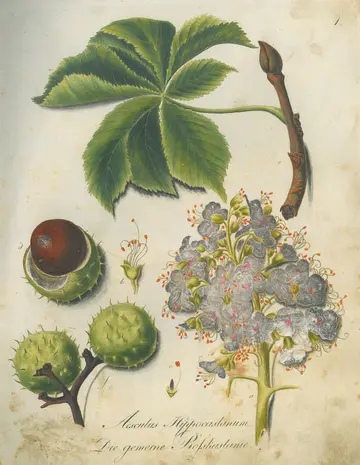
Image wanted. A licensed image will be added when found.
How to tell them apart
- Sweet chestnut: The edible chestnut. Its husk is covered in dense, fine spines and its nut has a pointed, hairy tip; its leaves are single and long.
- Horse chestnut: Not related despite the name. Its leaves are hand-shaped with 5–7 leaflets, its husk has sparse, stout spines, and its seeds are poisonous.
Side by side
| Horse chestnut | Sweet chestnut | |
|---|---|---|
| Scientific name | Aesculus hippocastanum | Castanea sativa |
| Family | Sapindaceae (soapberry family) | Fagaceae (beech family) |
| Form | tree, perennial, deciduous | tree, perennial, deciduous |
| Height | Up to 39 m | 20–35 m |
| Flower colour | White | White, Yellow |
| Origin | Balkans | Balkans, Anatolia and the Caucasus |
| Toxicity | People: toxic · Cats: toxic · Dogs: toxic | — |
| Flowering | ||
| Leaves | Hand-shaped compound leaves of 5–7 large, toothed leaflets spreading from one point. | Long (10–25 cm), lance-shaped, glossy leaves with a sharp tooth at the end of each vein. |
| Flowers | White flowers in upright, candle-shaped spikes; each has a blotch in the centre that turns from yellow to red after pollination. | Long, upright, cream-yellow catkins, mostly male, with the female flowers at their base; pollinated by insects and wind. |
| Fruit and seeds | One or two glossy brown seeds in a spiny green husk. They are not edible. | One to three glossy brown nuts inside a husk covered in dense, fine, sharp spines; ripening in autumn. |
All pairs: look-alike plants · Full pages: Horse chestnut, Sweet chestnut