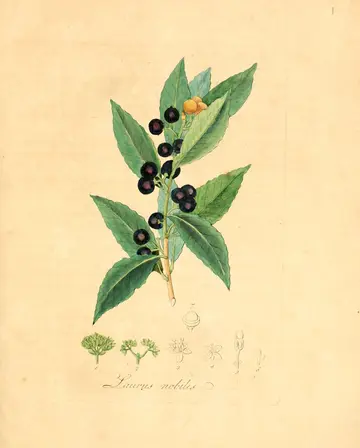
Description
Form
tree, perennial, deciduous
Height: 20–35 m
Flower colour
Green
Flowering
April–May
Habitat
Leaves
Fan-shaped leaves, often split in the middle into two lobes ("biloba" means two-lobed), with veins forking out like a fan. In autumn they all turn bright yellow together and drop within a few days.
Flowers
No true flowers. Male trees bear catkin-like pollen cones and female trees long-stalked ovules; male and female are separate trees.
Fruit and seeds
On female trees, apricot-like seeds with a fleshy coat; when they ripen and fall, the coat smells very bad because of butyric acid.
Classification
- KingdomPlantae
- PhylumTracheophyta
- ClassGinkgoopsida
- OrderGinkgoales
- FamilyGinkgoaceae
- GenusGinkgo
- SpeciesGinkgo biloba
Native range
According to POWO it is native only to south-eastern China. Whether truly wild populations survive, or whether all come from trees protected around temples for centuries, is debated. It is now planted all over the world.
IUCN Red List status: Endangered (EN).
Growing conditions
Light
Full sun or part shade.
Water
Moderate; drought tolerant once established.
Soil
Not fussy.
Temperature
Very hardy to cold and urban pollution.
In cities mostly male trees are planted to avoid the smelly seeds.
Culture and history
Hiroshima
Several ginkgo trees near the centre of the 1945 atomic bombing of Hiroshima survived and sprouted again; in Japan these trees are seen as symbols of resilience.
A living fossil
Fossils of the ginkgo lineage are more than 200 million years old. Ginkgo biloba is its only living species.
Toxicity
The fleshy seed coat contains ginkgolic acids and can cause an itchy skin rash, like poison ivy, in some people who touch it. The seed kernel contains ginkgotoxin, and eating it raw or in quantity can cause poisoning.
In an emergency call your local poison centre; for pets, contact a vet straight away. See also: plants and pets.
Questions
Why is ginkgo called a "living fossil"?
The ginkgo lineage is more than 200 million years old, and all its relatives are known only from fossils; Ginkgo biloba is its only living species.
Why do ginkgo trees smell bad?
Only the fallen seeds of female trees smell: their fleshy coat contains butyric acid. That is why cities mostly plant male trees.
Ginkgo: when does it flower?
In spring: April–May. Months are for temperate northern-hemisphere climates and shift with altitude and weather.
Ginkgo: how do you grow it?
Light: Full sun or part shade. Water: Moderate; drought tolerant once established. Soil: Not fussy. Temperature: Very hardy to cold and urban pollution. In cities mostly male trees are planted to avoid the smelly seeds.
Ginkgo: what is its scientific name?
Ginkgo biloba L., in the genus Ginkgo and the family Ginkgoaceae.
Sources
- Wikipedia: Ginkgo biloba
- World Flora Online
- Plants of the World Online (Kew) · native range (WCVP)
- GBIF · classification
- Wikidata
Checked: 2026-11-17. Spotted a mistake? Tell us.