Description
Form
herbaceous bulb, perennial
Height: 20–70 cm (by cultivar)
Flower colour
RedYellowPinkPurpleWhiteOrange
Flowering
March–May
Habitat
Leaves
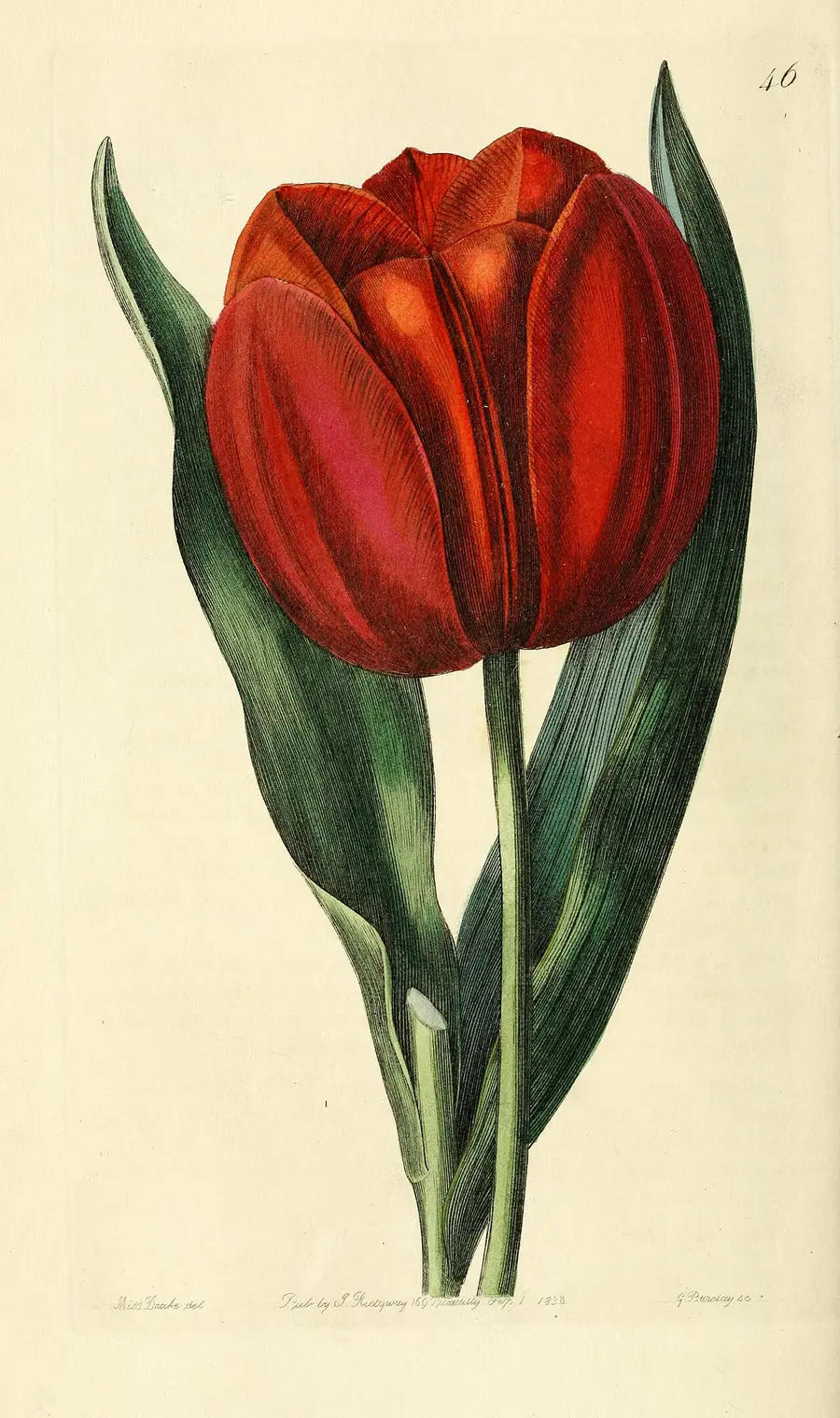
Two to six broad, bluish-green leaves at the base of the stem.
Flowers
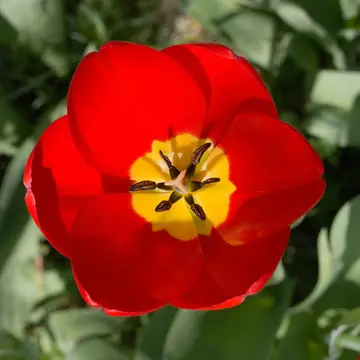
A single cup-shaped flower of six tepals on each stem, in almost every colour except true blue.
Fruit and seeds
A three-sided capsule with flat seeds; garden plants are propagated from bulbs.
Classification
- KingdomPlantae
- PhylumTracheophyta
- ClassLiliopsida
- OrderLiliales
- FamilyLiliaceae
- GenusTulipa
- SpeciesTulipa gesneriana
Native range
The garden tulip has a complex hybrid origin from wild tulips of Central Asia and Anatolia, which is why some botanists write it Tulipa × gesneriana. POWO gives its native range as Türkiye, but the plant is above all a cultivated one, grown for centuries.
Growing conditions
Light
Full sun.
Water
Moderate in spring; dry during the summer rest.
Soil
Well-drained soil; bulbs rot in waterlogged ground.
Temperature
Bulbs need a cold winter to flower.
Plant bulbs in autumn, about three times their own depth.
Culture and history
Tulip mania
In the Dutch Republic of the 1630s, bulbs of rare streaked tulips changed hands for extraordinary sums before the market collapsed in 1637.
The Tulip Era
The early 18th century in the Ottoman Empire is known as the Tulip Era (Lâle Devri); the tulip appears everywhere in Ottoman tiles, textiles and manuscripts.
Toxicity
ASPCA lists tulips as toxic to cats, dogs and horses. The toxins, tulipalin A and B, are most concentrated in the bulb; signs include vomiting, depression, diarrhoea and drooling. Frequent handling of bulbs can irritate human skin ("tulip fingers").
In an emergency call your local poison centre; for pets, contact a vet straight away. See also: plants and pets.
Look-alikes
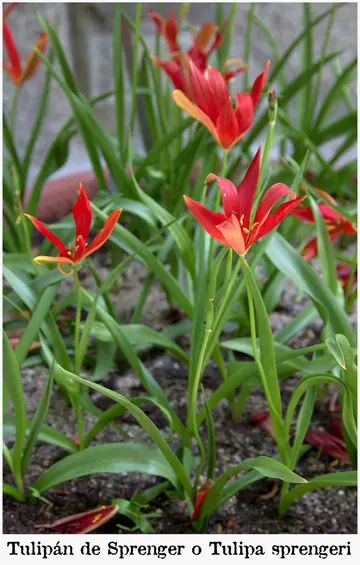
- Sprenger's tulip: An endemic Turkish species with scarlet flowers that open in early summer, much later than garden tulips. Compare side by side →
Questions
Are tulips poisonous to cats and dogs?
Yes. ASPCA lists tulips as toxic to cats, dogs and horses; the bulb is the most dangerous part.
Where do tulips come from?
Garden tulips descend from wild tulips of Central Asia and Anatolia and were bred in the Ottoman Empire and later in the Netherlands.
Garden tulip: when does it flower?
In spring: March–May. Months are for temperate northern-hemisphere climates and shift with altitude and weather.
Garden tulip: how do you grow it?
Light: Full sun. Water: Moderate in spring; dry during the summer rest. Soil: Well-drained soil; bulbs rot in waterlogged ground. Temperature: Bulbs need a cold winter to flower. Plant bulbs in autumn, about three times their own depth.
Garden tulip: what is its scientific name?
Tulipa gesneriana L., in the genus Tulipa and the family Liliaceae.
Sources
- ASPCA Animal Poison Control: Tulip
- Wikipedia: Tulipa gesneriana
- World Flora Online
- Plants of the World Online (Kew) · native range (WCVP)
- GBIF · classification
- Wikidata
Checked: 2026-11-16. Spotted a mistake? Tell us.