Description
Form
herbaceous, perennial
Height: 60–100 cm
Flower colour
OrangeRedYellow
Flowering
March–May
Leaves
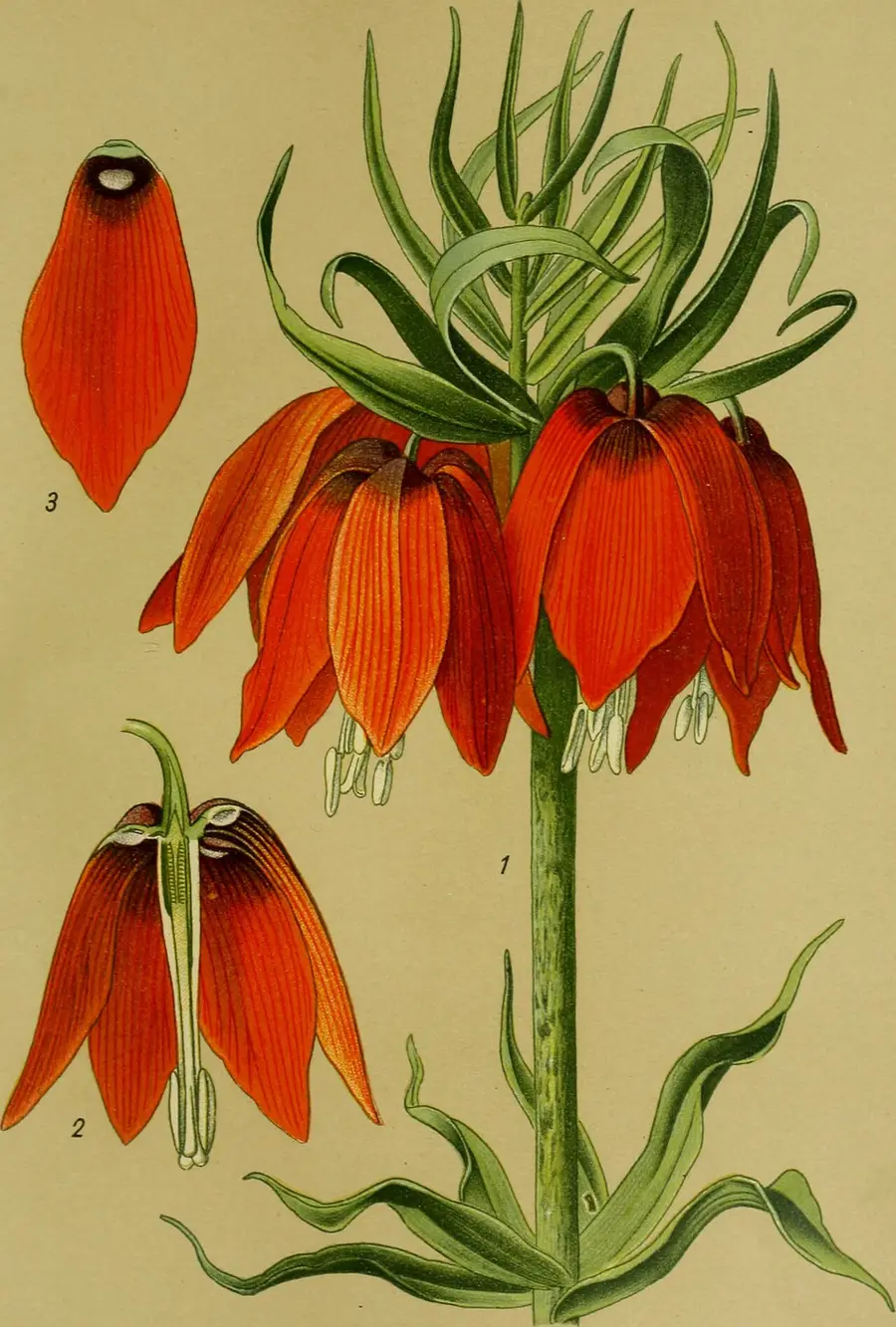
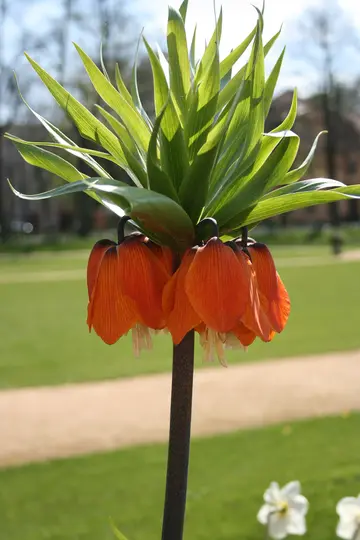
Glossy, lance-shaped leaves in whorls on the lower half of the stem. Above the flowers sits a "crown" of small leaves.
Flowers
At the top of the stem, 3–8 bell-shaped flowers hang beneath the leafy crown. Wild plants are mostly orange-red; garden forms can be yellow or red. A shining drop of nectar sits at the base of each petal. The plant gives off a sharp, foxy smell.
Fruit and seeds
An upright, six-angled, winged capsule.
Classification
- KingdomPlantae
- PhylumTracheophyta
- ClassLiliopsida
- OrderLiliales
- FamilyLiliaceae
- GenusFritillaria
- SpeciesFritillaria imperialis
Native range
According to POWO its native range is Türkiye, Iraq, Iran, Afghanistan, Pakistan and the western Himalaya, where it grows on rocky slopes and in scrub in the mountains. It reached European gardens via Istanbul in the 16th century and has naturalised in places in Austria and Germany.
Growing conditions
Light
Sun or part shade.
Water
Moderate while growing; dry during the summer rest.
Soil
Deep, free-draining, fertile soil. The bulb rots in wet soil.
Temperature
Hardy; it needs a cold winter to flower.
Plant bulbs in late summer or early autumn, about 20 cm deep. They dislike being left out of the ground for long. Buy only nursery-grown bulbs.
Culture and history
The weeping bride
In Anatolia the nectar drops inside the flowers are likened to tears, and the plant is called "ağlayan gelin", the weeping bride. Many folk tales under this name are told around Hakkari. In Europe a similar belief says the flower is in mourning.
Into the gardens
In the 16th century the crown imperial travelled from Ottoman gardens to Vienna and on across Europe, becoming one of Europe's oldest garden bulbs.
Toxicity
The bulbs of Fritillaria species contain steroidal alkaloids and must not be eaten.
In an emergency call your local poison centre; for pets, contact a vet straight away. See also: plants and pets.
Look-alikes
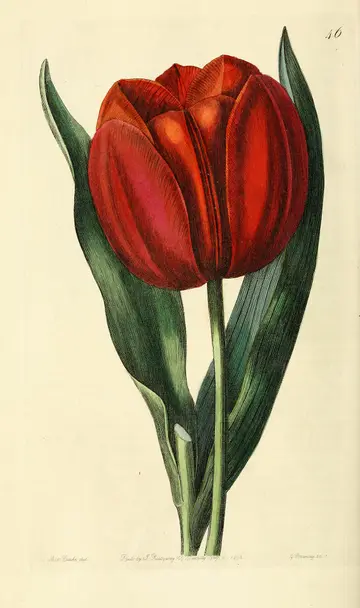
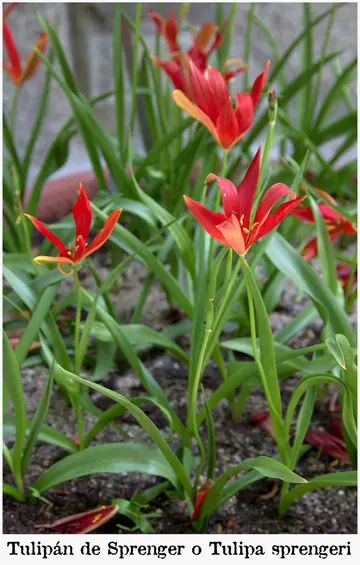
- Tulip: Despite the Turkish name ("upside-down tulip"), tulip flowers face upwards and have no leafy crown. Compare side by side →
- Persian lily (Fritillaria persica): Another Fritillaria native to Türkiye; its flowers are small and dark purple-brown, with no leafy crown on top.
Questions
Is the crown imperial endemic to Türkiye?
No. It grows wild in Türkiye but is also native to Iran, Iraq, Afghanistan, Pakistan and the western Himalaya. Endemic means a species grows naturally in only one region.
Why is it called the "weeping bride"?
The drops of nectar shining at the base of each petal inside the hanging flowers are likened to tears.
Crown imperial: when does it flower?
In spring: March–May. Months are for temperate northern-hemisphere climates and shift with altitude and weather.
Crown imperial: how do you grow it?
Light: Sun or part shade. Water: Moderate while growing; dry during the summer rest. Soil: Deep, free-draining, fertile soil. The bulb rots in wet soil. Temperature: Hardy; it needs a cold winter to flower. Plant bulbs in late summer or early autumn, about 20 cm deep. They dislike being left out of the ground for long. Buy only nursery-grown bulbs.
Crown imperial: what is its scientific name?
Fritillaria imperialis L., in the genus Fritillaria and the family Liliaceae.
Sources
- Wikipedia: Fritillaria imperialis
- World Flora Online
- Plants of the World Online (Kew) · native range (WCVP)
- GBIF · classification
- Wikidata
Checked: 2026-11-17. Spotted a mistake? Tell us.