Description
Form
shrub, perennial, deciduous
Height: 1–3 m
Flower colour
PinkWhite
Flowering
May–June
Habitat
Leaves
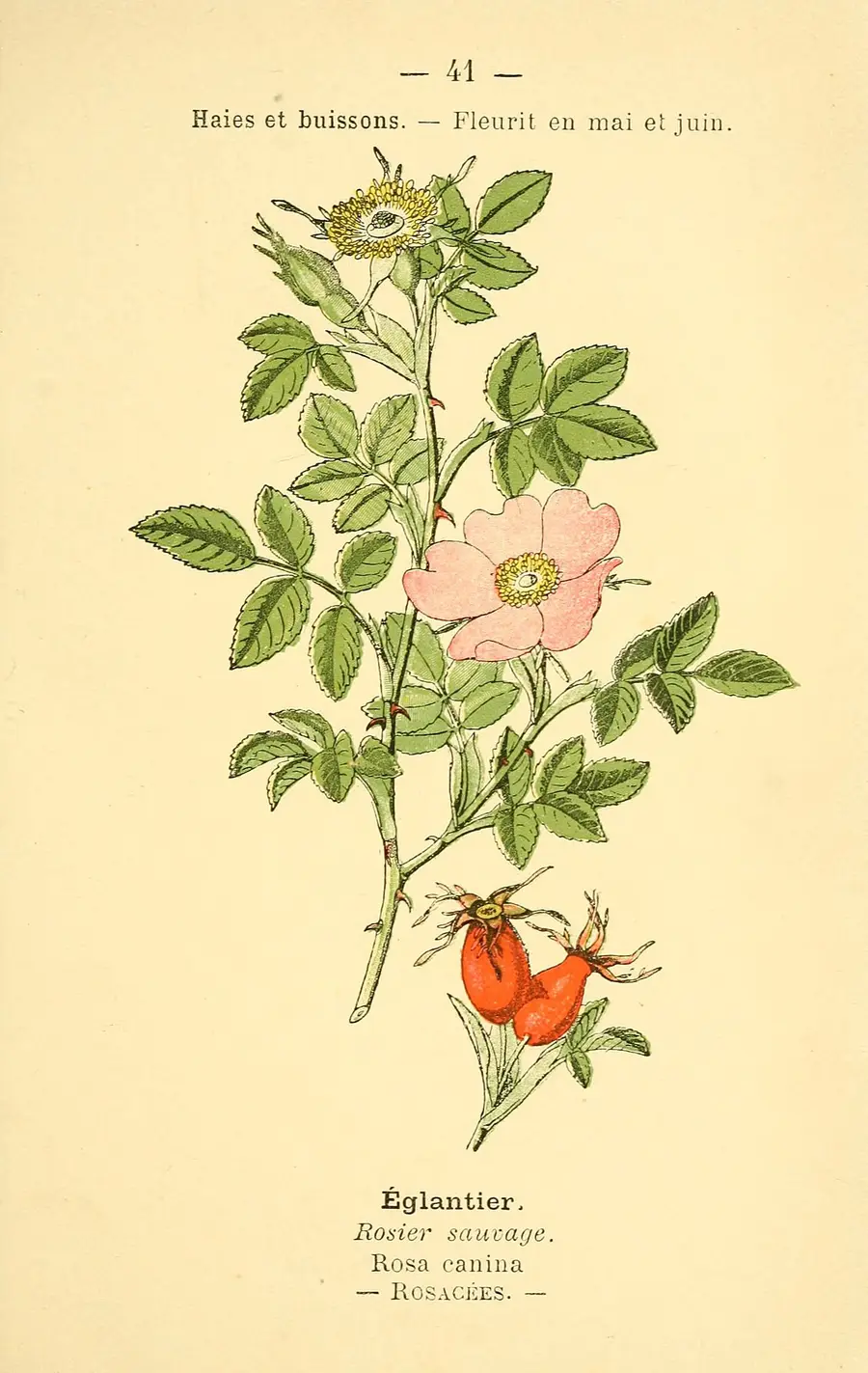
Hairless leaves of 5–7 toothed leaflets. The stems are covered in hooked, downward-curving thorns.
Flowers
Single, five-petalled, pale pink or white, lightly scented flowers.
Fruit and seeds
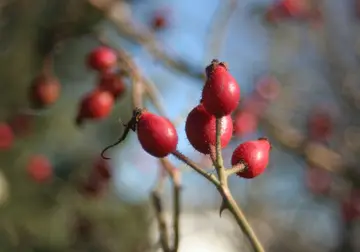
A bright red or orange, oval, fleshy false fruit (hip), holding many hard seeds surrounded by hairs; the hairs make the skin itch.
Classification
- KingdomPlantae
- PhylumTracheophyta
- ClassMagnoliopsida
- OrderRosales
- FamilyRosaceae
- GenusRosa
- SpeciesRosa canina
Native range
According to POWO it is native to most of Europe, North Africa, Türkiye and western Asia east to Central Asia and Pakistan. It has been carried to parts of North and South America.
Culture and history
The thousand-year rose
The rose bush growing on the wall of Hildesheim Cathedral in Germany, said by tradition to be over a thousand years old, is a dog rose.
Toxicity
ASPCA lists roses (Rosa species) as non-toxic to cats, dogs and horses. The hooked thorns can cause injuries, and the hairs inside the hips irritate the skin and mouth.
In an emergency call your local poison centre; for pets, contact a vet straight away. See also: plants and pets.
Look-alikes
- Other wild roses (Rosa species): Many wild rose species grow in Türkiye; most are told apart by leaf hairiness, thorn shape and hip shape, which takes an expert eye.
Questions
Are dog rose and rose the same plant?
The dog rose (Rosa canina) is a wild rose species. Many garden roses are also Rosa; the dog rose has single flowers.
Is dog rose toxic to cats and dogs?
ASPCA lists roses as non-toxic to cats, dogs and horses. The thorns and the hairs inside the hips can still cause irritation.
Dog rose: when does it flower?
In spring and summer: May–June. Months are for temperate northern-hemisphere climates and shift with altitude and weather.
Dog rose: what is its scientific name?
Rosa canina L., in the genus Rosa and the family Rosaceae.
Sources
- Wikipedia: Rosa canina
- World Flora Online
- Plants of the World Online (Kew) · native range (WCVP)
- GBIF · classification
- Wikidata
- ASPCA Animal Poison Control: Rose (Rosa spp.)
Checked: 2026-11-17. Spotted a mistake? Tell us.