Description
Form
climber, annual
Height: Climbing varieties 2–3 m, bush varieties 20–60 cm
Flower colour
WhitePinkPurple
Flowering
No reliable data in the sources.
Leaves
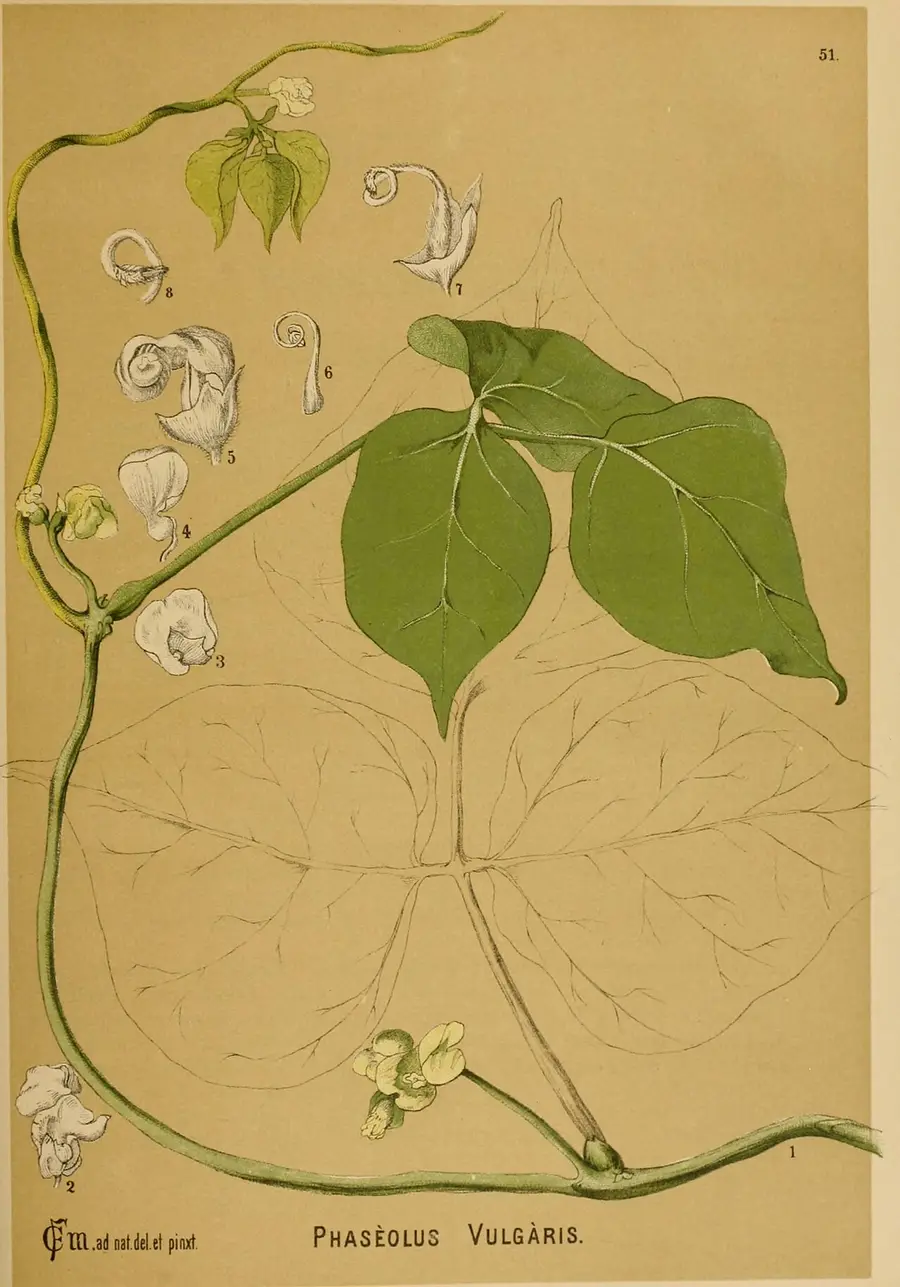
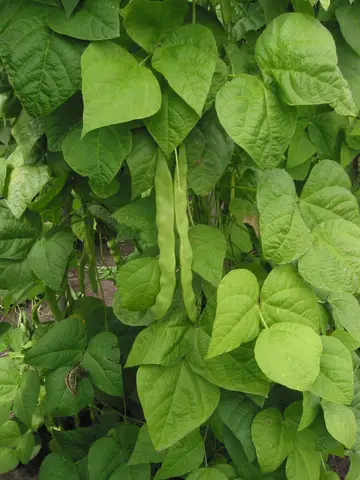
Compound leaves of three broad, pointed leaflets.
Flowers
Butterfly-shaped flowers typical of the legume family, white, pink or purple.
Fruit and seeds
A long pod. Young pods are eaten as green beans and the ripe seeds as dried beans.
Classification
- KingdomPlantae
- PhylumTracheophyta
- ClassMagnoliopsida
- OrderFabales
- FamilyFabaceae
- GenusPhaseolus
- SpeciesPhaseolus vulgaris
Native range
According to POWO it is native from Mexico through Central America to Colombia, Venezuela, Ecuador, Peru, Bolivia and northern Argentina.
IUCN Red List status: Least concern (LC).
Growing conditions
Light
Full sun.
Water
Regular; drought at flowering makes the flowers drop.
Soil
Free-draining, fertile soil.
Temperature
Not frost hardy; sow once the soil has warmed.
Bacteria in its roots fix nitrogen from the air and enrich the soil.
Culture and history
Never eaten raw
Raw and undercooked dried beans, especially red kidney beans, contain a lectin called phytohaemagglutinin that can cause severe stomach upset. Thorough boiling destroys it.
Toxicity
Raw or undercooked bean seeds contain phytohaemagglutinin, which can cause nausea, vomiting and diarrhoea. Thorough boiling destroys it.
In an emergency call your local poison centre; for pets, contact a vet straight away. See also: plants and pets.
Questions
Are green beans and dried beans the same plant?
Yes. Both are Phaseolus vulgaris: green beans are the young pods and dried beans the ripe seeds.
Where do beans come from?
From the Americas. They were domesticated separately in Mexico and the Andes and reached Europe in the 16th century.
Common bean: how do you grow it?
Light: Full sun. Water: Regular; drought at flowering makes the flowers drop. Soil: Free-draining, fertile soil. Temperature: Not frost hardy; sow once the soil has warmed. Bacteria in its roots fix nitrogen from the air and enrich the soil.
Common bean: what is its scientific name?
Phaseolus vulgaris L., in the genus Phaseolus and the family Fabaceae.
Sources
- Wikipedia: Phaseolus vulgaris
- World Flora Online
- Plants of the World Online (Kew) · native range (WCVP)
- GBIF · classification
- Wikidata
- Wikipedia: Phytohaemagglutinin
Checked: 2026-11-17. Spotted a mistake? Tell us.