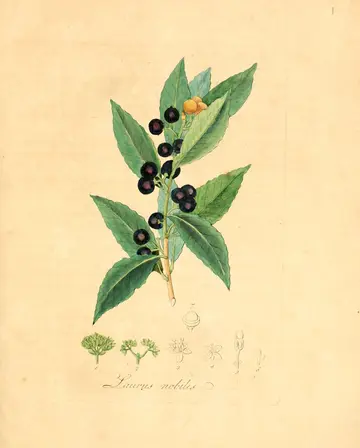
Description
Form
tree, perennial, deciduous
Height: Usually 7–12 m, exceptionally 45 m
Flower colour
Purple
Flowering
No reliable data in the sources.
Habitat
Leaves
Long-stalked leaves up to 50 cm long, two or three times pinnate; the leaflets are dark green above, lighter beneath, with serrated edges.
Flowers
Small, fragrant flowers in clusters, with five pale purple or lilac petals.
Fruit and seeds
A marble-sized drupe with a hard stone, light yellow when ripe; it hangs on the tree all winter, slowly wrinkling and turning almost white.
Classification
- KingdomPlantae
- PhylumTracheophyta
- ClassMagnoliopsida
- OrderSapindales
- FamilyMeliaceae
- GenusMelia
- SpeciesMelia azedarach
Native range
According to POWO it is native from Pakistan and India to the Himalayas, China, Taiwan, Southeast Asia, Indonesia, New Guinea, the Solomon Islands and Australia. It has been introduced to the Mediterranean, the Americas and Africa.
IUCN Red List status: Least concern (LC).
Growing conditions
Light
Sun or part shade.
Soil
Adapts to sandy, clay and loamy soils.
Temperature
According to Wikipedia a mature tree withstands temperatures from −5 °C to 39 °C.
Culture and history
Rosary beads
According to Wikipedia its tough, five-grooved seeds were once widely used for rosaries and other beaded goods, though plastics have mostly replaced them.
Timber and invasiveness
According to Wikipedia it has good-quality, medium-density timber ranging from light brown to dark red. It sets seed prolifically and is spread by birds, so it is considered invasive in the southern United States, parts of Australia and New Zealand.
Name
According to Wikipedia the species name azedarach comes, through French azédarac, from a Persian word meaning "free or noble tree". It should not be confused with neem (Azadirachta), a different genus in the same family.
Toxicity
ASPCA lists the chinaberry tree as toxic to cats, dogs and horses. The toxic principles are tetranortriterpenes (meliatoxins); signs are diarrhoea, vomiting, salivation, depression, weakness and seizures. The ripe berries are the most toxic part, but the bark, leaves and flowers are toxic too.
In an emergency call your local poison centre; for pets, contact a vet straight away. See also: plants and pets.
Questions
Why is it called the bead-tree?
According to Wikipedia its hard, five-grooved seeds were once widely used for making rosaries and other beaded goods.
Are chinaberries poisonous?
Yes. According to ASPCA the ripe berries are the most toxic part, and the bark, leaves and flowers are toxic too. The toxic principles are tetranortriterpenes called meliatoxins.
Chinaberry tree: how do you grow it?
Light: Sun or part shade. Soil: Adapts to sandy, clay and loamy soils. Temperature: According to Wikipedia a mature tree withstands temperatures from −5 °C to 39 °C.
Chinaberry tree: what is its scientific name?
Melia azedarach L., in the genus Melia and the family Meliaceae.
Sources
- Wikipedia: Melia azedarach
- ASPCA Animal Poison Control: Chinaberry Tree (Melia azedarach)
- Plants of the World Online (Kew) · native range (WCVP)
- GBIF · classification
- Wikidata
Checked: 2026-11-24. Spotted a mistake? Tell us.