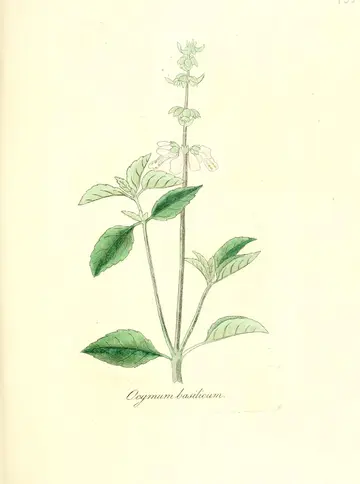
Description
Form
herbaceous, perennial (grown as an annual)
Height: Dwarf cultivars 20–40 cm; wild form 1.3 m
Flower colour
RedPurplePinkWhite
Flowering
June–October
Habitat
Leaves
Opposite, long-stalked, elliptic leaves about 7 × 5 cm with toothed edges. The stem is square.
Flowers
Bright red, tubular, two-lipped flowers about 35 mm long, 2–6 at each node of the upright spikes; the calyx is red too. Cultivars also come in purple, pink and white.
Fruit and seeds
A small dry fruit that splits into four nutlets.
Classification
- KingdomPlantae
- PhylumTracheophyta
- ClassMagnoliopsida
- OrderLamiales
- FamilyLamiaceae
- GenusSalvia
- SpeciesSalvia splendens
Native range
POWO gives south-eastern Brazil as its only native area. According to Wikipedia it grows at 2,000–3,000 m in places that are warm and humid all year.
Growing conditions
Light
Sun or part shade.
Water
Regular.
Soil
Fertile, free-draining soil.
Temperature
Not frost hardy.
Culture and history
A flower of cities
The species was described in 1822. Once dwarf cultivars were bred, it became one of the commonest bedding plants of parks, shopping centres and public gardens worldwide.
Look-alikes
- Greek sage: Same genus, but a shrub with grey-hairy, aromatic leaves and lilac flowers. Compare side by side →
Questions
Is scarlet sage a sage?
Yes, it belongs to Salvia, the sage genus, but its leaves are not aromatic and it is grown as an ornamental.
Scarlet sage: when does it flower?
In summer and autumn: June–October. Months are for temperate northern-hemisphere climates and shift with altitude and weather.
Scarlet sage: how do you grow it?
Light: Sun or part shade. Water: Regular. Soil: Fertile, free-draining soil. Temperature: Not frost hardy.
Scarlet sage: what is its scientific name?
Salvia splendens Sellow ex Nees, in the genus Salvia and the family Lamiaceae.
Sources
- Wikipedia: Salvia splendens
- World Flora Online
- Plants of the World Online (Kew) · native range (WCVP)
- GBIF · classification
- Wikidata
Checked: 2026-11-17. Spotted a mistake? Tell us.