Description
Form
succulent, perennial, evergreen
Height: Up to 12 m
Flower colour
White
Flowering
May–June
Habitat
Leaves
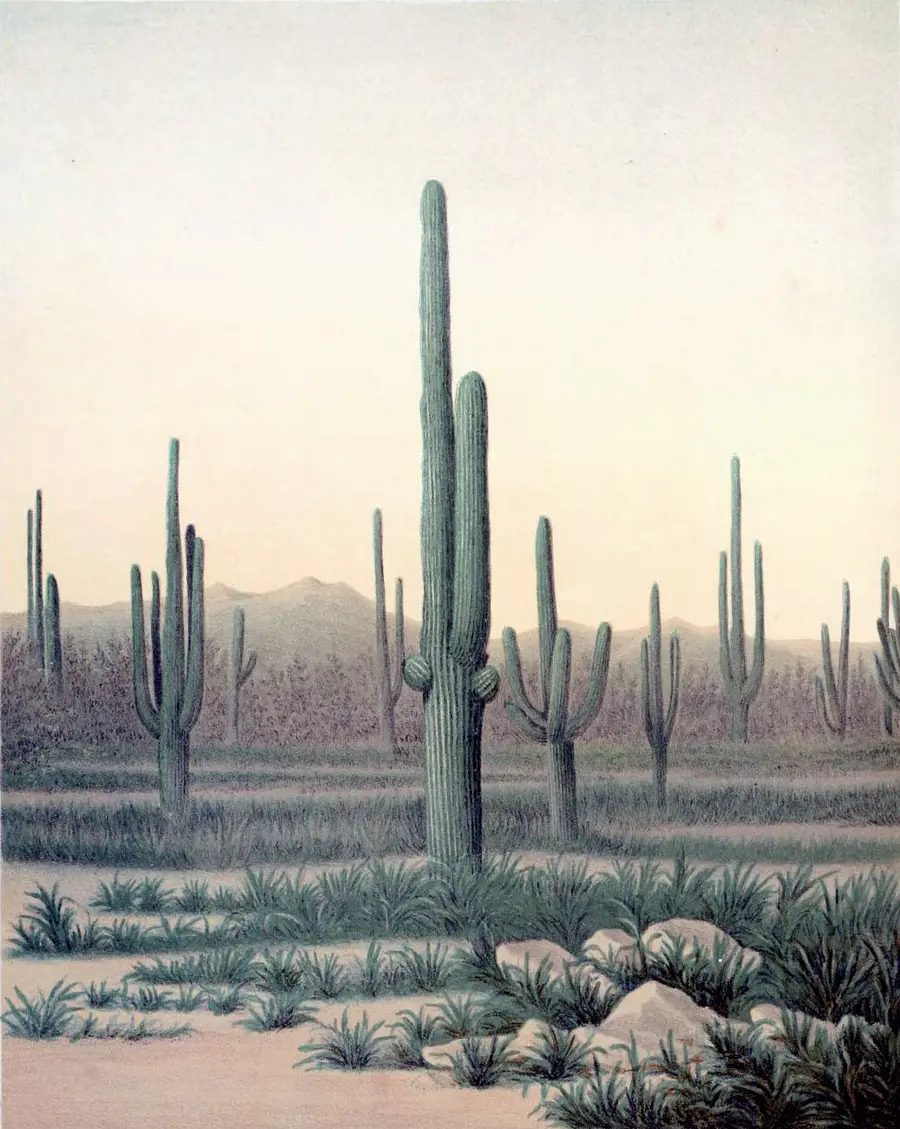
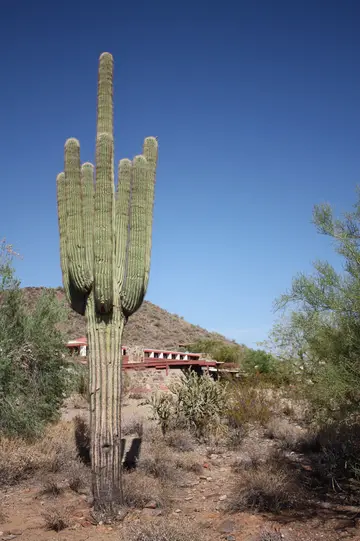
No leaves; the thick, pleated stem is covered in hard spines. The pleats swell with water and narrow as the plant dries out.
Flowers
Large white flowers at the tips of the trunk and arms that open at night; they are pollinated by bats, birds and bees.
Fruit and seeds
A red, fleshy, edible fruit packed with thousands of small black seeds.
Classification
- KingdomPlantae
- PhylumTracheophyta
- ClassMagnoliopsida
- OrderCaryophyllales
- FamilyCactaceae
- GenusCarnegiea
- SpeciesCarnegiea gigantea
Native range
According to POWO it is native to Arizona, the south-eastern tip of California and Sonora in Mexico; it is restricted to the Sonoran Desert.
IUCN Red List status: Least concern (LC).
Culture and history
Symbol of Arizona
The saguaro blossom is the state flower of Arizona. The Tohono O'odham people have harvested its fruit for centuries.
Slow growth
The saguaro grows very slowly and takes decades to produce its first arms. In Arizona it is illegal to remove or damage a saguaro without a permit.
Questions
Saguaro: when does it flower?
In spring and summer: May–June. Months are for temperate northern-hemisphere climates and shift with altitude and weather.
Saguaro: what is its scientific name?
Carnegiea gigantea (Engelm.) Britton & Rose, in the genus Carnegiea and the family Cactaceae.
Sources
- Wikipedia: Saguaro
- World Flora Online
- Plants of the World Online (Kew) · native range (WCVP)
- GBIF · classification
- Wikidata
Checked: 2026-11-16. Spotted a mistake? Tell us.