Description
Form
herbaceous, annual
Height: 60–150 cm
Flower colour
Green
Flowering
July–August
Leaves
Long, upright, strap-shaped leaves wrapping the stem like a sheath.
Flowers
Small, greenish spikelets in a drooping, branched cluster at the top of the stem.
Fruit and seeds
A one-seeded grain enclosed in hard husks; the unhusked grain is called paddy rice.
Classification
- KingdomPlantae
- PhylumTracheophyta
- ClassLiliopsida
- OrderPoales
- FamilyPoaceae
- GenusOryza
- SpeciesOryza sativa
Native range
According to POWO it is native to north-central, south-central and south-eastern China. It was domesticated from its wild ancestor Oryza rufipogon and spread from there across Asia and the world.
Culture and history
Why underwater?
Rice stems and roots are full of air channels that carry air down to the roots, so the plant can live in flooded fields. The water suppresses most competing weeds.
Look-alikes
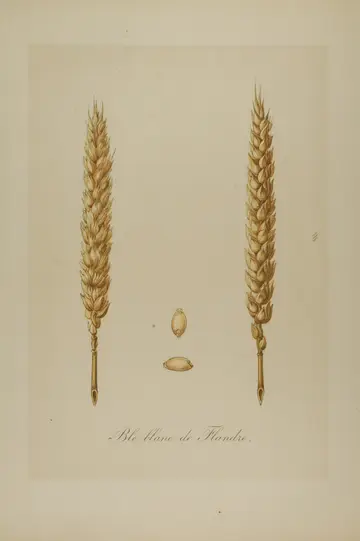
- Bread wheat: Same family, but it grows in dry fields and its grains are in an upright, tight ear. Rice grains are in a drooping, branched cluster. Compare side by side →
Questions
What is the difference between paddy and rice?
Paddy is both the plant and the unhusked grain; once the husk is removed, the grain is called rice.
Rice: when does it flower?
In summer: July–August. Months are for temperate northern-hemisphere climates and shift with altitude and weather.
Rice: what is its scientific name?
Oryza sativa L., in the genus Oryza and the family Poaceae.
Sources
- Wikipedia: Rice
- World Flora Online
- Plants of the World Online (Kew) · native range (WCVP)
- GBIF · classification
- Wikidata
- Wikipedia
Checked: 2026-11-17. Spotted a mistake? Tell us.