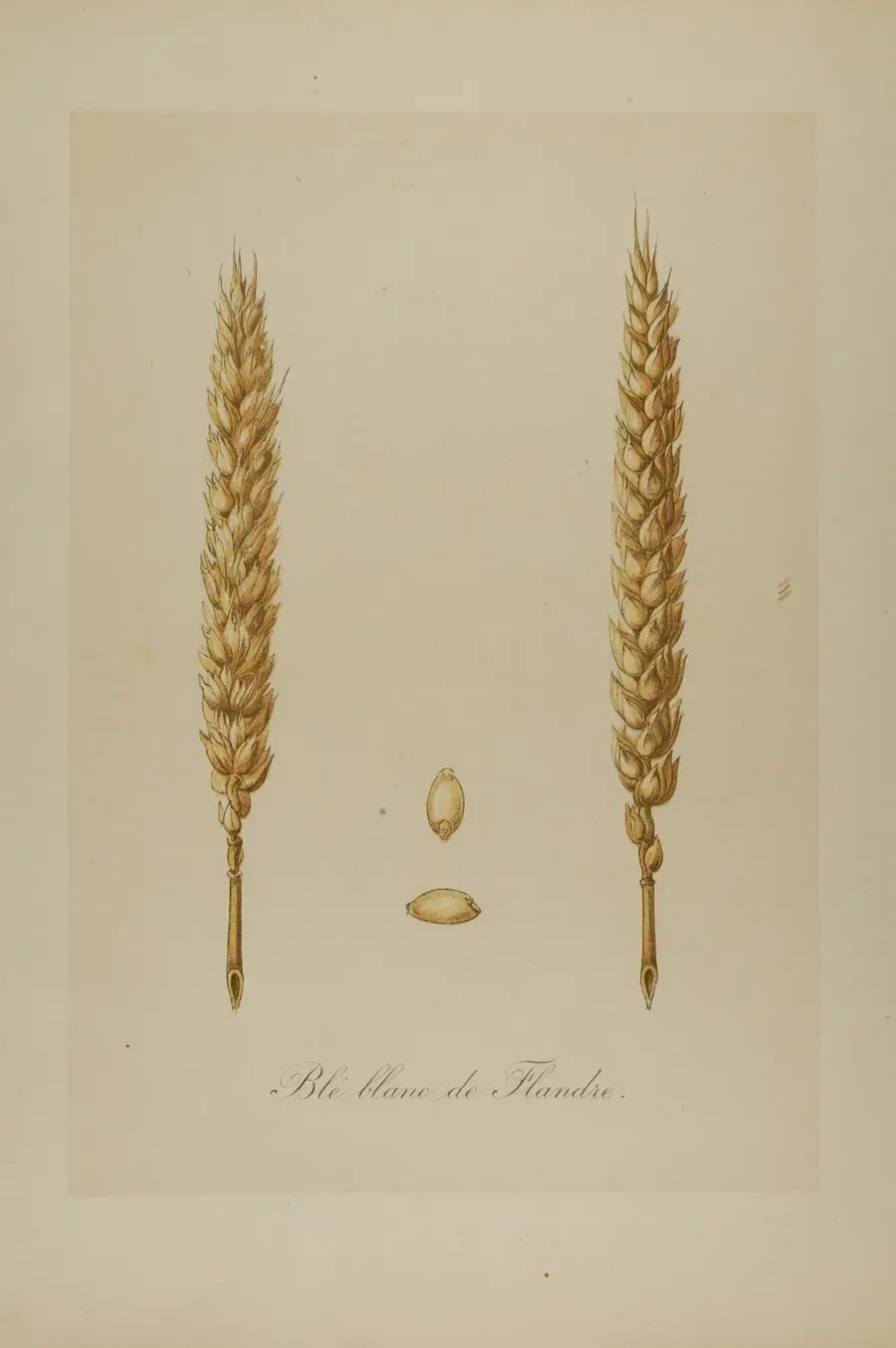

Description
Form
herbaceous, annual
Height: 0.6–1.5 m
Flower colour
Green
Flowering
No reliable data in the sources.
Habitat
Leaves
Long, narrow, strap-shaped leaves whose bases wrap the stem like a sheath.
Flowers
Petal-less flowers hidden between scales in spikelets along the ear at the top of the stem; mostly self-pollinating.
Fruit and seeds
The grain is botanically a dry fruit in which the seed coat is fused to the fruit wall (a caryopsis).
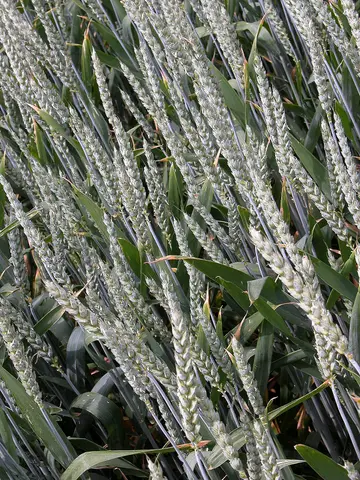

Classification
- KingdomPlantae
- PhylumTracheophyta
- ClassLiliopsida
- OrderPoales
- FamilyPoaceae
- GenusTriticum
- SpeciesTriticum aestivum
Native range
Bread wheat is hexaploid: four of its six chromosome sets come from cultivated emmer wheat (Triticum turgidum) and two from a wild grass, Aegilops tauschii. This cross happened about 8,000 years ago in the South Caucasus or southwest of the Caspian. POWO gives its range as Türkiye, the Caucasus, Lebanon–Syria, Palestine, Iran, Pakistan, India and the western Himalaya.
Growing conditions
Light
Full sun.
Water
Low to moderate; in Türkiye mostly rain-fed.
Soil
Deep clay loams.
Temperature
Winter wheat is sown in autumn and needs winter cold to form ears; spring wheat is sown in spring.
Culture and history
Karacadağ and einkorn
A DNA study by Heun and colleagues, published in Science in 1997, showed that cultivated einkorn is most similar to the wild einkorn of Karacadağ near Diyarbakır, suggesting that southeastern Anatolia was one of the places where wheat was first domesticated.
Look-alikes
- Durum wheat (Triticum turgidum subsp. durum): A tetraploid relative with a harder, glassy grain, used for pasta and bulgur.
- Barley (Hordeum vulgare): Its ears have long awns and three spikelets at each node. Compare side by side →
Questions
Where was wheat first domesticated?
In the Fertile Crescent; DNA studies point to einkorn being domesticated around Karacadağ in southeastern Türkiye. Bread wheat arose later, about 8,000 years ago, from a cross in the South Caucasus or Caspian region.
What is the difference between bread wheat and durum wheat?
Bread wheat has six chromosome sets and durum wheat four; durum grain is harder.
Bread wheat: how do you grow it?
Light: Full sun. Water: Low to moderate; in Türkiye mostly rain-fed. Soil: Deep clay loams. Temperature: Winter wheat is sown in autumn and needs winter cold to form ears; spring wheat is sown in spring.
Bread wheat: what is its scientific name?
Triticum aestivum L., in the genus Triticum and the family Poaceae.
Sources
- Wikipedia: Common wheat
- World Flora Online
- Plants of the World Online (Kew) · native range (WCVP)
- GBIF · classification
- Wikidata
- Heun M. ve ark. (1997). Site of einkorn wheat domestication identified by DNA fingerprinting. Science 278: 1312–1314
Checked: 2026-11-16. Spotted a mistake? Tell us.