Description
Form
small tree, perennial, deciduous
Height: 1.5–5 m
Flower colour
RedOrange
Flowering
May–June
Habitat
Leaves
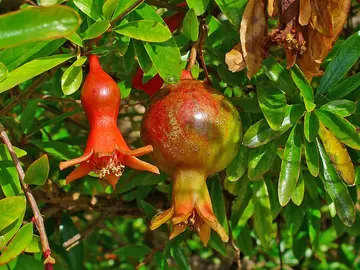
Narrow, glossy, oblong leaves, bronze when young.
Flowers
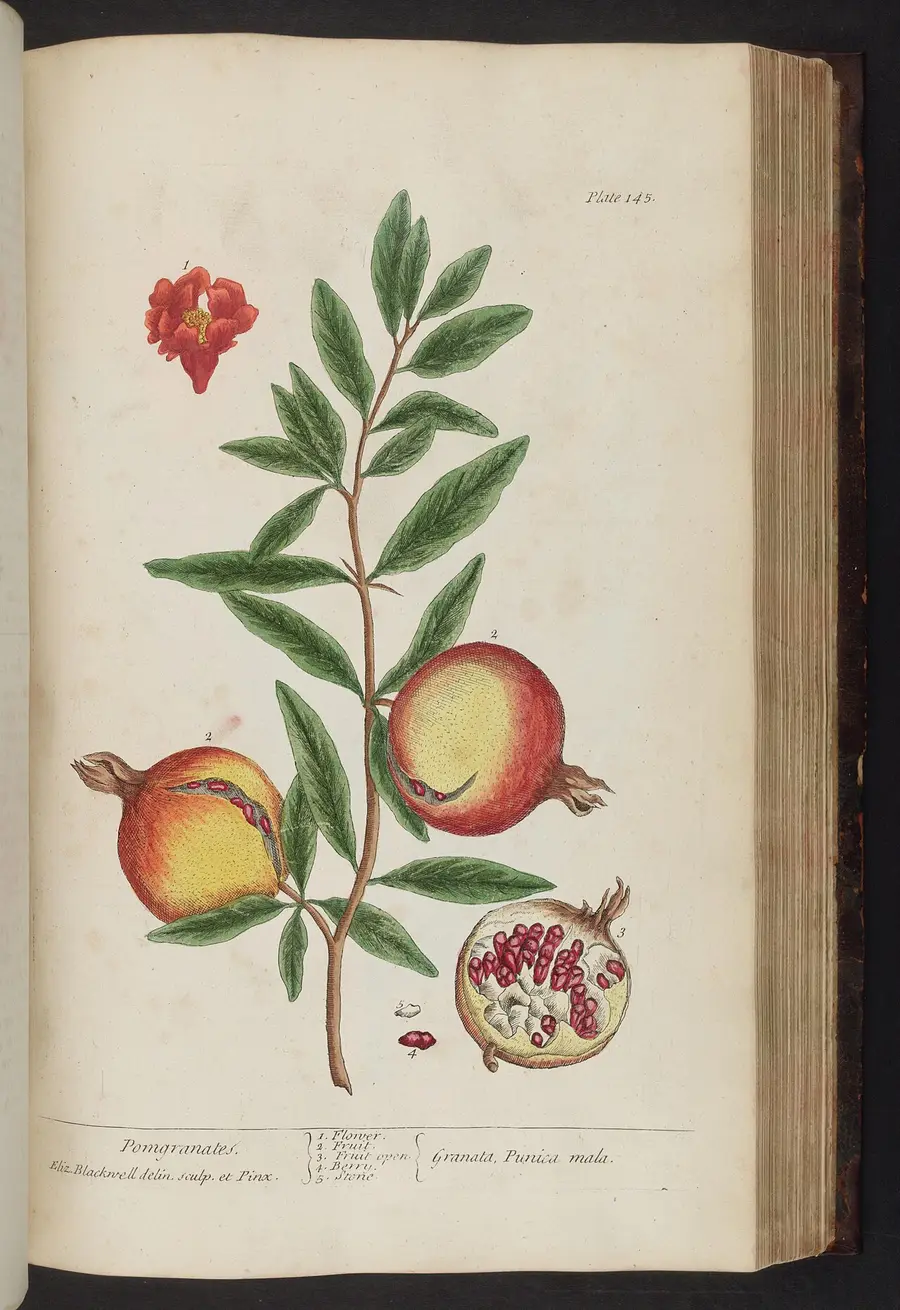
Flowers 3 cm or more across, usually bright red, sometimes white: three to seven crinkled petals emerge from a thick, fleshy calyx. Pollinated by honeybees and bumblebees.
Fruit and seeds
A round, leathery berry topped by the calyx "crown", divided by thin membranes into chambers holding from 200 to about 1,400 seeds in juicy red coats (arils).
Classification
- KingdomPlantae
- PhylumTracheophyta
- ClassMagnoliopsida
- OrderMyrtales
- FamilyLythraceae
- GenusPunica
- SpeciesPunica granatum
Native range
According to POWO it is native to Türkiye, Iran, Iraq, the Caucasus, Turkmenistan, Tajikistan, Afghanistan and Pakistan. It spread to the Mediterranean and warm temperate regions in ancient times.
IUCN Red List status: Least concern (LC).
Growing conditions
Light
Full sun.
Water
Drought tolerant; even watering prevents fruit splitting.
Soil
Not fussy.
Temperature
Tolerates moderate frost.
Dwarf forms grow well in pots.
Questions
Where is the pomegranate from?
It is native from Türkiye and Iran to Pakistan and was spread around the Mediterranean in antiquity.
Pomegranate: when does it flower?
In spring and summer: May–June. Months are for temperate northern-hemisphere climates and shift with altitude and weather.
Pomegranate: how do you grow it?
Light: Full sun. Water: Drought tolerant; even watering prevents fruit splitting. Soil: Not fussy. Temperature: Tolerates moderate frost. Dwarf forms grow well in pots.
Pomegranate: what is its scientific name?
Punica granatum L., in the genus Punica and the family Lythraceae.
Sources
- Wikipedia: Pomegranate
- World Flora Online
- Plants of the World Online (Kew) · native range (WCVP)
- GBIF · classification
- Wikidata
Checked: 2026-11-16. Spotted a mistake? Tell us.