Description
Form
herb, annual
Height: 0.3–1.5 m
Flower colour
WhitePurple
Flowering
June–September
Habitat
Leaves
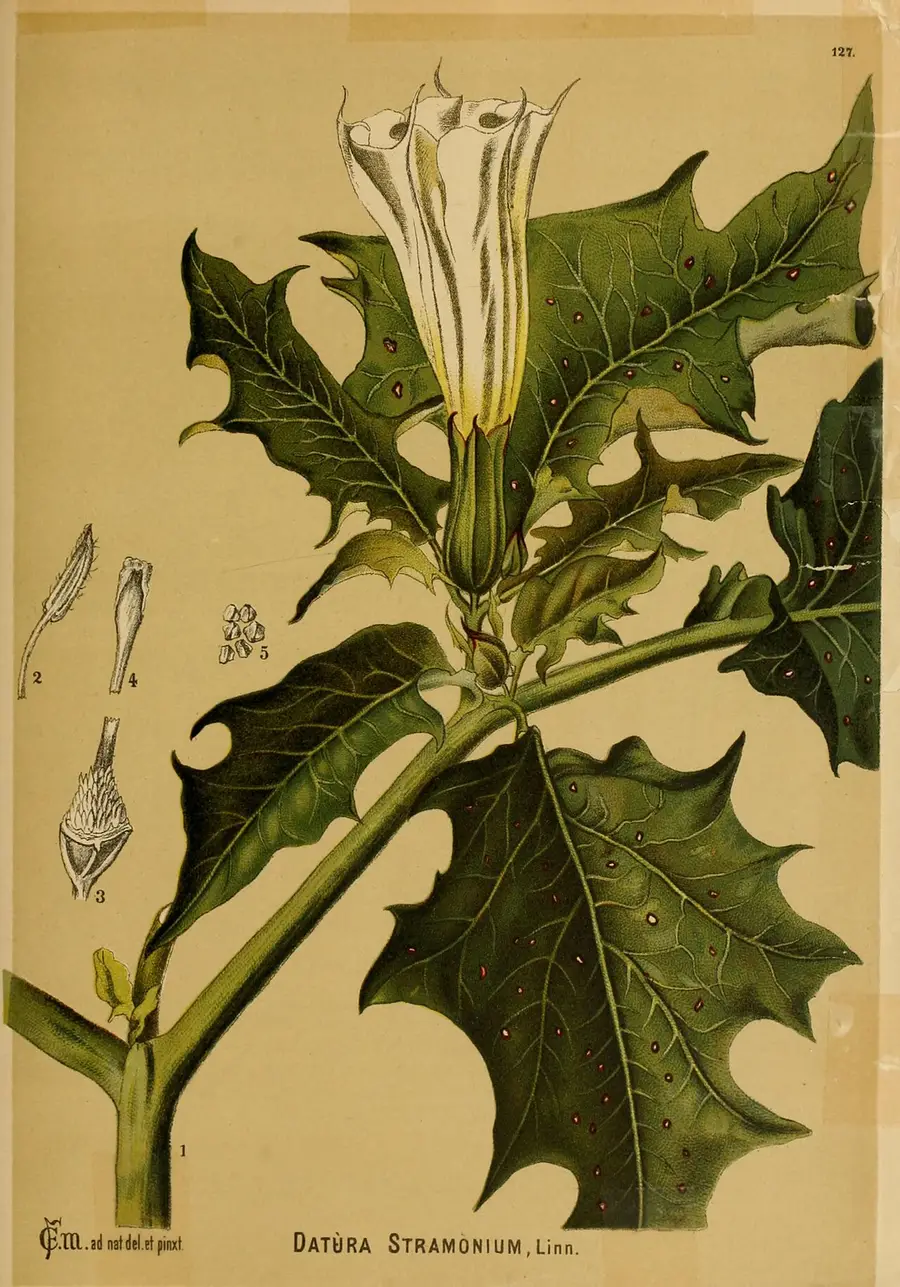
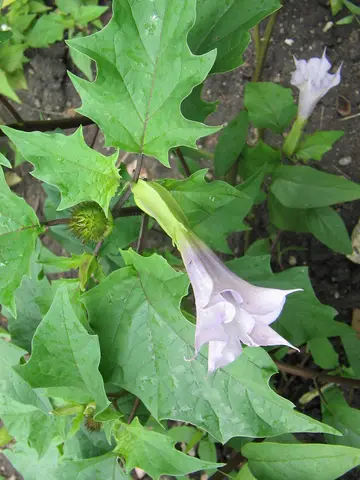
Large, irregularly toothed leaves with an unpleasant smell.
Flowers
Long, trumpet-shaped white or pale purple flowers that open in the evening.
Fruit and seeds
A walnut-sized capsule covered in stiff spines, splitting into four to release many black seeds.
Classification
- KingdomPlantae
- PhylumTracheophyta
- ClassMagnoliopsida
- OrderSolanales
- FamilySolanaceae
- GenusDatura
- SpeciesDatura stramonium
Native range
According to POWO it is native to Mexico. It has spread as a weed across most temperate and warm regions of the world.
Culture and history
The name
"Jimsonweed" comes from Jamestown, Virginia, where in 1676 soldiers sent to put down a rebellion were poisoned after eating the plant.
Toxicity
All parts, especially the seeds, contain tropane alkaloids such as atropine and scopolamine. Signs include dry mouth, dilated pupils, fever, racing heart, confusion and hallucinations; it can be fatal. Mass poisonings have occurred when its seeds contaminated grain and bean harvests. Never pick or eat a wild plant unless you are certain what it is. If poisoning is suspected, call your local poison centre or emergency number at once.
In an emergency call your local poison centre; for pets, contact a vet straight away. See also: plants and pets.
Look-alikes
- Angel's trumpet (Brugmansia): An ornamental relative with hanging flowers and smooth pods; it is also highly poisonous.
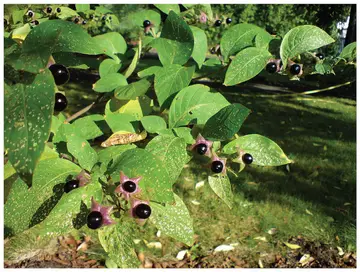
- Deadly nightshade: Another poisonous plant of the same family with the same kind of alkaloids. Compare side by side →
Questions
Why is it called jimsonweed?
The name comes from Jamestown, Virginia, where soldiers were poisoned by the plant in 1676.
Jimsonweed: when does it flower?
In summer and autumn: June–September. Months are for temperate northern-hemisphere climates and shift with altitude and weather.
Jimsonweed: is it toxic to cats and dogs?
Toxic to cats and dogs and people. Tropane alkaloids, especially in seeds.
Jimsonweed: what is its scientific name?
Datura stramonium L., in the genus Datura and the family Solanaceae.
Sources
- Wikipedia: Datura stramonium
- World Flora Online
- Plants of the World Online (Kew) · native range (WCVP)
- GBIF · classification
- Wikidata
Checked: 2026-11-16. Spotted a mistake? Tell us.