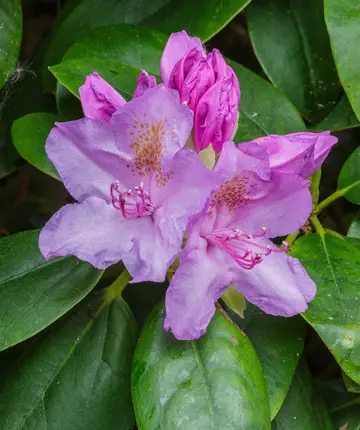
Description
Form
shrub, perennial, evergreen
Height: Up to 2 m
Flower colour
WhitePinkRed
Flowering
No reliable data in the sources.
Habitat
Leaves
Leaves egg-shaped, elliptic or oblanceolate, 1.5–5 cm long and 0.5–3 cm wide.
Flowers
Funnel-shaped flowers from white to dark red.
Classification
- KingdomPlantae
- PhylumTracheophyta
- ClassMagnoliopsida
- OrderEricales
- FamilyEricaceae
- GenusRhododendron
- SpeciesRhododendron simsii
Native range
According to POWO it is native to south-central and southeastern China, Tibet, Taiwan, the Ryukyu Islands, Myanmar, Laos, Thailand and Vietnam.
Toxicity
ASPCA lists azaleas (Rhododendron species) as toxic to cats, dogs and horses. The toxic principle is grayanotoxin; signs are vomiting (not in horses), diarrhoea, weakness and cardiac failure. Wikipedia also notes that some varieties of Rhododendron simsii are poisonous because of grayanotoxin.
In an emergency call your local poison centre; for pets, contact a vet straight away. See also: plants and pets.
Look-alikes
- Pontic rhododendron (Rhododendron ponticum): Same genus and also poisonous, but its leaves are large, leathery and lance-shaped, and its purple or lilac flowers come in large clusters at the branch tips. Compare side by side →
Questions
Is azalea toxic to cats?
Yes. ASPCA lists azaleas as toxic to cats, dogs and horses; the toxic principle is grayanotoxin.
Azalea: what is its scientific name?
Rhododendron simsii Planch., in the genus Rhododendron and the family Ericaceae.
Sources
- Wikipedia: Rhododendron simsii
- ASPCA Animal Poison Control: Azalea
- World Flora Online
- Plants of the World Online (Kew) · native range (WCVP)
- GBIF · classification
- Wikidata
Checked: 2026-11-22. Spotted a mistake? Tell us.