Telling them apart
Leyland cypress vs Mediterranean cypress
Leyland cypress (Cupressus × leylandii) and Mediterranean cypress (Cupressus sempervirens) look similar enough to be confused. Both belong to the same family, Cupressaceae (cypress family).
Image wanted. A licensed image will be added when found.
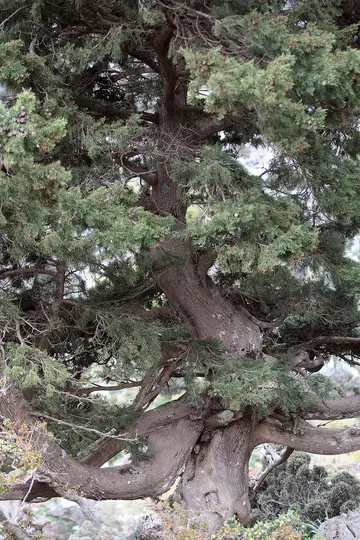
How to tell them apart
- Mediterranean cypress: Same genus with scale leaves too, but its cones are larger (2–4 cm), round, woody and made of 10–14 shield-shaped scales.
Side by side
| Leyland cypress | Mediterranean cypress | |
|---|---|---|
| Scientific name | Cupressus × leylandii | Cupressus sempervirens |
| Family | Cupressaceae (cypress family) | Cupressaceae (cypress family) |
| Form | tree, perennial, evergreen | tree, perennial, evergreen |
| Height | 20–25 m | 20–35 m |
| Flower colour | — | — |
| Origin | Britain (cultivated hybrid) | Eastern Mediterranean |
| Toxicity | — | — |
| Flowering | — | — |
| Leaves | Scale leaves about 1 mm long, pressed against the twig, on flattened, slightly aromatic sprays. | Tiny, scale-like, dark green leaves pressed tightly against the shoots. |
| Flowers | Does not flower; it bears cones. | Cypresses do not flower; male cones shed plenty of pollen in late winter. |
| Fruit and seeds | Cones about 2 cm long with eight scales; as a hybrid its seeds are mostly sterile. Over time the cones dry, shrink and turn grey or chocolate brown. | Round, woody cones 2–4 cm across with 10–14 shield-shaped scales, green at first, ripening greyish brown. |
All pairs: look-alike plants · Full pages: Leyland cypress, Mediterranean cypress