Telling them apart
Fennel vs Poison hemlock
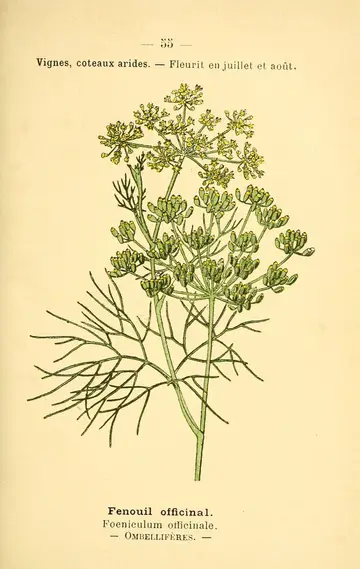
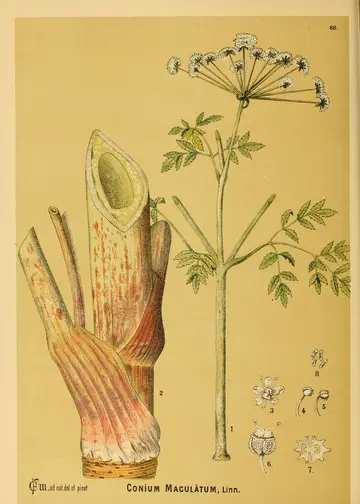
Fennel (Foeniculum vulgare) and Poison hemlock (Conium maculatum) look similar enough to be confused. Both belong to the same family, Apiaceae (carrot family).
CautionPoison hemlock is poisonous to people. Never pick or eat a wild plant unless you are certain of its identity. If poisoning is suspected, call your local poison centre or emergency number.
How to tell them apart
- Poison hemlock: Deadly poisonous. Its umbrella-shaped flower heads are white (fennel's are yellow), its stem is blotched purple, and it smells foul, like mouse urine, when crushed, not of aniseed.
Side by side
| Fennel | Poison hemlock | |
|---|---|---|
| Scientific name | Foeniculum vulgare | Conium maculatum |
| Family | Apiaceae (carrot family) | Apiaceae (carrot family) |
| Form | herbaceous, perennial | herb, biennial |
| Height | 1–2.5 m | 1–2.5 m |
| Flower colour | Yellow | White |
| Origin | Mediterranean and western Asia | Europe, North Africa and western Asia |
| Toxicity | Cats: non-toxic · Dogs: non-toxic | People: toxic · Cats: toxic · Dogs: toxic |
| Flowering | ||
| Leaves | Hair-fine, much-divided, bluish-green leaves whose stalks sheathe the stem. They smell of aniseed when crushed. | Finely divided, fern-like, glossy green leaves with an unpleasant smell when crushed. |
| Flowers | Small yellow flowers in broad, flat umbrella-shaped heads. | Small white flowers in umbrella-shaped clusters (umbels). |
| Fruit and seeds | Small, elongated, distinctly ribbed, fragrant dry fruits ("fennel seeds"). | Small, ridged, roundish fruits. |
All pairs: look-alike plants · Full pages: Fennel, Poison hemlock