Telling them apart
Dill vs Fennel
Dill (Anethum graveolens) and Fennel (Foeniculum vulgare) look similar enough to be confused. Both belong to the same family, Apiaceae (carrot family).
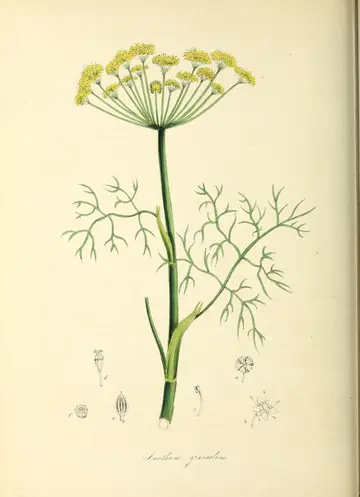
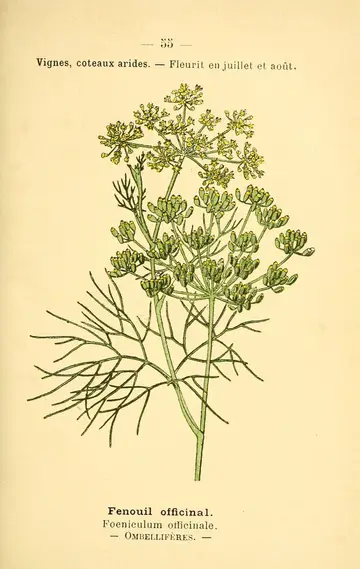
How to tell them apart
Side by side
| Dill | Fennel | |
|---|---|---|
| Scientific name | Anethum graveolens | Foeniculum vulgare |
| Family | Apiaceae (carrot family) | Apiaceae (carrot family) |
| Form | herbaceous, annual | herbaceous, perennial |
| Height | 0.5–1.5 m | 1–2.5 m |
| Flower colour | Yellow, White | Yellow |
| Origin | North Africa and western Asia | Mediterranean and western Asia |
| Toxicity | Cats: non-toxic · Dogs: non-toxic | Cats: non-toxic · Dogs: non-toxic |
| Flowering | — | |
| Leaves | The stem is thin and hollow. Leaves 10–20 cm long are divided into thread-like segments only 1–2 mm wide. | Hair-fine, much-divided, bluish-green leaves whose stalks sheathe the stem. They smell of aniseed when crushed. |
| Flowers | Small, white to yellow, fragrant flowers in umbrella-shaped heads 2.5–9 cm across. It runs to flower in hot, dry weather. | Small yellow flowers in broad, flat umbrella-shaped heads. |
| Fruit and seeds | Dry fruits 4–5 mm long and 1 mm thick, straight or slightly curved and ribbed lengthwise; these are the "dill seeds" used as a spice. | Small, elongated, distinctly ribbed, fragrant dry fruits ("fennel seeds"). |
All pairs: look-alike plants · Full pages: Dill, Fennel