Telling them apart
Chrysanthemum vs German chamomile
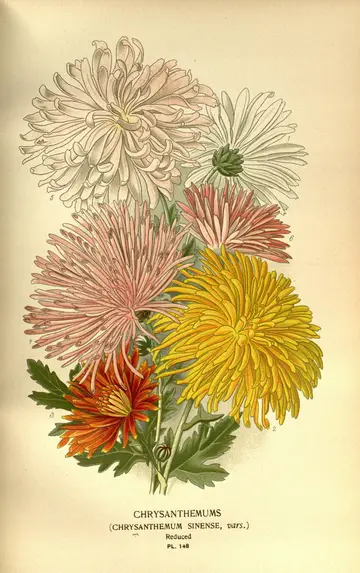
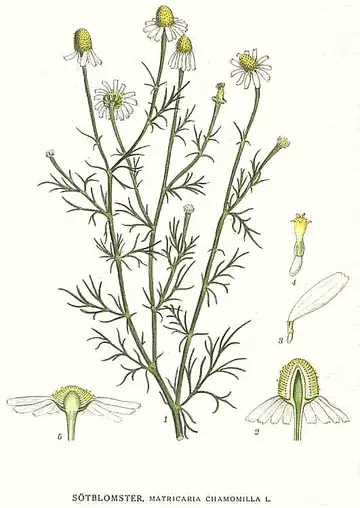
Chrysanthemum (Chrysanthemum × morifolium) and German chamomile (Matricaria chamomilla) look similar enough to be confused. Both belong to the same family, Asteraceae (daisy family).
How to tell them apart
- German chamomile: A relative, but an annual with small flower heads that flowers in spring and summer.
Side by side
| Chrysanthemum | German chamomile | |
|---|---|---|
| Scientific name | Chrysanthemum × morifolium | Matricaria chamomilla |
| Family | Asteraceae (daisy family) | Asteraceae (daisy family) |
| Form | herbaceous, perennial | herbaceous, annual |
| Height | 30–90 cm | 15–60 cm |
| Flower colour | Yellow, White, Pink, Purple, Red, Orange | White, Yellow |
| Origin | China (cultivated hybrid) | Europe and western Asia |
| Toxicity | Cats: toxic · Dogs: toxic | — |
| Flowering | ||
| Leaves | Alternate, lobed, toothed leaves up to 12 cm long, covered in grey hairs and sharply scented when crushed. | Leaves two or three times divided into very fine, almost thread-like segments. |
| Flowers | The typical daisy-family flower head, with disc florets in the centre and ray florets around the edge. In cultivars the heads range from button-size to 20 cm, and may be single, ball-shaped, spider-shaped and much more. | Each head has yellow disc florets in the centre and white ray florets around the edge. The base of the head (receptacle) is cone-shaped and hollow. The rays bend downwards as the head matures. |
| Fruit and seeds | Cultivars rarely set seed. | A tiny, dry, one-seeded fruit (achene). |
All pairs: look-alike plants · Full pages: Chrysanthemum, German chamomile