Telling them apart
Avocado vs Bay laurel
Avocado (Persea americana) and Bay laurel (Laurus nobilis) look similar enough to be confused. Both belong to the same family, Lauraceae (laurel family).
Image wanted. A licensed image will be added when found.
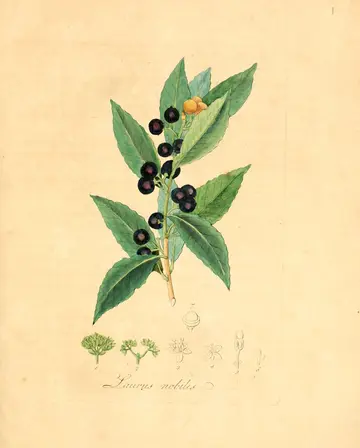
How to tell them apart
- Bay laurel: Same family (Lauraceae); its leaves are also leathery and aromatic, but much smaller.
Side by side
| Avocado | Bay laurel | |
|---|---|---|
| Scientific name | Persea americana | Laurus nobilis |
| Family | Lauraceae (laurel family) | Lauraceae (laurel family) |
| Form | tree, perennial, evergreen | tree or shrub, perennial, evergreen |
| Height | 10–20 m | As a shrub 2–5 m; as a tree 10–18 m |
| Flower colour | Green, Yellow | Yellow, Green |
| Origin | Mexico and Central America | Mediterranean Basin |
| Toxicity | — | Cats: toxic · Dogs: toxic |
| Flowering | ||
| Leaves | Large, elliptic, leathery, dark green leaves with smooth edges. | Alternate, lance-shaped, leathery, glossy leaves 6–12 cm long with slightly wavy edges, strongly and pleasantly scented when crushed. |
| Flowers | Small, yellowish-green flowers in clusters. Each flower opens over two days, first as female, then as male; cultivars are divided into A and B types by these opening times. | Small, yellowish-green flowers in clusters in the leaf axils; male and female flowers on separate trees. |
| Fruit and seeds | A pear-shaped berry with green or purple-black skin, oily flesh and a single large stone. | A small, glossy black berry with a single seed; only female trees fruit. |
All pairs: look-alike plants · Full pages: Avocado, Bay laurel