Telling them apart
Apricot vs European plum
Apricot (Prunus armeniaca) and European plum (Prunus domestica) look similar enough to be confused. Both belong to the same family, Rosaceae (rose family).
CautionApricot is poisonous to people. Never pick or eat a wild plant unless you are certain of its identity. If poisoning is suspected, call your local poison centre or emergency number.
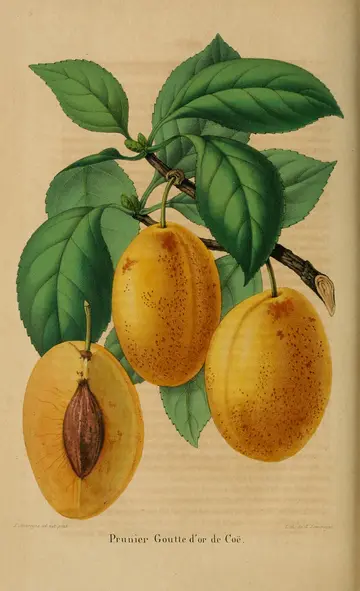
Image wanted. A licensed image will be added when found.
How to tell them apart
- European plum: Same genus, also with a single-stoned fruit, but plums are smooth-skinned, often with a whitish bloom, and purple, blue, yellow, green or red depending on the variety. Its leaves are elliptic and its flowers open with the leaves. Apricots are orange-yellow and velvety, with roundish leaves on reddish stalks.
Side by side
| Apricot | European plum | |
|---|---|---|
| Scientific name | Prunus armeniaca | Prunus domestica |
| Family | Rosaceae (rose family) | Rosaceae (rose family) |
| Form | tree, perennial, deciduous | tree, perennial, deciduous |
| Height | 5–10 m | 5–10 m |
| Flower colour | White, Pink | White |
| Origin | Central Asia and northern China | The Caucasus and Iran |
| Toxicity | People: toxic · Cats: toxic · Dogs: toxic | Cats: toxic · Dogs: toxic |
| Flowering | ||
| Leaves | Roundish, pointed leaves with finely toothed edges and reddish stalks. | Alternate, elliptic leaves with blunt-toothed edges, slightly hairy underneath. |
| Flowers | White or pale pink flowers on short stalks along the branches, before the leaves. | White flowers with five petals, opening in twos and threes with or just before the leaves. |
| Fruit and seeds | An orange-yellow stone fruit with a velvety skin and a single stone. | A juicy, fleshy drupe with a single stone, often covered with a whitish bloom; purple, blue, yellow, green or red depending on the cultivar. |
All pairs: look-alike plants · Full pages: Apricot, European plum