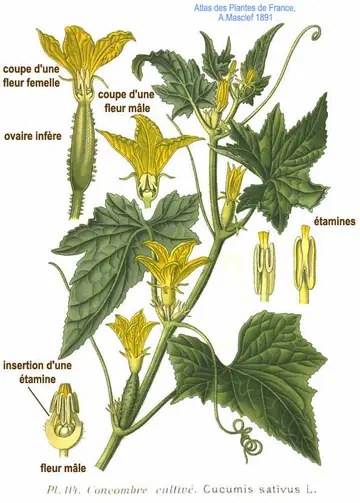
Description
Form
herbaceous (trailing), annual
Flowering
No reliable data in the sources.
Fruit and seeds
Round or flattened round fruits, ribbed, warty or smooth, in dull yellow to reddish shades, with yellow-orange flesh. Shape and colour vary greatly between cultivars.
Classification
- KingdomPlantae
- PhylumTracheophyta
- ClassMagnoliopsida
- OrderCucurbitales
- FamilyCucurbitaceae
- GenusCucurbita
- SpeciesCucurbita maxima
Native range
According to POWO it is native to northeastern and northwestern Argentina and Bolivia. According to Wikipedia the cultivated forms arose in northern Argentina near the Andes, with secondary centres of diversity in India, Bangladesh and Myanmar.
Culture and history
North to the Americas
According to Wikipedia squashes of this species reached North America by the 16th century, and by the American Revolution Native American peoples were growing them across what is now the United States.
Look-alikes
- Summer squash and pumpkin (Cucurbita pepo): A separate species in the same genus, which includes courgettes and many pumpkins. Winter squash fruits are round or flattened, dull yellow to reddish, with yellow-orange flesh. Compare side by side →
Questions
Is winter squash the same species as courgette?
No. Both are in the genus Cucurbita but they are separate species: courgettes belong to Cucurbita pepo, while Hubbard, buttercup and banana squashes belong to Cucurbita maxima.
Winter squash: what is its scientific name?
Cucurbita maxima Duchesne, in the genus Cucurbita and the family Cucurbitaceae.
Sources
- Wikipedia: Cucurbita maxima
- Plants of the World Online (Kew) · native range (WCVP)
- GBIF · classification
- Wikidata
Checked: 2026-11-23. Spotted a mistake? Tell us.