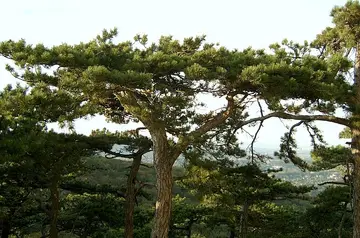
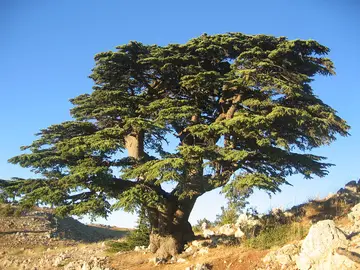
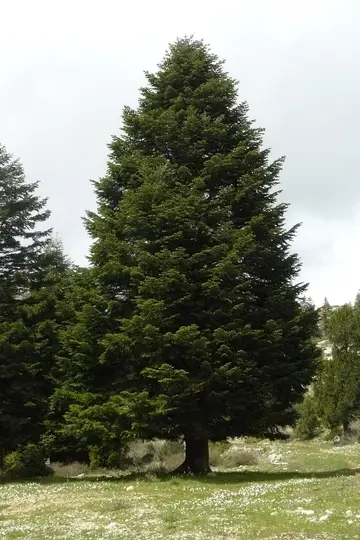
Description
Form
tree, perennial, evergreen
Height: 12–20 m; sometimes 25 m
Flowering
No reliable data in the sources.
Habitat
Leaves
Flexible, mid-green needles 10–20 cm long, in pairs.
Flowers
Yellow male cones and small female cones in spring.
Fruit and seeds
Large (8–15 cm), heavy, glossy brown cones that take three years to ripen, holding large, hard-shelled seeds (pine nuts).
Classification
- KingdomPlantae
- PhylumTracheophyta
- ClassPinopsida
- OrderPinales
- FamilyPinaceae
- GenusPinus
- SpeciesPinus pinea
Native range
According to POWO it is native to Portugal, Spain, France, Italy, the Mediterranean islands, Albania, Greece, Crete, the Aegean islands, Türkiye, Cyprus and Lebanon-Syria.
IUCN Red List status: Least concern (LC).
Growing conditions
Light
Full sun.
Water
Little; drought tolerant.
Soil
Sandy, free-draining soil.
Temperature
Tolerates light frost.
Culture and history
The umbrella crown
According to Wikipedia it is a bushy globe when young, an umbrella on a thick trunk in mid-age, and a broad, flat crown more than 8 m wide when mature. It has won the Royal Horticultural Society's Award of Garden Merit.
Look-alikes
- Turkish pine: Grows on the same coasts; its crown is not umbrella-shaped, its cones are small and its seeds small and winged. Compare side by side →
Questions
Which tree do pine nuts come from?
The pine nuts sold in Türkiye and around the Mediterranean are the seeds in the large cones of the stone pine (Pinus pinea).
Stone pine: how do you grow it?
Light: Full sun. Water: Little; drought tolerant. Soil: Sandy, free-draining soil. Temperature: Tolerates light frost.
Stone pine: what is its scientific name?
Pinus pinea L., in the genus Pinus and the family Pinaceae.
Sources
- Wikipedia: Pinus pinea
- World Flora Online
- Plants of the World Online (Kew) · native range (WCVP)
- GBIF · classification
- Wikidata
Checked: 2026-11-17. Spotted a mistake? Tell us.