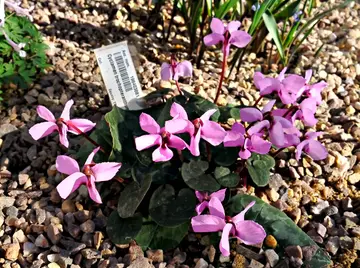
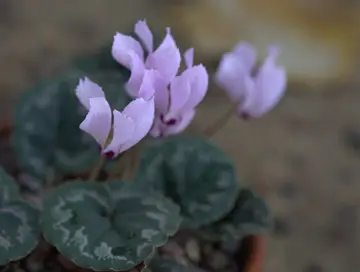
Description
Form
herbaceous, perennial, semi-evergreen
Height: 10–30 cm
Flower colour
YellowWhitePink
Flowering
February–April
Habitat
Leaves
Leaves in a basal rosette, 5–25 cm long and 2–6 cm wide, often strongly wrinkled, irregularly toothed and narrowing towards the base.
Flowers
Lightly scented, five-petalled flowers 2–4 cm across, borne singly on short stalks from the centre of the rosette; usually pale yellow with a darker centre, sometimes white or pink in the wild.
Fruit and seeds
A capsule opening by valves to release small black seeds.
Classification
- KingdomPlantae
- PhylumTracheophyta
- ClassMagnoliopsida
- OrderEricales
- FamilyPrimulaceae
- GenusPrimula
- SpeciesPrimula vulgaris
Native range
According to POWO it is native from Britain, Ireland and southern Scandinavia to the Mediterranean, central Europe, the Balkans, Ukraine and the Crimea, the Caucasus, Türkiye, Cyprus, Lebanon-Syria, Morocco and Algeria.
Growing conditions
Light
Part shade.
Water
Regular; keep the soil moist.
Soil
Moist, humus-rich soil.
Temperature
Likes cool weather and is hardy; dislikes hot, dry summers.
Potted forms flower longer in a cool, bright spot.
Culture and history
Two kinds of flower
Some primrose plants bear long-styled ("pin") flowers and others flowers with the anthers on top ("thrum"). Charles Darwin showed that this arrangement promotes pollination between different plants.
Toxicity
ASPCA lists the primrose (Primula vulgaris) as toxic to cats, dogs and horses; the toxic principle is unknown. The sign is mild vomiting.
In an emergency call your local poison centre; for pets, contact a vet straight away. See also: plants and pets.
Look-alikes
- Cowslip (Primula veris): Its flowers are not single but in a nodding cluster at the top of a tall stalk, and they are deep yellow.
Questions
Is primrose toxic to cats?
ASPCA lists the primrose as toxic to cats, dogs and horses; the sign is mild vomiting.
Primrose: when does it flower?
In winter and spring: February–April. Months are for temperate northern-hemisphere climates and shift with altitude and weather.
Primrose: how do you grow it?
Light: Part shade. Water: Regular; keep the soil moist. Soil: Moist, humus-rich soil. Temperature: Likes cool weather and is hardy; dislikes hot, dry summers. Potted forms flower longer in a cool, bright spot.
Primrose: what is its scientific name?
Primula vulgaris Huds., in the genus Primula and the family Primulaceae.
Sources
- Wikipedia: Primula vulgaris
- ASPCA Animal Poison Control: Primrose
- World Flora Online
- Plants of the World Online (Kew) · native range (WCVP)
- GBIF · classification
- Wikidata
Checked: 2026-11-17. Spotted a mistake? Tell us.