Telling them apart
Snake plant vs Spineless yucca
Snake plant (Dracaena trifasciata) and Spineless yucca (Yucca gigantea) look similar enough to be confused. Both belong to the same family, Asparagaceae (asparagus family).
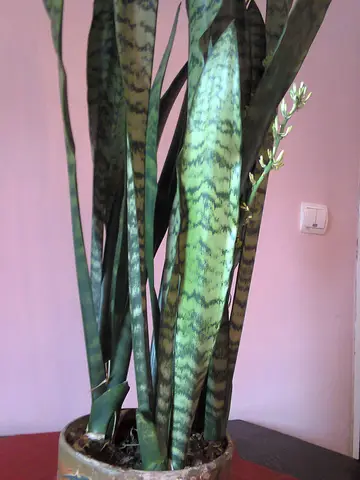
Image wanted. A licensed image will be added when found.
How to tell them apart
- Snake plant: Also has sword-shaped leaves, but they rise straight from the soil without a trunk.
Side by side
| Snake plant | Spineless yucca | |
|---|---|---|
| Scientific name | Dracaena trifasciata | Yucca gigantea |
| Family | Asparagaceae (asparagus family) | Asparagaceae (asparagus family) |
| Form | succulent herb, perennial, evergreen | shrub or small tree, perennial, evergreen |
| Height | 50–120 cm (leaf length) | Potted 1–3 m; up to 10 m in the wild |
| Flower colour | White, Green | White |
| Origin | Tropical West and Central Africa | Mexico and Central America |
| Toxicity | People: mildly toxic / irritant · Cats: toxic · Dogs: toxic | Cats: toxic · Dogs: toxic |
| Flowering | — | |
| Leaves | Stiff, sword-shaped, upright leaves with dark green and grey-green cross bands; some cultivars have yellow margins. | Long (50–100 cm), sword-shaped, stiff but blunt-tipped, glossy green leaves in tufts at the stem tips. |
| Flowers | Fragrant, greenish-white tubular flowers on a slender stalk; occasional indoors. | Bell-shaped, creamy-white flowers on a tall upright spike; rare in pots. |
| Fruit and seeds | Small orange berries. | — |
All pairs: look-alike plants · Full pages: Snake plant, Spineless yucca