Telling them apart
Scots pine vs Turkish pine
Scots pine (Pinus sylvestris) and Turkish pine (Pinus brutia) look similar enough to be confused. Both belong to the same family, Pinaceae (pine family).
Image wanted. A licensed image will be added when found.
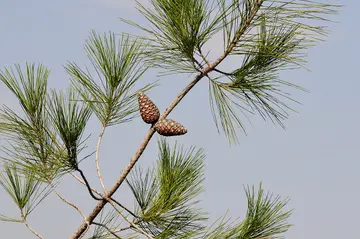
How to tell them apart
- Turkish pine: Grows in the coastal belt; its needles are thin, long and light green, and its cones larger.
Side by side
| Scots pine | Turkish pine | |
|---|---|---|
| Scientific name | Pinus sylvestris | Pinus brutia |
| Family | Pinaceae (pine family) | Pinaceae (pine family) |
| Form | tree, perennial, evergreen | tree, perennial, evergreen |
| Height | 20–35 m | 20–35 m |
| Flower colour | Yellow | — |
| Origin | Europe and northern Asia | Eastern Mediterranean |
| Toxicity | — | — |
| Flowering | — | |
| Leaves | Needles in pairs, 3–7 cm long, bluish-green, twisted and stiff. | Needles in pairs, 10–18 cm long, slender and light green. |
| Flowers | In spring, yellow male cones shed plenty of pollen; female cones are small and reddish. | Pines do not flower; in spring the male cones shed yellow pollen. |
| Fruit and seeds | Small (3–7 cm), pointed egg-shaped cones; the seeds ripen at the end of the second year. | Cones 5–10 cm long, almost stalkless and pointing forwards; they can stay closed on the branch for years and open after fire. |
All pairs: look-alike plants · Full pages: Scots pine, Turkish pine