Telling them apart
Poison hemlock vs Yarrow
Poison hemlock (Conium maculatum) and Yarrow (Achillea millefolium) look similar enough to be confused. They belong to different families: Apiaceae (carrot family) and Asteraceae (daisy family).
CautionPoison hemlock is poisonous to people. Never pick or eat a wild plant unless you are certain of its identity. If poisoning is suspected, call your local poison centre or emergency number.
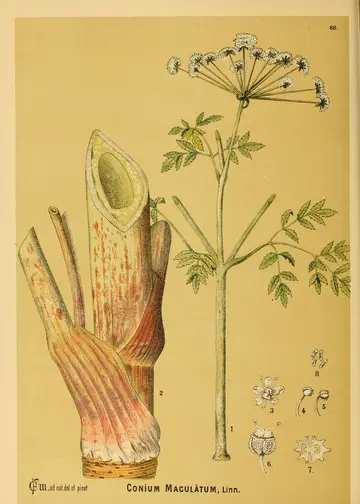
Image wanted. A licensed image will be added when found.
How to tell them apart
- Poison hemlock: Deadly poisonous. Its white, umbrella-like flower clusters and divided leaves can be mistaken for yarrow, and Wikipedia notes that confusing the two can be fatal. Hemlock has a smooth, purple-spotted stem and smells unpleasant when crushed.
Side by side
| Poison hemlock | Yarrow | |
|---|---|---|
| Scientific name | Conium maculatum | Achillea millefolium |
| Family | Apiaceae (carrot family) | Asteraceae (daisy family) |
| Form | herb, biennial | herbaceous, perennial |
| Height | 1–2.5 m | 20–100 cm |
| Flower colour | White | White, Pink |
| Origin | Europe, North Africa and western Asia | Eurasia and North America |
| Toxicity | People: toxic · Cats: toxic · Dogs: toxic | Cats: toxic · Dogs: toxic |
| Flowering | ||
| Leaves | Finely divided, fern-like, glossy green leaves with an unpleasant smell when crushed. | Fern-like leaves 5–20 cm long, two or three times pinnately divided, arranged spirally up the stem with the largest at the base. The name millefolium ("thousand leaves") refers to them. |
| Flowers | Small white flowers in umbrella-shaped clusters (umbels). | Small flower heads in flat-topped clusters, each with 3–8 white or pink ray florets and 10–40 tiny disc florets. |
| Fruit and seeds | Small, ridged, roundish fruits. | Small dry fruits (cypselae). |
All pairs: look-alike plants · Full pages: Poison hemlock, Yarrow